
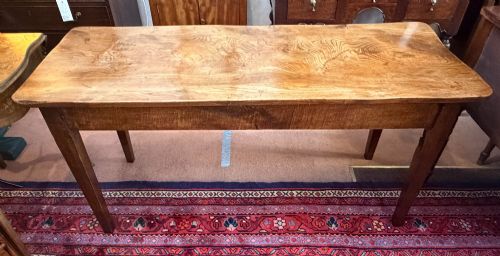
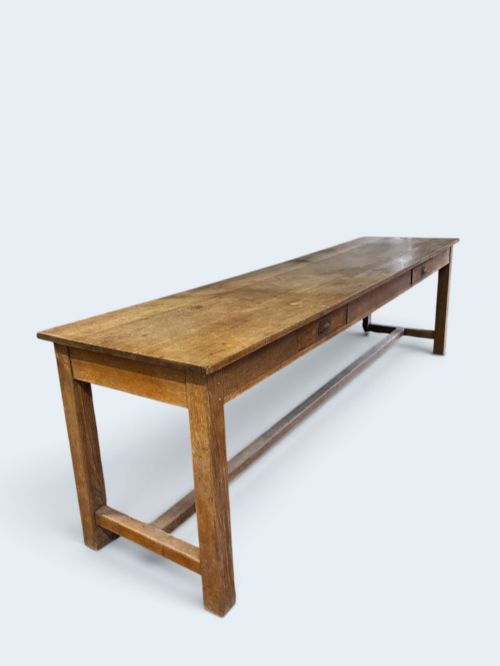
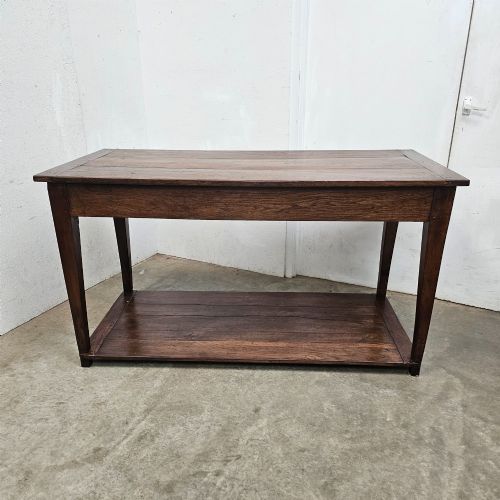
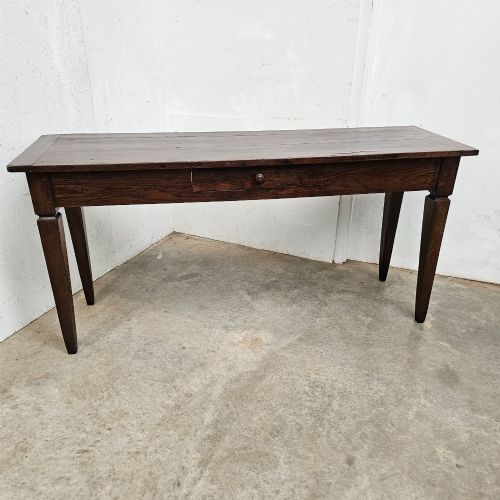



French Oak Prep Table
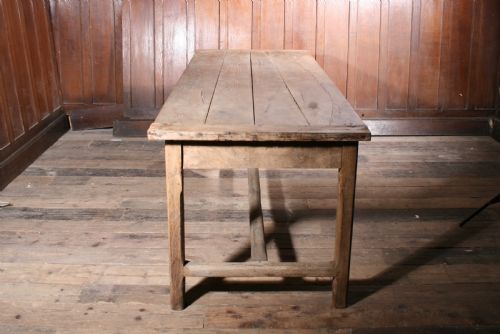
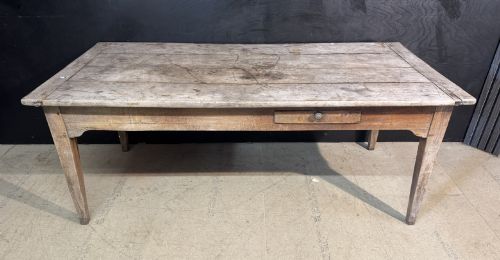
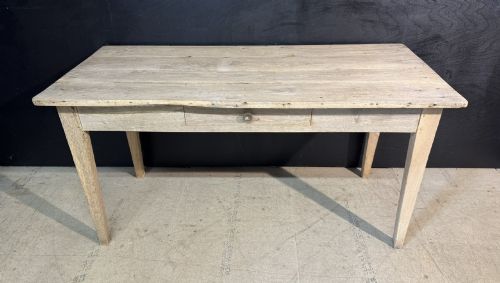
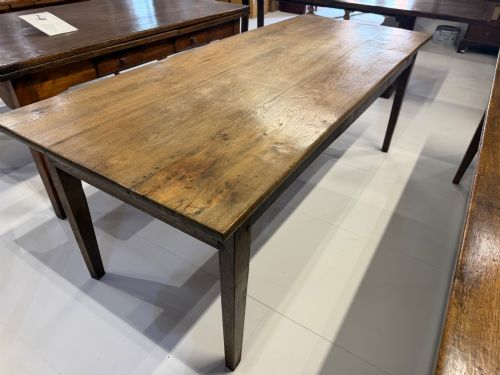
These french oak prep table examples bring enduring utility and honest country character to a modern kitchen, built for serious work.
French Oak Prep Table
A french oak prep table brings sturdy functionality and regional French character into domestic spaces, appearing in forms ranging from monumental drapers' tables to low bread prep surfaces. These pieces emerge chiefly from the nineteenth century, alongside examples from the eighteenth century and early decades of the twentieth century. They serve as central working hubs in kitchens, dining areas, and pantries, reflecting rural traditions of food preparation and daily domestic labour.
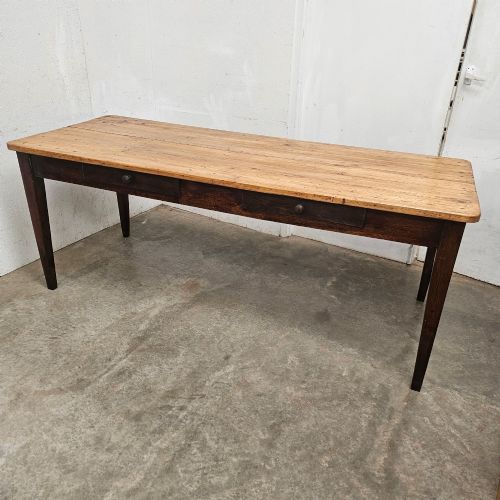
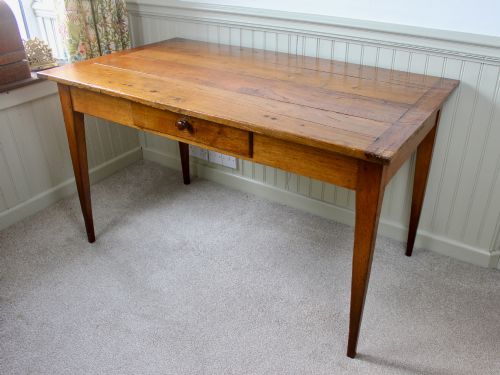
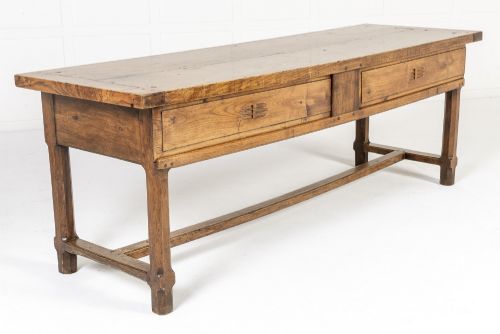
The variations on this page include farmhouse tables with tapered legs, two-tier work tables, console tables, and specialised kitchen islands. Makers and rural joiners utilised robust timbers to construct surfaces capable of withstanding heavy daily use, incorporating drawers, lift-top compartments, or pot boards. Whether styled as rustic country, French provincial, or industrial, each piece displays the practical adaptations required for baking, butchery, and serving.
Materials and construction methods
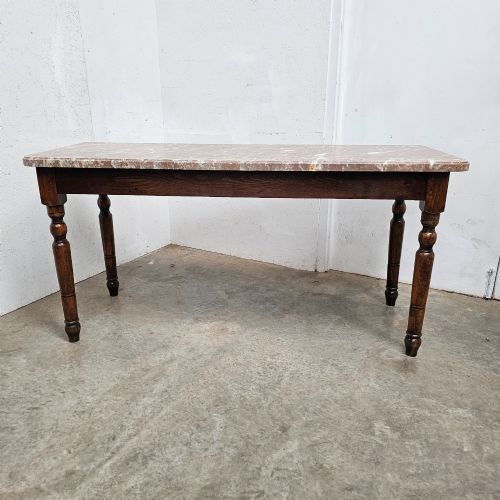
Makers constructed these surfaces primarily from solid oak, frequently pairing the durable timber with pine, beech, poplar, or general hardwood for internal elements or secondary framing. Iron and brass hardware provide structural reinforcement and functional operation for drawers, mounts, and supports. Surface finishes encompass natural timber, bleached oak treatments, and historic paint applications, while specialised patisserie and butchery variants incorporate marble tops or heavy wooden blocks.
Joinery techniques focus on absolute stability, utilising substantial framing, trestle structures, and tapered legs to support heavy downward pressure during food preparation. Tables designed for commercial or domestic kitchens often feature multiple tiers, deep drawers for utensils, or lift-top mechanisms for storage. The integration of bronze mounts on specific industrial or workshop pieces demonstrates the blending of utilitarian design with decorative restraint.
Bread prep tables often feature hidden lift-tops designed to keep dough warm and safe from curious farm cats.
What separates the finest examples
The distinction between standard utility items and exceptional survivals lies in the integrity of the original timber and the cleverness of the regional joinery. Tables featuring untouched bleached oak patination or deeply scored working surfaces display an authentic history of use that machine-planed boards lack. Superior examples maintain their original structural proportions without excessive timber replacement in the underframe or top.
Hardware integrity and clever functional details elevate certain forms above ordinary workshop tables. Pieces retaining original brass or iron mounts, operational drawers with traditional joints, or specialised additions like marble slabs and bronze accents indicate higher workshop origins. The balance between heavy oak framing and refined provincial styling governs the visual success of each piece.
Trussant & Cie·Hennes France
The French Oak Prep Table Glossary
- Drapers Table
- A long, narrow utilitarian table traditionally used in textile shops with multiple tiers for storing cloth, now utilised as a kitchen island. These pieces offer exceptional length and shallow proportions.
- Bleached Oak
- Timber treated with a process to lighten its natural tone, removing decades of dark grease and wax while preserving the underlying grain. This finish became popular in French country interiors.
- Patisserie Table
- A specialised work table featuring an inset marble slab designed for rolling pastry and working dough at a cool temperature. These surfaces often include lower shelves for resting baking equipment.
- Butchers Block
- A thick, solid block of end-grain timber mounted on a sturdy stand, engineered to absorb the impact of cleavers and heavy chopping. They represent the most robust category of kitchen preparation furniture.
- Provincial
- A descriptor for furniture made in the French regions outside Paris, reflecting local tastes, available timber resources, and traditional rural craftsmanship rather than court styles.
French Oak Prep Table: Frequently Asked Questions
How do I use a prep table in a modern kitchen?
These tables function naturally as central kitchen islands, providing a generous surface for food preparation, baking, and casual dining. Their lower tiers and drawers offer practical storage for pots, pans, and everyday utensils.
Positioning the table away from kitchen cabinetry allows full access from all sides, mirroring its original workspace function. The robust oak and marble surfaces easily withstand the demands of daily culinary tasks.
What is the difference between a drapers table and a farmhouse table?
Drapers tables are noticeably longer and narrower, originally designed for measuring and displaying textiles with the aid of multiple lower shelves. Farmhouse tables are broader and built primarily for communal dining and general kitchen labour.
While both utilise sturdy oak construction and hail from the same rural traditions, their proportions serve distinct spatial requirements in a modern interior.
How should I care for an antique oak surface?
Maintenance requires simple cleaning with a damp cloth followed by immediate drying, avoiding harsh chemical cleaners that strip the historic finish. Periodic application of natural beeswax nourishes the dry timber and protects the grain.
Hot pans and standing moisture should be kept away from untreated wooden tops to prevent staining and warping over time.
Can I use a pastry table for daily food preparation?
Marble-topped pastry tables are exceptionally well-suited for rolling dough, pastry making, and general kitchen tasks requiring a cool, smooth surface. The stone naturally resists moisture and provides a hygienic workspace.
Care should be taken to avoid exposing the marble to acidic substances like lemon juice or vinegar, which can etch the polished stone surface.