

French Neoclassical Table Lamps
French neoclassical table lamps bring architectural symmetry and classical dignity into a room through bronze, marble and ormolu.

What they are
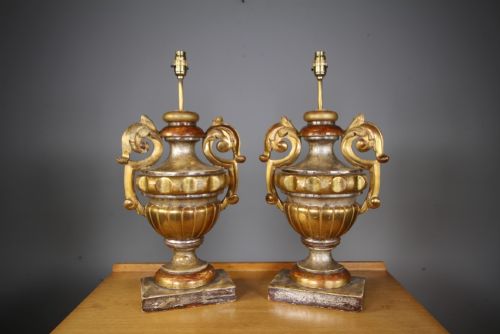
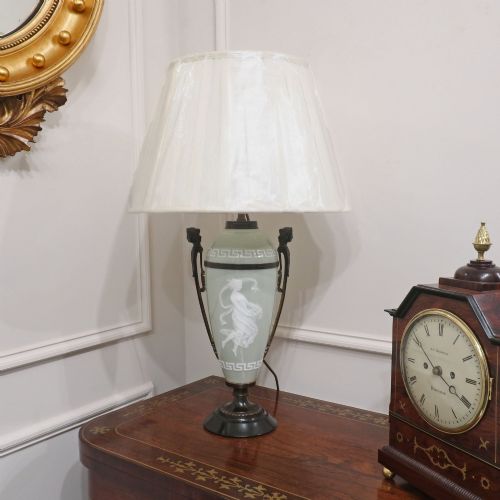
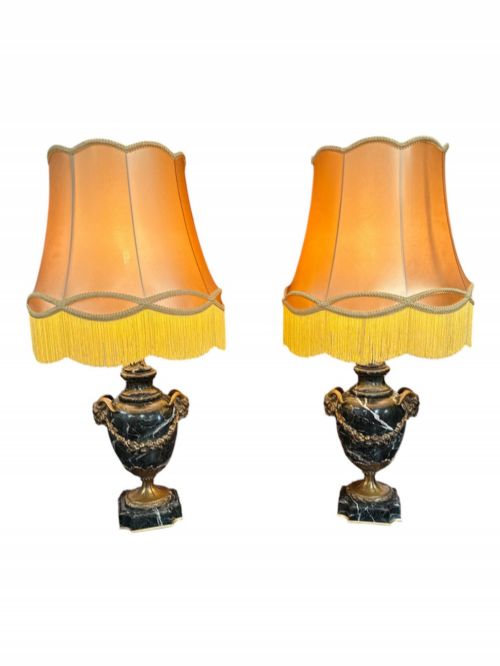
French neoclassical table lamps translate ancient architectural forms into lighting, drawing directly on Louis XVI and French Empire design vocabulary. The selection on this page centres primarily on pairs dating from the nineteenth century, including examples around eighteen hundred and the early twentieth century.
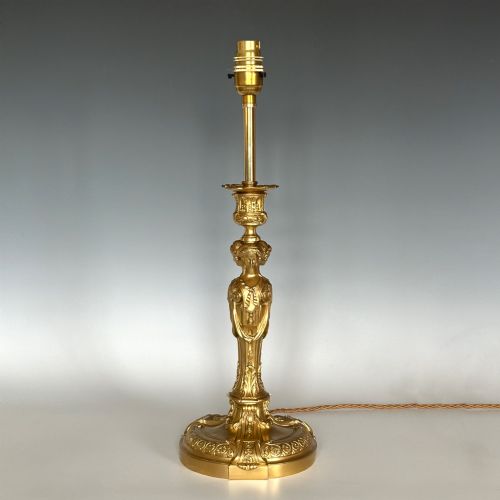
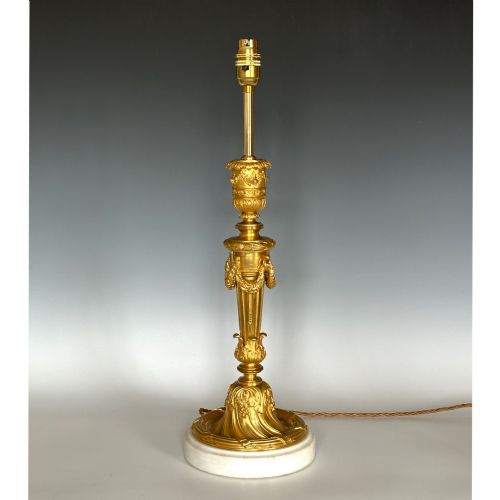
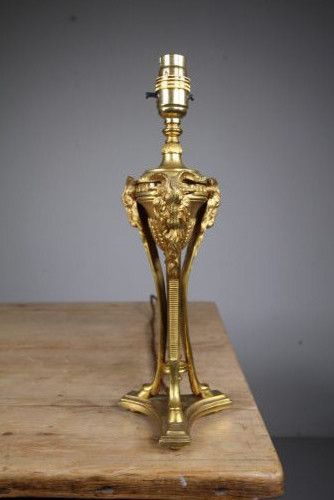
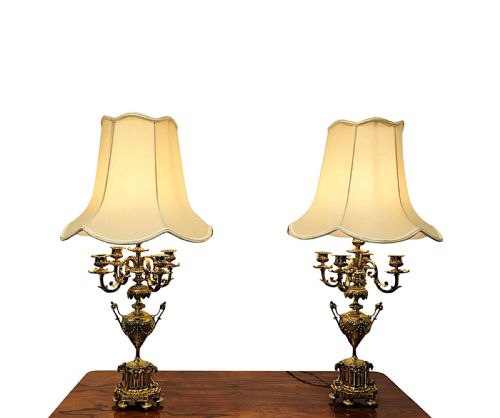
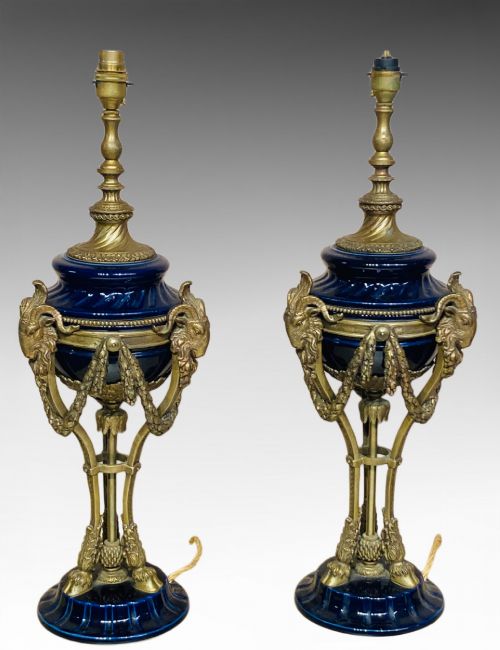
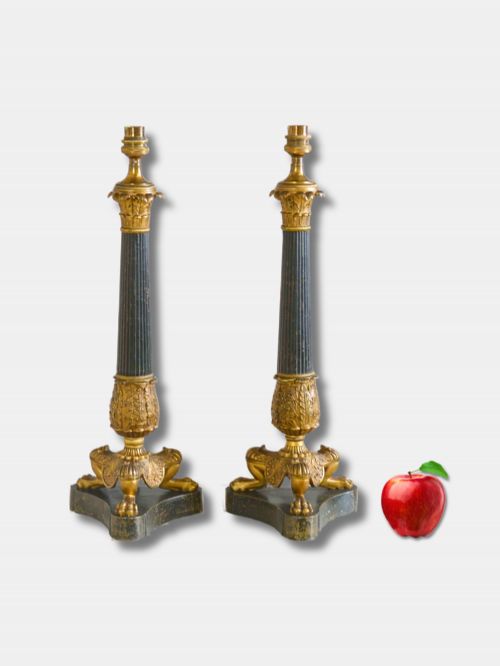
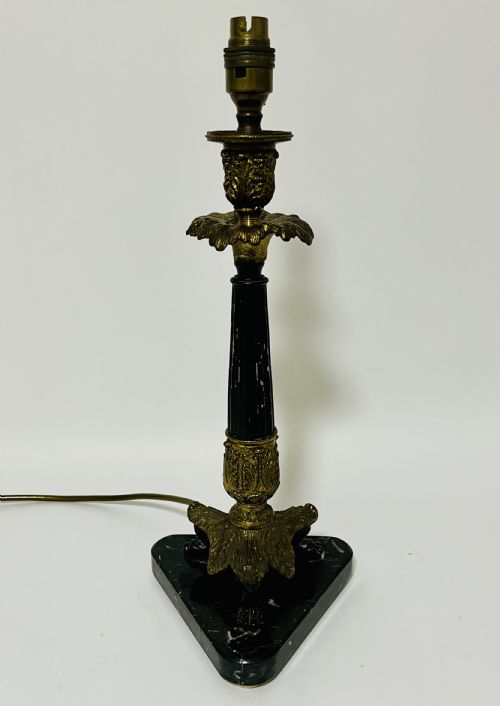
Makers and workshops of these periods frequently adapted classical cassolettes, fluted columns with lions paw feet, and candlesticks into electrified or adaptable lighting. Marble and ormolu mounts dominate the forms, creating substantial pieces designed to anchor a room with classical order and proportion.
Buyers encounter architectural columns, mounted cassolettes, and candlestick configurations as the primary object types. These items reflect the enduring nineteenth-century enthusiasm for revival styles rooted in Greek and Roman antiquity.
How they were made
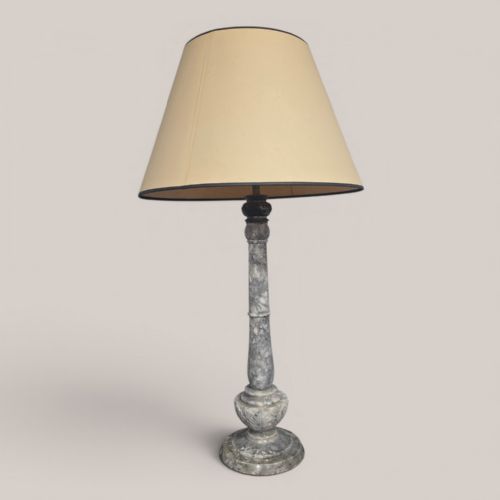
Craftsmen built these lamps using heavy metals such as ormolu, gilt bronze, patinated bronze, and brass, often paired with natural stone bases like Siena marble. The metal components were cast and chased by hand to achieve crisp classical detailing, then combined with cut crystal or fabric elements.
Ormolu mounts were fire-gilded, a process using mercury and gold to produce a rich, durable surface finish that retains its lustre over centuries. Marble sections were turned on lathes and polished, while bronze elements were cast before receiving either a dark patination or gilding.
Retail Price Guide 2026
Typical UK retail prices for french neoclassical table lamps, calculated from the Sellingantiques database of over a million retail prices indexed since 2003. This retail price guide relies exclusively on Sellingantiques data; no external sources or auction records are used, so the figures do not describe the wider market.
Materials documented across the inventory include cut crystal, fabric, brass, and Siena marble alongside traditional bronze.
What varies in quality
Quality rests in the crispness of the bronze chasing and the depth of the fire gilding on the ormolu. Finer examples display sharp architectural fluting, deeply articulated animal feet, and solid weight in the metalwork.
The choice and execution of the marble base also set pieces apart, with select items utilising dense, richly coloured stone like Siena marble paired with meticulously fitted metal collars rather than simple castings.
The French Neoclassical Table Lamps Glossary
- Ormolu
- Gilt bronze created by applying a mixture of mercury and gold to a bronze base and heating it. This historic technique produces a distinctive soft golden finish.
- Cassolette
- A decorative vessel shaped like an urn, often reversible or fitted with a lid. In lighting, these vessels are mounted on heavy bases and adapted as lamp bodies.
- Patinated bronze
- Bronze that has been treated with chemical solutions to create a dark, aged surface tone. It contrasts sharply with bright ormolu mounts.
- Siena marble
- A yellow-gold decorative marble quarried in Italy. It appears frequently in fine nineteenth-century neoclassical decorative objects.
- Louis XVI style
- A revival design movement characterised by straight lines, classical symmetry, and architectural restraint. It draws inspiration from ancient Greek and Roman motifs.
Frequently Asked Questions
What periods do these lamps come from?
The listings span from around eighteen hundred through the nineteenth century and into the early twentieth century. They include pieces executed in the Louis XVI style and the French Empire manner.
These dates reflect the nineteenth-century revival movements that continuously reinterpreted classical antiquity for domestic lighting.
What materials are used in these pieces?
Construction relies heavily on cast metals, specifically ormolu, gilt bronze, patinated bronze, brass, and cut crystal. These are frequently combined with natural marble bases.
Fabric elements and specialised mountings complete the structures, bringing together stone and metal in typical nineteenth-century fashion.
How do I identify French Empire style?
French Empire pieces often feature heavier military or classical motifs, such as columns, lions paw feet, and robust patinated bronze surfaces. They reflect the aesthetic of early nineteenth-century France under Napoleon.
In contrast, Louis XVI style pieces lean towards lighter architectural details, crisp fluting, and refined ormolu mounts.
Are these lamps usually sold as pairs?
The selection on this page consists predominantly of matched pairs. This reflects their original creation as garniture sets or symmetrical mantel ornaments.
Pairs allow for balanced placement on sideboards, consoles, or bedside tables within a neoclassical interior scheme.