





French Mounted Chinese Vases
French mounted chinese vases bring together eastern ceramics and western metalwork to create decorative objects of striking contrast.
French Mounted Chinese Vases
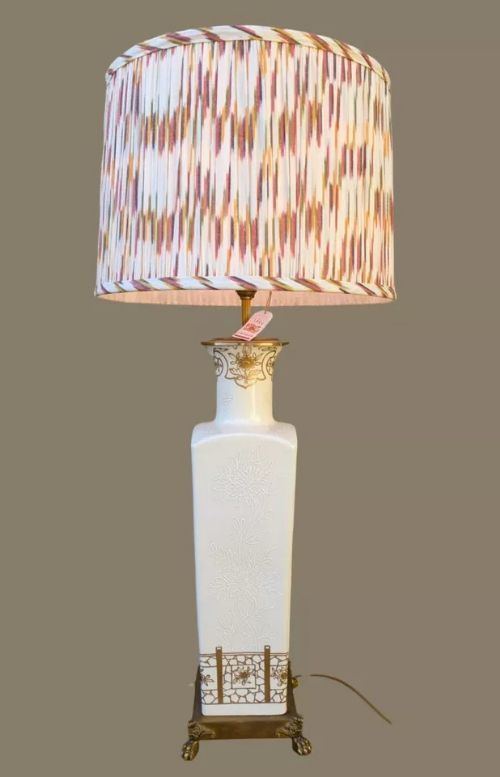
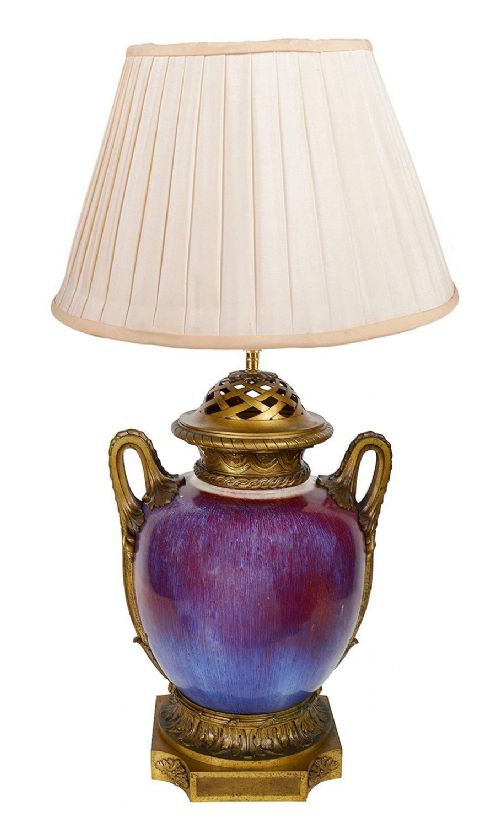
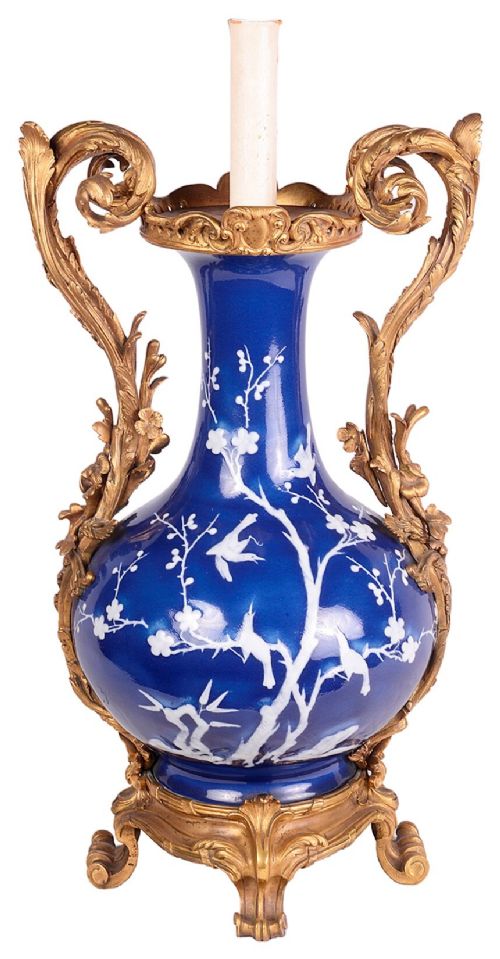
The ceramic bodies take several distinct forms across the selection, ranging from powder blue and sang de boeuf monochromes to blue and white, famille rose, and cloisonne enamel. Many pieces function as table lamps, candelabras, or lidded vases, integrating functional utility with ornate decorative bronze and ormolu framing.
Makers such as Samson frequently emulate traditional Chinese export patterns, producing porcelain bodies specifically designed to receive elaborate French metal mounts. The resulting pieces reflect a long standing European fascination with Asian ceramics, enhanced by nineteenth century craftsmanship in gilt bronze, brass, and gold leaf.
How They Were Made
The foundational vessels utilise traditional ceramic techniques including hand painted glazes, underglaze blue, and intricate cloisonne enamel work on metal substrates. Chinese export and domestic kilns produced porcelain bodies in monochrome and polychrome palettes, which were subsequently shipped to Europe.
European metalworkers created bespoke mounts from ormolu, gilt bronze, and brass, casting and chasing the metal to embrace the contours of the porcelain. These mounts often feature scrolling foliage, handles, and bases designed in the French Rococo Revival style, secured to the ceramic vessels with pins or adhesives.
French Mounted Chinese Vases Retail Price Guide 2026
Typical asking prices for french mounted chinese vases among the pieces listed under this phrase on Sellingantiques today, from the lower quarter to the upper quarter. They describe what is for sale here now, not the wider market.
Some nineteenth century porcelain lamps secretly conceal electrical wiring running straight through centuries of hand painted dragons.
What Varies in Quality
Quality rests upon the harmony between the ceramic body and the metal mounts, where superior examples exhibit cast bronze that follows the exact curves of the porcelain without obscuring the glaze. The crispness of the chasing on the ormolu and the depth of the gilding distinguish skilled nineteenth century foundry work from simpler production.
The provenance and nature of the porcelain also shape the overall merit of the piece, with genuine eighteenth century vessels carrying a different weight than nineteenth century interpretations by makers like Samson. Hand painted details on famille rose or blue and white surfaces reveal the steady hand of the painter.
Samson Porcelain
The French Mounted Chinese Vases Glossary
- Ormolu
- Gilded bronze used extensively for decorative mounts on furniture and ceramics during the eighteenth and nineteenth centuries. The technique involves applying a finely ground gold mercury amalgam to a bronze base before heating.
- Cloisonne Enamel
- A metalwork technique where thin metal wires are soldered to a base to form compartments, which are then filled with coloured enamel paste and fired. This method produces intricate decorative patterns on vases and decorative objects.
- Famille Rose
- A palette of opaque enamel colours dominated by pink, introduced to Chinese ceramics during the Qing dynasty and widely imitated in Europe. The style permits subtle tonal gradations for floral and figurative scenes.
- Chinoiserie
- A European artistic style reflecting Chinese artistic influences, prominent in decorative arts, architecture, and interior design. It involves imaginative interpretations of eastern motifs by western artisans.
- Sang du Bouf
- A rich, deep red copper glaze developed in Chinese kilns, highly prized by European collectors and often fitted with gilt bronze mounts. The intense coloration results from controlled firing reductions.
French Mounted Chinese Vases: Frequently Asked Questions
What are French mounted Chinese vases?
These decorative objects consist of imported Chinese ceramic vessels fitted with ornate European metal mounts, typically cast in ormolu or gilt bronze. They bridge eastern and western decorative traditions.
Craftsmen in nineteenth century France adapted these vases into table lamps, candelabras, and ornamental centerpieces to suit contemporary interior tastes.
How were these vases used originally?
Wealthy households displayed these mounted pieces on mantelpieces, side tables, and pedestals as symbols of refined taste and global trade connections. Their striking visual contrast added luxury to formal reception rooms.
Over time, many of these vessels were converted into functional lighting fixtures, such as lamps and candelabras, while retaining their decorative character.
How do you date the mounts?
Mounts are dated by analyzing the style of the metalwork, such as the fluid asymmetrical scrolling typical of French Rococo Revival designs from the nineteenth century. The quality of the chasing and the type of gilding also provide clues to the period of production.
Comparing the mount construction to documented foundry practices helps distinguish nineteenth century interpretations from later reproductions.
Are all the porcelain bodies Chinese?
While many pieces utilise genuine Chinese export porcelain from earlier periods, European factories also produced their own ceramic bodies in eastern styles. Makers like Samson specialised in creating imitation Chinese porcelain specifically for mounting.
Examining the paste, glaze characteristics, and painting style helps determine whether a vessel originates from an Asian kiln or a European workshop.