




Vintage Canton Porcelain
These vintage canton porcelain pieces bring vibrant traditional palettes and detailed figurative scenes into domestic spaces.
Vintage Canton Porcelain
Buyers seeking vintage canton porcelain encounter a distinct group of ceramics defined by intricate enamelling and rich domestic scenes. These objects span periods from the nineteenth century into the early twentieth century, reflecting enduring export traditions.
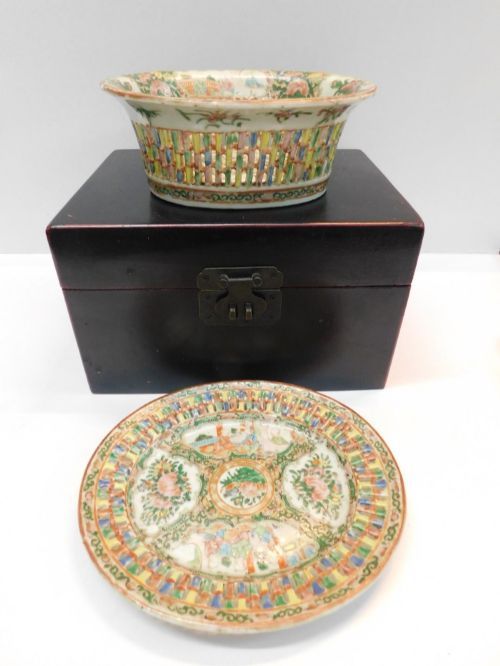
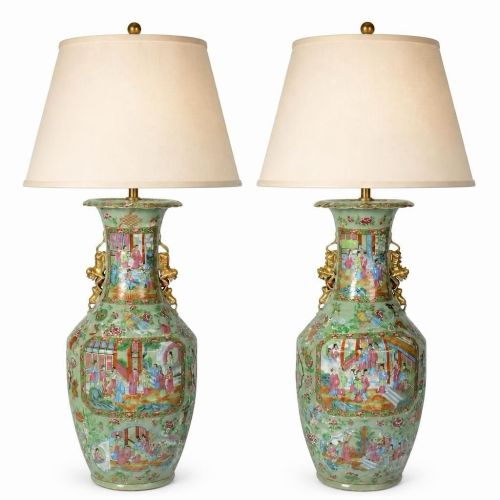
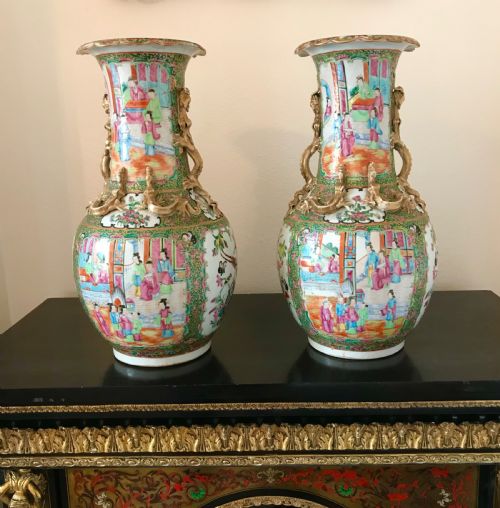
The selections available here most commonly feature nineteenth century rose medallion designs, large vases, and decorative plates. Many examples arrive mounted as table lamps or paired with wooden stands, showing how these items adapted to western interiors over time.
Vessels range from garden seats to large bowls, all carrying the characteristic bright palettes of Qing Dynasty and Chinese Export work. Each piece demonstrates the specific decorative vocabulary associated with Canton production during the Victorian era.
How vintage canton porcelain was made
Potters built these forms using porcelain clay bodies finished with white glaze before applying complex enamel decoration. Artisans then incorporated gold leaf accents to highlight the borders and key decorative panels across the surface.
Secondary materials such as brass, hardwood, and fabric appear in stands and lamp mountings added to the porcelain bodies. These mounts show how utilitarian and decorative functions merged during later adaptation periods.
Vintage Canton Porcelain Retail Price Guide 2026
Typical asking prices for vintage canton porcelain among the pieces listed under this phrase on Sellingantiques today, from the lower quarter to the upper quarter. They describe what is for sale here now, not the wider market.
Current listings feature porcelain, enamel, gold leaf, and hardwood across nineteenth century and Victorian periods.
What varies in quality
Quality rests upon the precision of the enamel work and the density of the figurative scenes painted across the surface. Finer examples display meticulous brushwork within the panels, whilst simpler pieces rely on broader, less detailed application.
The presence of undamaged gold leaf gilding and original mounting elements also distinguishes superior specimens. Additionally, large-scale forms like garden seats and substantial vases demonstrate greater ambition in both throwing and firing than smaller plates.
The Vintage Canton Porcelain Glossary
- Rose Medallion
- A distinct style of Chinese export porcelain decorated with alternating panels of figures, birds, and flowers centred around a medallion. This pattern dominates nineteenth century Canton production.
- Famille Rose
- A palette of opaque enamel colours dominated by pink or rose, introduced during the Qing Dynasty. It forms the basis of the colourful scenes found on Canton ceramics.
- Chinese Export
- Ceramics produced in China specifically for western markets between the seventeenth and early twentieth centuries. These goods combined traditional Chinese manufacturing with western functional forms.
- Qing Dynasty
- The final imperial dynasty of China, lasting from 1644 to 1912. Much of the export porcelain seen today originates from the later decades of this period.
- Garden Seat
- A barrel-shaped ceramic form designed for outdoor or indoor seating. Canton examples feature pierced coins and detailed panel painting.
Vintage Canton Porcelain: Frequently Asked Questions
What is canton porcelain?
Canton porcelain refers to ceramics decorated in the port city of Canton for export to western markets. They are best known for bright enamel palettes and panels depicting figures.
The style developed through the nineteenth century, encompassing table wares, large vases, and decorative objects destined for European and American homes.
How do I identify rose medallion?
Rose medallion is identified by its segmented panels containing painted figures, birds, and flowers arranged around a central medallion. The palette relies heavily on pink enamel and gold highlights.
This pattern appears frequently on plates, bowls, and vases from the Victorian era and earlier nineteenth century.
Are these pieces functional?
Many surviving pieces function as decorative objects, lamps, or garden seats rather than active tableware. Vases and bowls were often mounted with brass or placed on wooden stands.
Buyers frequently encounter nineteenth century vases that were converted into table lamps during the twentieth century, altering their original use.
How do I date these ceramics?
Dating relies on stylistic indicators, potting characteristics, and associated materials like hardwood stands or brass electrical fittings. Pieces from the nineteenth century display hand-painted enamels characteristic of Qing Dynasty export wares.
Victorian era records and nineteenth century typologies help narrow the production window for unmarked items.