



French Metal Bedstead
A french metal bedstead brings an enduring continental character to a bedroom through robust ironwork and polished brass details.
French Metal Bedstead
When you search for a french metal bedstead, you encounter substantial sleeping furniture spanning the Victorian, Edwardian, and early twentieth century periods. The selection encompasses single beds, double beds, and king size formats designed with distinct regional aesthetics.
Most examples originate from the period between 1880 and 1920, incorporating classic European proportions and traditional silhouettes. You will find both robust double frames and pairs of single beds suited to various bedroom layouts.
How they were made
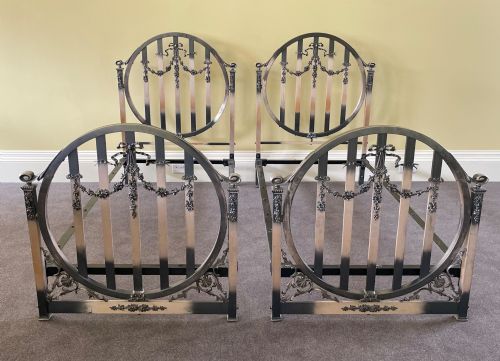
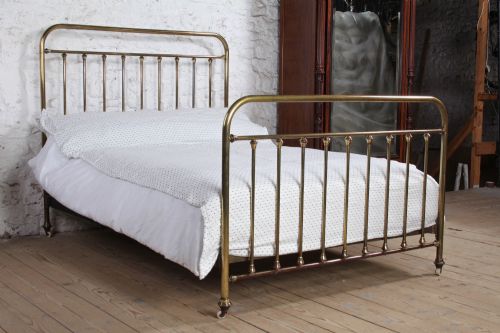
Makers constructed these frames using combinations of cast iron, wrought iron, and tubular brass, frequently finished with nickel plating or applied paint. Metal components were forged and joined to create sturdy structures capable of supporting everyday use.
Decorative elements include brass embellishments, hoop details, and painted surfaces that reflect Victorian and Art Nouveau influences. The combination of black iron frameworks with polished brass finials and mounts represents a defining manufacturing method of the era.
Several single beds come in matching pairs, ideal for anyone wishing to coordinate twin guest rooms with continental style.
What varies in quality
The distinction between standard production and finer examples lies in the complexity of the metalwork and the presence of detailed brass castings. Elaborate corner mounts, integrated platform designs, and specialised configurations like half testers elevate the character of a frame.
The preservation of original surface finishes, whether painted metal or polished brass, influences the overall integrity of the piece. Substantial square tube construction and refined hoop details demonstrate superior craftsmanship compared to simpler utilitarian models.
The French Metal Bedstead Glossary
- Cast iron
- A strong, hard iron-carbon alloy poured into moulds to create rigid structural components and decorative bed ends. This material provides the heavy foundation for many nineteenth-century frames.
- Nickel plating
- An electrolytic coating applied to base metals to produce a bright, corrosion-resistant silver finish. This technique appeared frequently on Edwardian bed frames.
- Half tester
- A canopy bed frame where the tester extends only partially over the head of the bed rather than the entire length. It supports drapery above the pillow area.
- Bedstead
- A framework of wood or metal designed to support a mattress and foundation. In older terminology, it specifically denotes the structural skeleton rather than the bedding.
French Metal Bedstead: Frequently Asked Questions
How do I choose the right size?
Consider the available floor space and mattress requirements for your room, noting that listings include single, double, and king size options.
Take careful measurements of your bedroom doorways and stairwells to ensure the headboard and footboard sections manoeuvre easily into place.
Are these beds suitable for daily use?
These historical frames offer robust metal construction designed to support modern mattress foundations securely.
Ensure that standard modern mattress dimensions align with the specific platform or rail length of the antique frame you select.
How do I care for the metal and brass?
Dust painted iron surfaces regularly with a soft cloth and avoid abrasive chemical cleaners that might damage original finishes.
Polish brass components sparingly with a mild, appropriate metal cleaner to maintain their lustre without stripping the aged patina.
How can I date a metal bed?
Examine the construction methods, stylistic markers such as Art Nouveau curves, and material choices like nickel plating to determine the era.
Reference the listed production periods, which typically span from the late Victorian years through the early twentieth century.