


French Marquetry Plant Table
A french marquetry plant table brings botanical display into the parlour through intricate wood veneers and metal mounts.
French Marquetry Plant Table
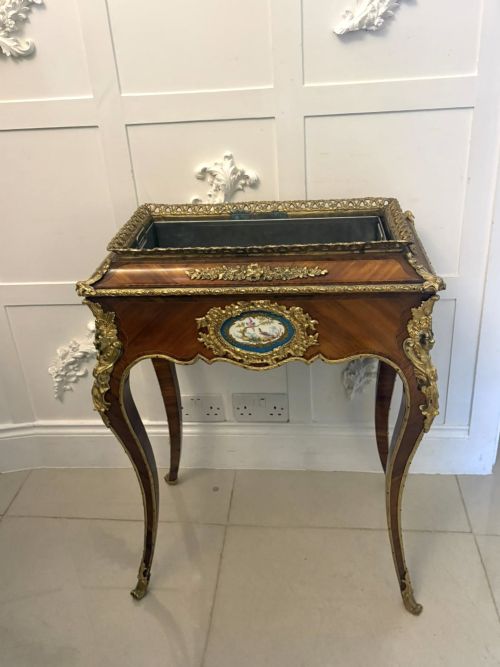
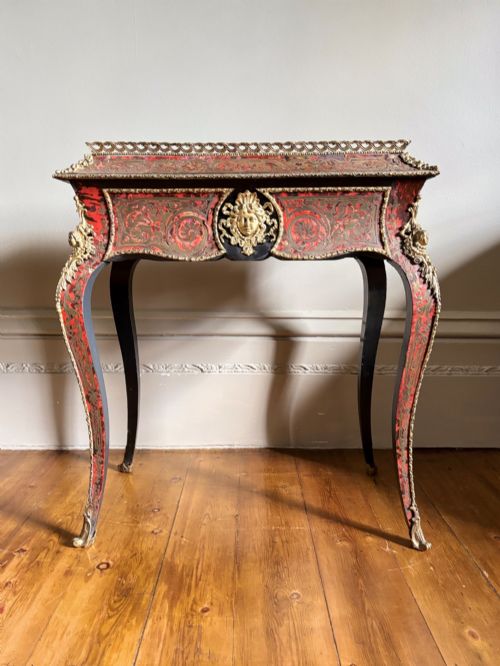
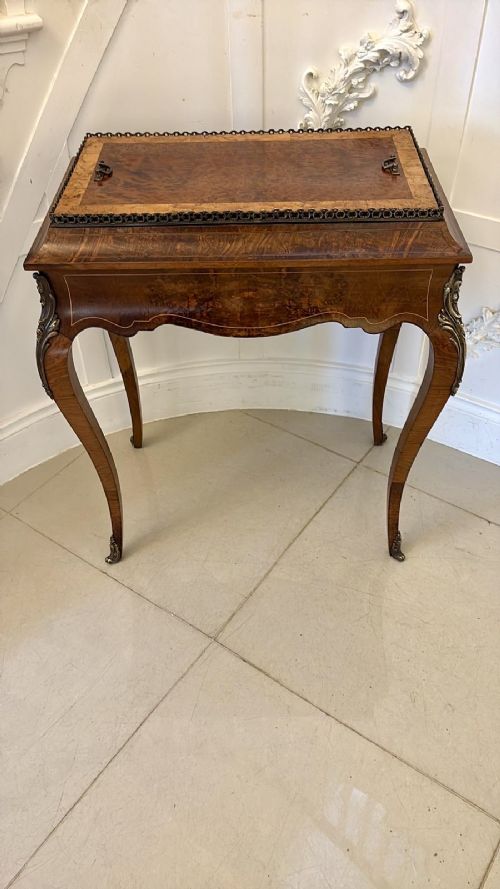
A french marquetry plant table functions primarily as a jardiniere, planter or occasional stand designed to hold plants or flowers within domestic rooms. These pieces emerge predominantly from the nineteenth century, including Victorian interpretations and Napoleon III designs.
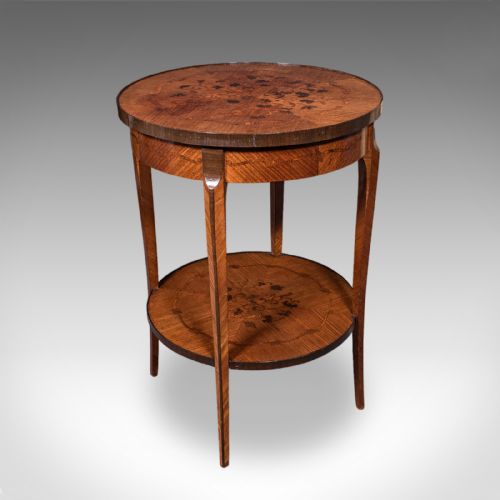
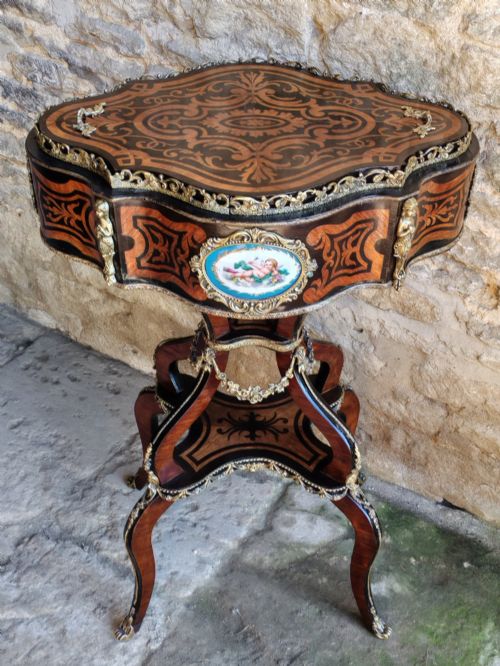
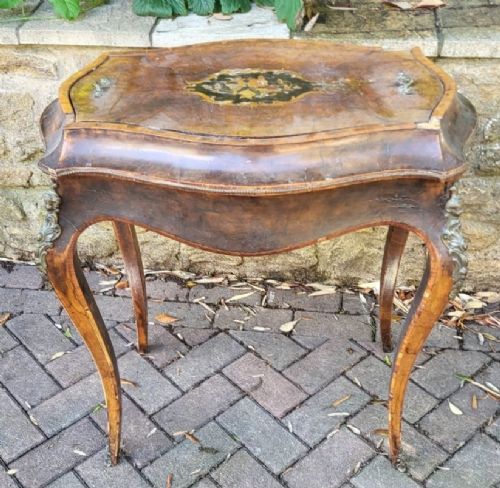
The physical form spans multi-tiered etageres, oval display shelves and side tables fitted with lift-off lids or inset liners. Cabinetmakers structured these stands to support heavy earthenware or porcelain vessels while displaying decorative wood veneers on the surface.
Makers working in the Louis XV and Rococo revival styles shaped these tables with curved outlines and distinct aprons. Surviving examples demonstrate how nineteenth-century workshops adapted eighteenth-century decorative vocabulary for plant display.
Evaluating Craftsmanship
Quality rests upon the precision of the veneer cutting and the depth of the timber figuring in the walnut or kingwood. Finer pieces display elaborate floral marquetry integrated cleanly into the surrounding grain without heavy filler.
The crispness of the ormolu mounts and the weight of the brass gallery determine the tier of production. Castings with sharper chased detail separate workshop output from standard commercial production.
Nineteenth-century plants led such sheltered lives they required their own bronze-gilded architecture just to sit beside the sofa.
Donald Ross
The French Marquetry Plant Table Glossary
- Jardiniere
- An ornamental stand or container designed specifically to hold growing plants or flowers indoors. They often feature metal liners to protect the surrounding woodwork from moisture.
- Marquetry
- The art of applying decorative pieces of veneer to a structural carcase to form picture-like designs. Craftsmen select various coloured woods to create contrast.
- Ormolu
- Gilded bronze applied to furniture mounts and decorative edges during the eighteenth and nineteenth centuries. This material provides a bright metallic contrast to dark woods.
- Etagere
- A piece of furniture consisting of open shelves for displaying small objects or plants. Multi-tiered versions appear frequently in nineteenth-century interiors.
- Parquetry
- Geometric wood inlay forming repetitive patterns such as cubes or chequers across a table top. It differs from pictorial marquetry by relying on angular symmetry.
French Marquetry Plant Table: Frequently Asked Questions
What is a french marquetry plant table used for?
These tables served primarily as indoor plant stands or flower holders within nineteenth-century drawing rooms and parlours. The surface typically incorporates a waterproof liner or lift-off lid to accommodate potted plants.
Beyond botanical display, many functioned as standard occasional tables or wine coolers depending on the depth of the central well and the presence of tiers.
How do I distinguish between Victorian and Napoleon III styles?
Napoleon III pieces frequently display heavy ormolu mounts, ebonised surfaces, and Boulle marquetry work utilising brass and tortoiseshell. Victorian British interpretations lean towards burr walnut veneers and simpler serpentine outlines.
Both styles share roots in Louis XV revival aesthetics, making timber choice and mount quality the clearest indicators of origin.
Are these tables suitable for holding real plants today?
Most antique jardinieres feature removable metal liners intended to catch water runoff from potted greenery. Care must be taken to remove plants for watering to prevent moisture damage to the underlying wood veneers.
Using modern plastic saucers inside the historic liners preserves the interior metal and prevents staining on the antique timber.
What woods were commonly used in these tables?
Cabinetmakers relied on exotic and domestic hardwoods including walnut, burr walnut, kingwood, rosewood, and mahogany. These timbers provided rich natural grains that contrasted against lighter boxwood or fruitwood marquetry.
Ebonised wood also appears on pieces designed to emulate seventeenth-century ebony furniture or to highlight gilt bronze mounts.