


Ebonised Jardiniere Stand
An ebonised jardiniere stand elevates your greenery with dark, striking contrast and classical form.
Ebonised Jardiniere Stand
When you search for an ebonised jardiniere stand, you encounter plant stands, torchere columns, wine coolers, and side tables designed to display foliage and decorative vessels. The pieces span the nineteenth century, Victorian era, Regency period, and early twentieth century.
You are most likely to meet French Napoleon III, Victorian, and Arts and Crafts examples on this page. These take the form of tall columns, planters, and tripod tables built to hold heavy pots of plants or floral arrangements.
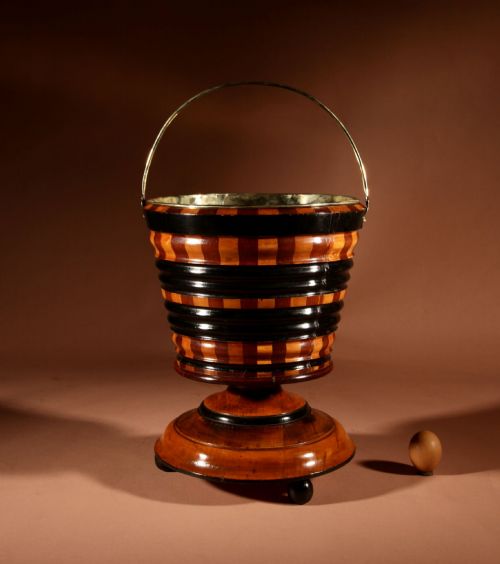
Origins range from English and French workshops to Dutch coopered designs and Chinese export pieces. The selection includes works influenced by Japanese aesthetics, Black Forest carving, and classical Empire design.
Materials and construction
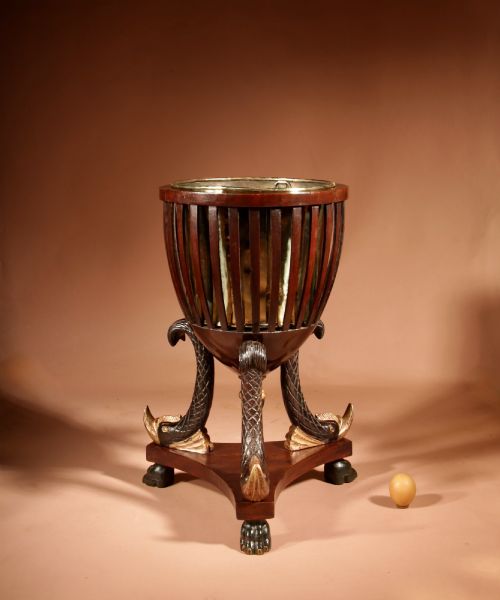
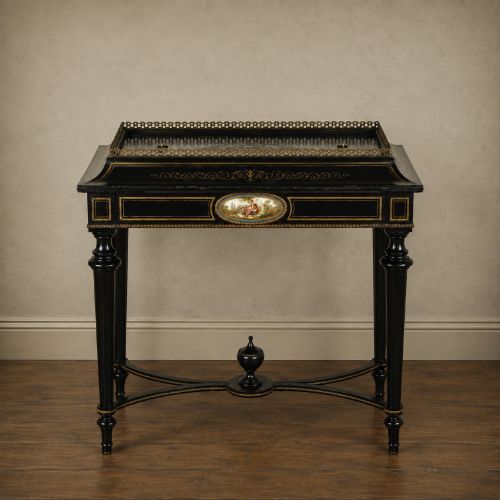
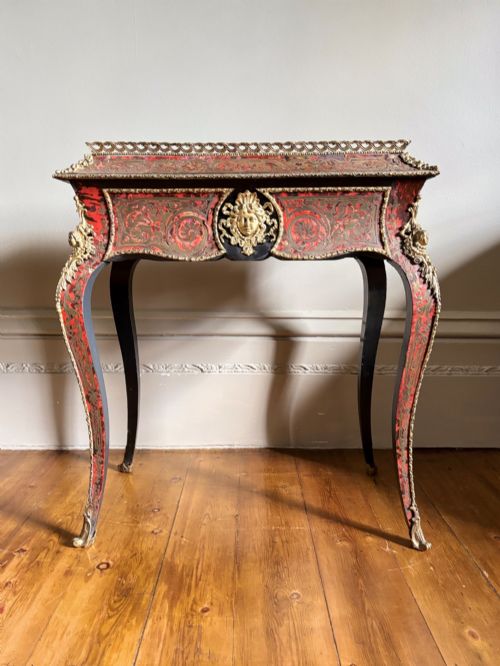
Darkened timber forms the structural base, utilising ebonised wood alongside walnut, mahogany, and hardwood. Artisans applied black finishes to mimic costly ebony, often combining the dark wood with brass, ormolu mounts, and gilt bronzes.
Surface decoration frequently incorporates marquetry inlay, aboyna inlay, and hand-carved details. Many examples integrate contrasting materials such as inset rouge marble tops or painted porcelain plaques into the wooden frames.
One winged griffin stands ready to guard your ferns.
Assessing quality and craftsmanship
The distinction between ordinary and exceptional pieces rests upon the precision of the joinery and the integration of decorative mounts. Fine examples feature crisply cast ormolu, detailed hand-carved elements, and tightly fitted porcelain plaques rather than simple applied decoration.
The choice of secondary materials marks the upper tier of the range, demonstrated by heavy marble inserts, intricate marquetry patterns, and sophisticated turning on torchere columns. The harmony between the darkened wood and its metal or stone accents dictates the overall success of the design.
Liberty of London
The Ebonised Jardiniere Stand Glossary
- Ebonised
- Wood treated to resemble dense, black ebony. This dark finish gained popularity during the nineteenth century for furniture requiring a dramatic, uniform tone.
- Jardiniere
- A decorative pot or stand intended for holding plants and flowers. The word derives from the French term for gardener.
- Ormolu
- Gilt bronze mounts applied to furniture and decorative objects. This technique creates bright metallic contrast against dark wood surfaces.
- Torchere
- A tall, slender stand designed to support a lamp, vase, or planter. These elevated pieces lift greenery to eye level within a room.
- Marquetry
- Inlaid wood veneers forming decorative patterns or pictures. Craftsmen assembled contrasting woods to create detailed surface enrichment.
Ebonised Jardiniere Stand: Frequently Asked Questions
What is an ebonised jardiniere stand?
An ebonised jardiniere stand is a piece of furniture designed specifically to hold plants, flowers, or decorative vessels. These stands feature a darkened wood finish created to imitate ebony.
Examples range from tall torchere columns and tripod stands to low side tables and coopered buckets. They serve both a practical function for displaying indoor plants and a decorative role within interior spaces.
How were these stands used historically?
Historically, these stands placed potted plants and floral arrangements in prominent areas of Victorian and nineteenth-century drawing rooms. They elevated greenery to catch natural light and protected interior surfaces from water damage.
Some variations also doubled as wine coolers or decorative display columns for porcelain and sculptures. Their placement brought botanical elements indoors during periods when indoor gardening grew fashionable.
How do I style an ebonised jardiniere stand today?
You can use an ebonised jardiniere stand as a focal point in a hallway, corner, or living room. The dark timber provides a strong neutral base that contrasts well with green foliage and colourful ceramic pots.
Pairing a tall torchere version with a trailing plant creates vertical interest in a room. Alternatively, a marble-topped or inlaid table version can support decorative objects when not holding plants.
How do I tell Victorian periods apart?
Distinguishing periods relies on observing stylistic influences, wood choices, and decorative motifs present in the construction. Victorian pieces often reflect eclectic tastes, combining ebonised surfaces with Japanese motifs, ormolu mounts, or heavy turned legs.
Earlier Regency and French Empire examples lean towards classical lines and gilt mounts, while later Arts and Crafts pieces favour simpler, hand-carved wooden construction. Examining the combination of materials helps narrow down the decade of manufacture.