

French Marquetry Cupboard
A french marquetry cupboard brings together intricate wood veneers and decorative mounts to anchor a room with period proportion.
French Marquetry Cupboard
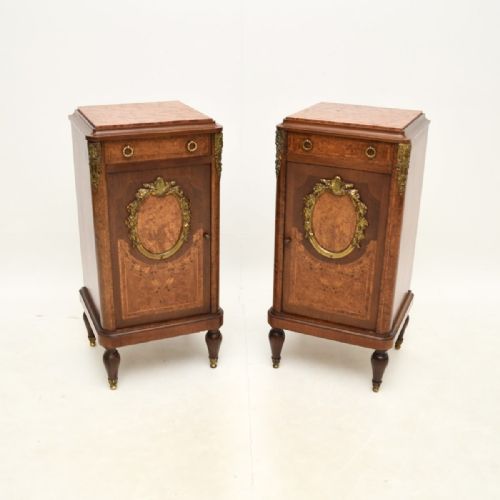
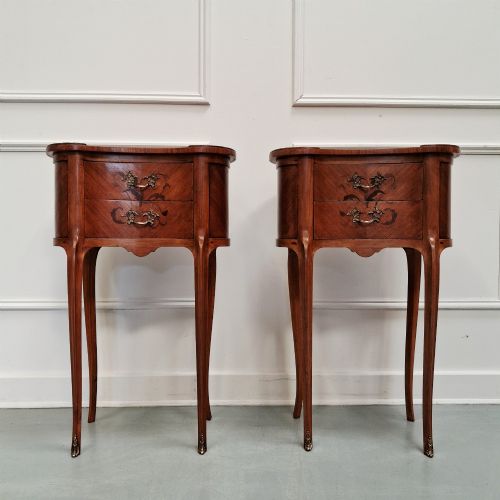
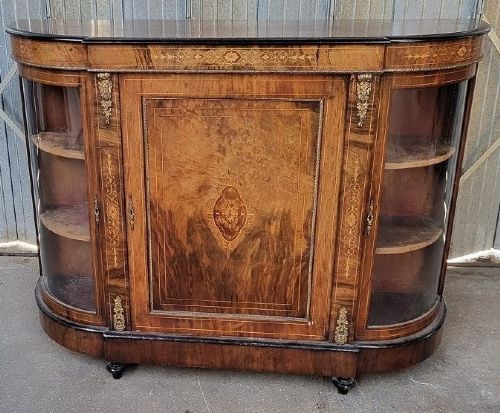
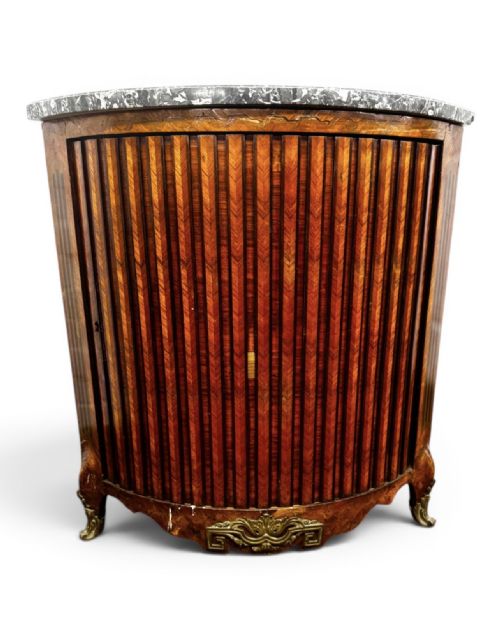
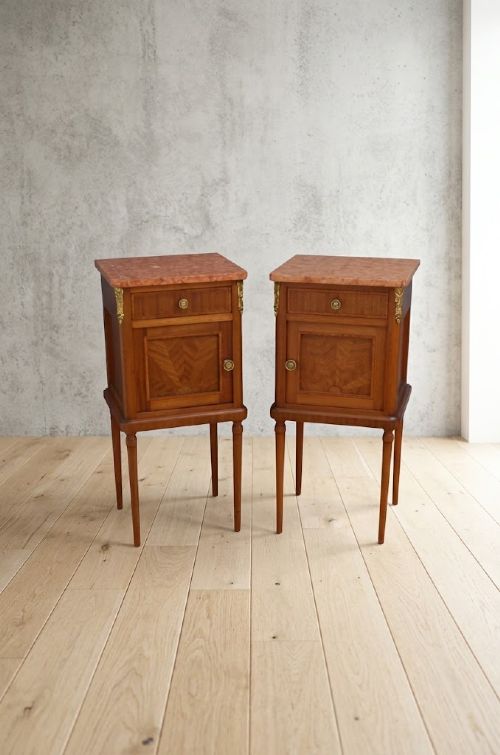
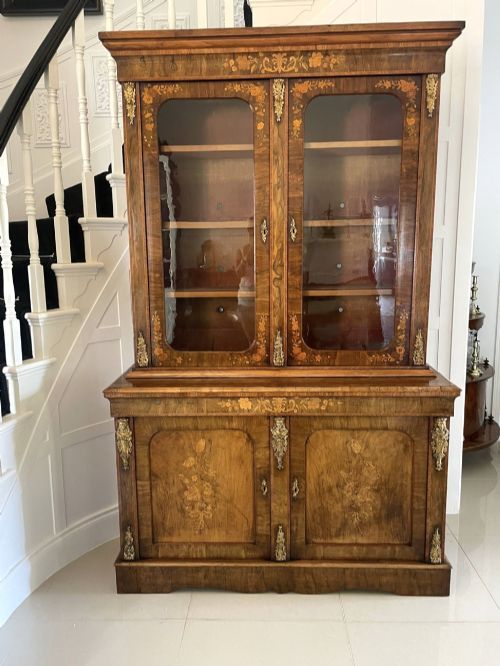
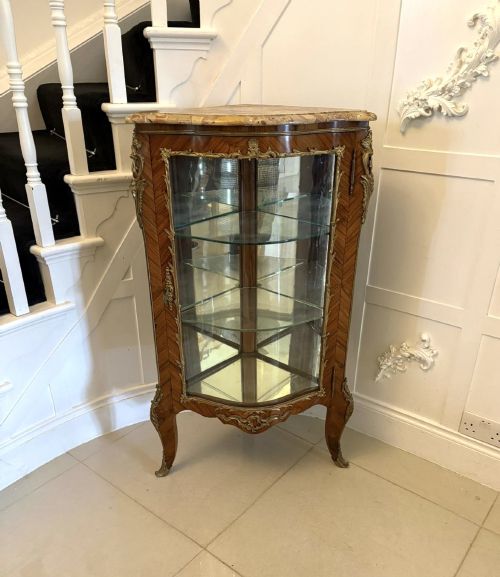
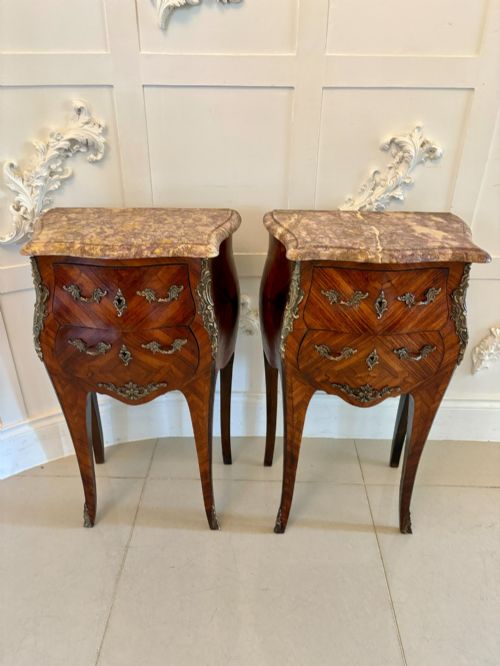
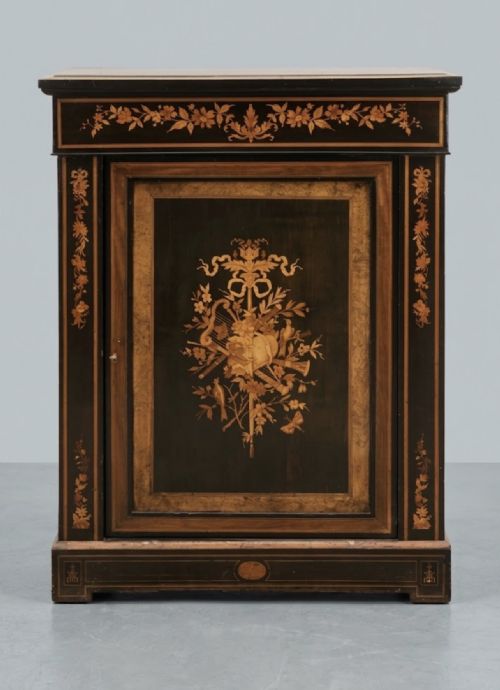
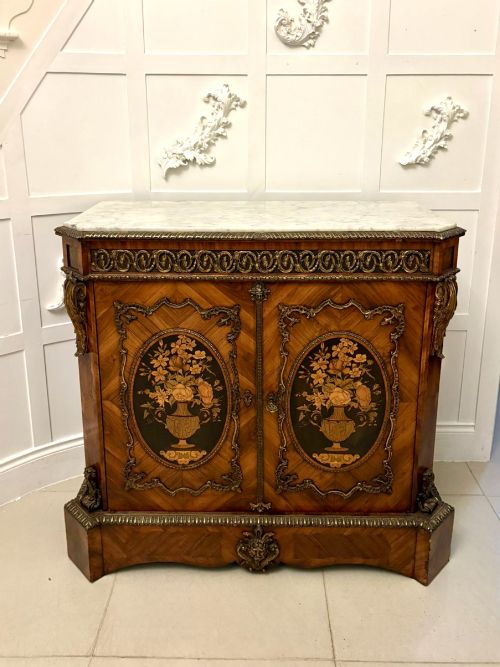
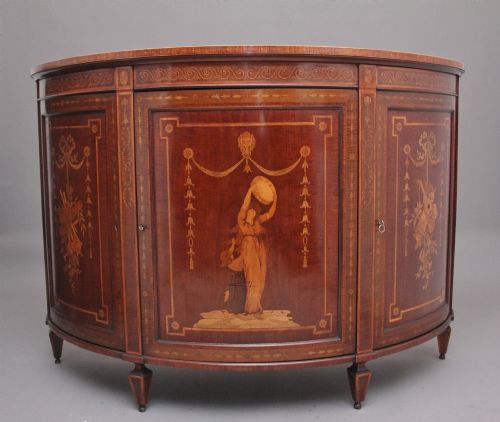
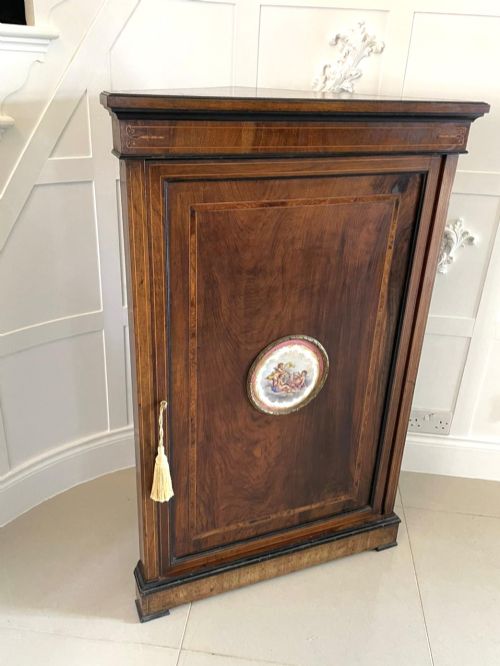
A french marquetry cupboard is a piece of case furniture combining patterned wood veneers with storage, appearing in forms from small bedside tables to tall display cabinets and commodes. The pieces span the nineteenth and early twentieth centuries, drawing heavily on Louis XV and Louis XVI revival styles alongside provincial designs.
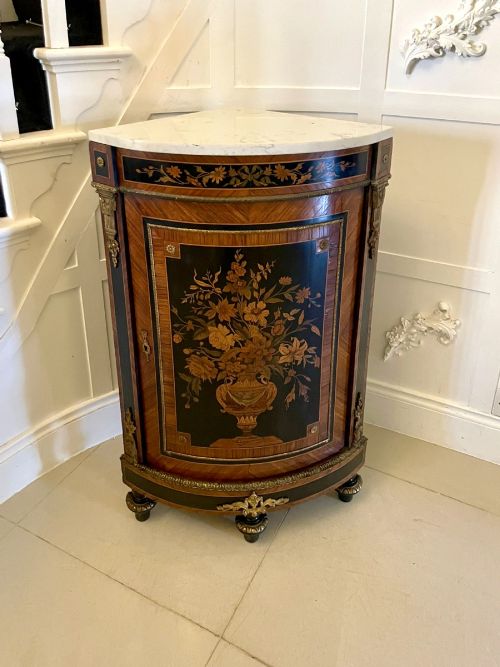
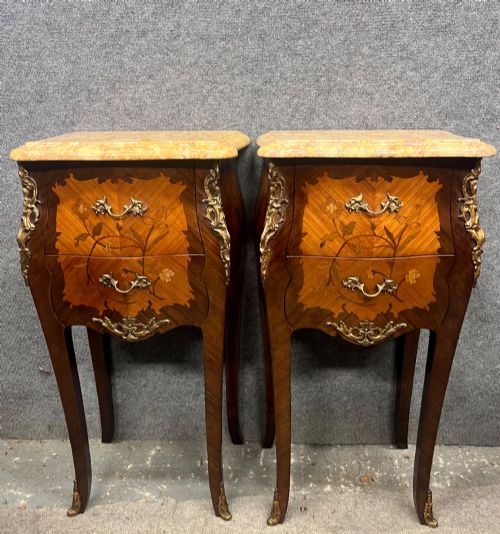
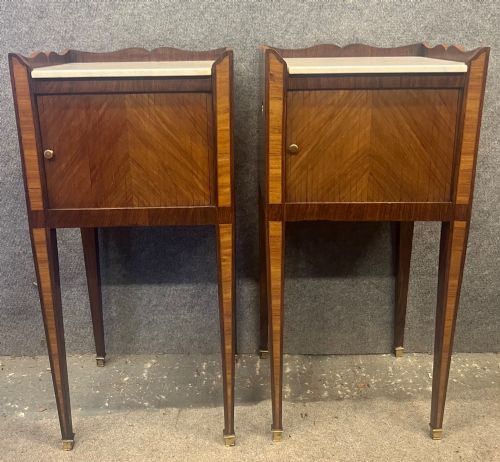
Buyers will find side cabinets, corner units, and pairs of bedside chests frequently represented in walnut, kingwood, and mahogany. These items served both utilitarian storage roles and decorative display functions within period drawing rooms and bedrooms.
How They Were Made
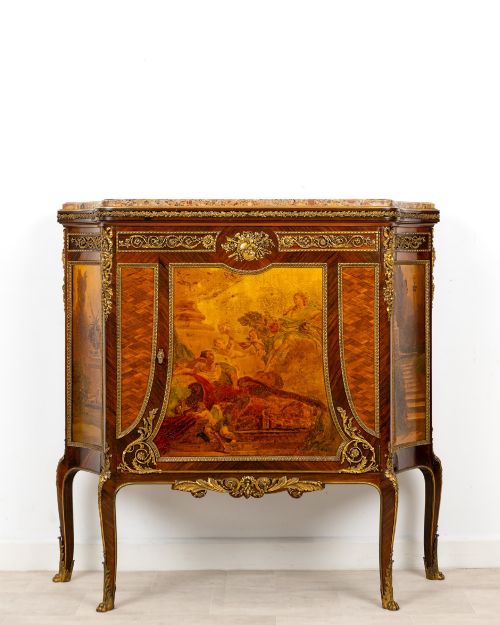
Cabinet makers utilised foundational timbers like walnut, mahogany, and oak, applying finely sliced veneers of kingwood, tulipwood, and satinwood to create pictorial or geometric surface patterns. Boulle work pieces incorporate tortoiseshell and brass inlay, while others integrate painted vernis martin panels.
Surfaces were frequently finished with shaped marble tops and cast or gilt ormolu mounts, bronze elements, and brass details that framed the doors and corners.
French Marquetry Cupboard Retail Price Guide 2026
Typical asking prices for french marquetry cupboard among the pieces listed under this phrase on Sellingantiques today, from the lower quarter to the upper quarter. They describe what is for sale here now, not the wider market.
Listings feature walnut, mahogany, and kingwood timbers alongside marble tops and ormolu mounts across nineteenth and twentieth century pieces.
What Varies in Quality
The precision of the marquetry cutting and the choice of contrasting timbers dictate the visual depth of the facade. Finer examples display meticulous grain matching and intricate floral or pictorial compositions rather than repetitive geometric tiling.
The weight and finish of the ormolu mounts, alongside the selection of heavy marble slabs for the tops, distinguish standard production pieces from master workshop outputs.
Edward Holmes Baldock
The French Marquetry Cupboard Glossary
- Marquetry
- Decorative veneer work arranged in patterns or pictures on a wooden substrate. This technique uses different coloured woods to create complex visual designs across the cupboard doors and panels.
- Ormolu
- Gilt bronze mounts applied to furniture for decorative accent and edge protection. These cast metal fittings reflect revival design preferences.
- Boulle
- An inlay technique combining tortoiseshell and brass. This method creates contrasting metallic and dark tortoiseshell patterns across the ebonised wood surface.
- Vernis Martin
- A type of decorative lacquer finish developed in France. It imitates Asian lacquer work using layered varnishes often painted with pastoral scenes.
- Demi-lune
- A half-moon or semicircular shape in furniture design. Cabinets with this profile fit flat against walls while offering curved front facades.
French Marquetry Cupboard: Frequently Asked Questions
Where were these cupboards placed in period homes?
These pieces were typically positioned in principal reception rooms, salons, or grand bedrooms to display prized objects and store personal items.
Smaller formats such as bedside tables and corner cabinets served private chambers, utilising compact footprints to maximise floor space.
How do I care for a marble top?
Marble surfaces require gentle cleaning with a damp cloth and mild soap to avoid dulling the polished stone finish. Acidic liquids should be kept away from the surface to prevent permanent etching.
Waxing the wooden marquetry body separately helps preserve the underlying veneer without affecting the stone top.
What is the difference between marquetry and parquetry?
Marquetry involves cutting diverse veneers to form pictorial scenes, floral sprays, or elaborate scrollwork across the furniture panels. This technique relies on artistic composition and varied wood tones.
Parquetry uses geometric blocks of timber such as cubes, lozenges, or squares to create repeating, symmetrical patterns across the surface.
How can I tell a revival piece from an older original?
Revival items produced during the nineteenth and early twentieth centuries often employ machine-sawn veneer thickness and standardised cast mounts. Examining the interior construction timbers and secondary woods helps determine the exact manufacturing era.
Stylistic cues such as Louis XV or Louis XVI revival motifs point directly to nineteenth-century interpretations rather than eighteenth-century originals.