



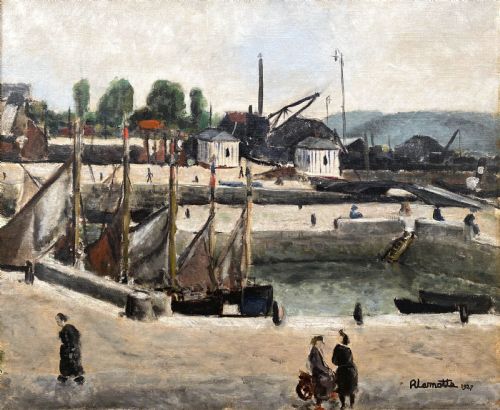

French Maritime Wall Art
French maritime wall art brings the colour and movement of the coast into a room through historic canvases and paper works.
French Maritime Wall Art
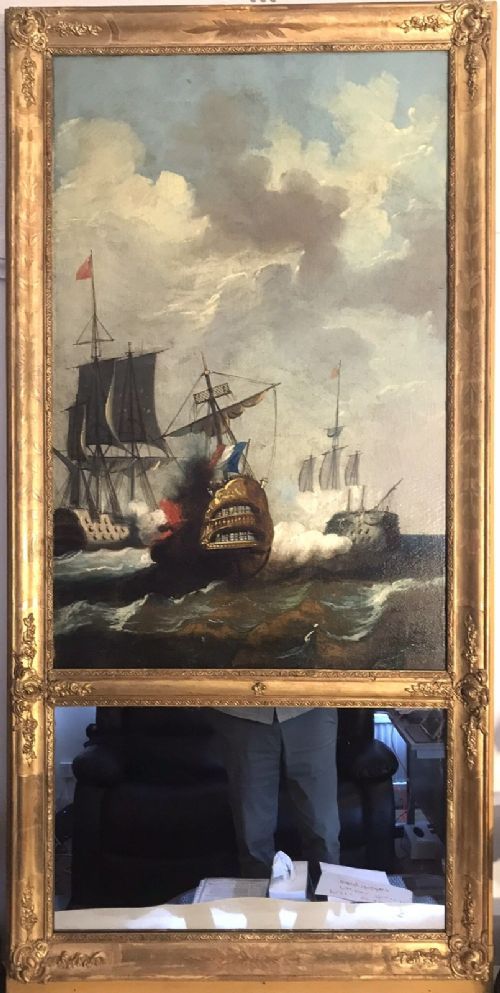
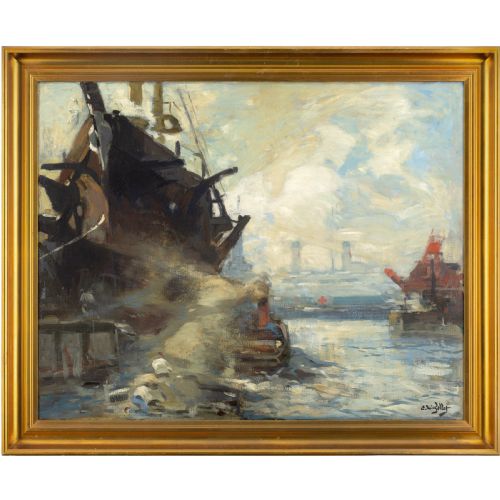
French maritime wall art covers paintings, posters, and mirrors that capture coastal scenes, harbours, and vessels from the nineteenth and twentieth centuries. These pieces range from Impressionist oil paintings of the Riviera to post-Impressionist views of Normandy ports and decorative trumeau mirrors inset with seascapes.
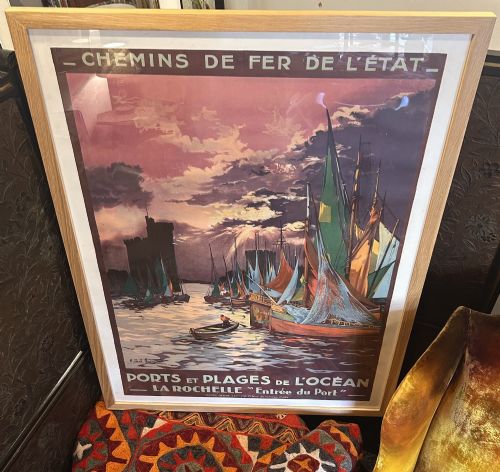
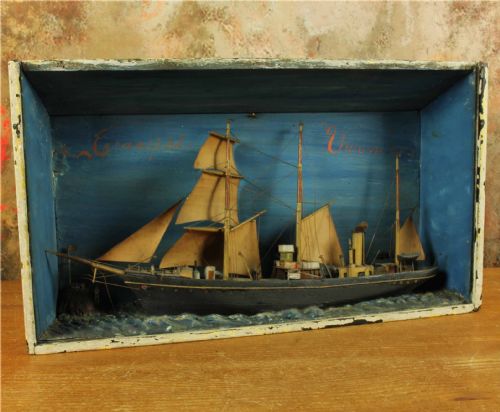
The versions most commonly met on this page are oil paintings on canvas executed in styles spanning Post-Impressionism, Realism, and maritime folk art. Buyers will also encounter framed gouache watercolours, railway posters, and shadow box dioramas depicting sailing yachts and warships.
Origins stretch from the Mediterranean coasts of Cannes and Marseille to the Atlantic shores of Brittany and the canals of the interior. Each format reflects the distinct light and maritime heritage of these regions, recorded by artists working across the decades.
Materials and construction methods
Canvas stretched over wooden frames serves as the primary support for oil paintings, accepting heavy impasto brushwork as well as thin, luminous glazes of oil paint. Artists also utilised paper for watercolours, gouache, and printed railway posters mounted behind glass.
Frames combine wood and gilt mouldings, occasionally incorporating carved trumeau panels or shadow box constructions that house handmade boat models. Pigments applied to canvas or paper capture atmospheric coastal light, using materials typical of nineteenth and twentieth century studio practices.
Listings feature canvases, oil paint, and gilt wood spanning periods from eighteen-fifty to nineteen-sixty.
Distinctions in quality and execution
Quality rests upon the handling of light and the surety of the brushwork, distinguishing confident coastal studies from routine decorative works. An artist's ability to render the movement of water and the atmosphere of a harbour determines the visual strength of a painting.
Materials and framing further separate the range, with period canvases in original gilt frames holding greater integrity than later replacements. The distinction lies in the fidelity of the execution and the preservation of the surface over time.
Eugène-Louis Gillot·Paul Bret·Elisabeth Bardon·Paul Delvaux·Louis Suire·Jean-Baptiste Olive·William Lee Hankey·Edward Henry Holder·Charles Euphrasie Kuwasseg·Henri Ottman·Henri Cadiou
The French Maritime Wall Art Glossary
- Trumeau mirror
- A decorative wall mirror featuring an oil painting set into the upper wooden panel above the glass plate. These architectural fittings originated in eighteenth century French interiors.
- Impasto
- Paint applied thickly to a canvas so that the brush or palette knife marks stand proud of the surface. This technique creates a textured relief that catches light.
- Gouache
- An opaque water-based paint mixed with a white pigment to create a solid, matte finish. It allows for vibrant colour application on paper supports.
- Maritime folk art
- Self-taught or unpretentious craft objects and paintings celebrating ships, sailors, and the sea. These pieces often carry personal or sentimental resonance.
- Post-Impressionism
- An art movement extending Impressionism while rejecting its limitations, favouring bolder colours and expressive forms. Practitioners focused on symbolic content and structural clarity.
French Maritime Wall Art: Frequently Asked Questions
What periods do these artworks cover?
The pieces span from the middle of the nineteenth century through the twentieth century, reflecting shifts in artistic style from Realism to Post-Impressionism.
Dates align with active periods of French painting and poster design, capturing coastal scenes across successive decades.
How do I hang a heavy oil painting?
Secure the painting using appropriate wall anchors matched to the weight of the wooden frame and canvas support.
Ensure the hanging wire or brackets engage firmly with wall studs to distribute the load safely.
Where were these coastal scenes painted?
Locations include Mediterranean ports along the French Riviera, such as Cannes, Marseille, and Toulon.
Other works record the northern shores of Normandy and Brittany, alongside inland French canals.
How do I identify a trumeau mirror?
A trumeau combines a vertical wall mirror with an integrated decorative painting panel positioned directly above the glass.
The entire assembly is typically framed in carved wood, designed to fit specific architectural wall spaces.