


French Marble Pedestal Table
A french marble pedestal table brings architectural stone and warm timber together in a compact form that suits a hallway or drawing room.
French Marble Pedestal Table
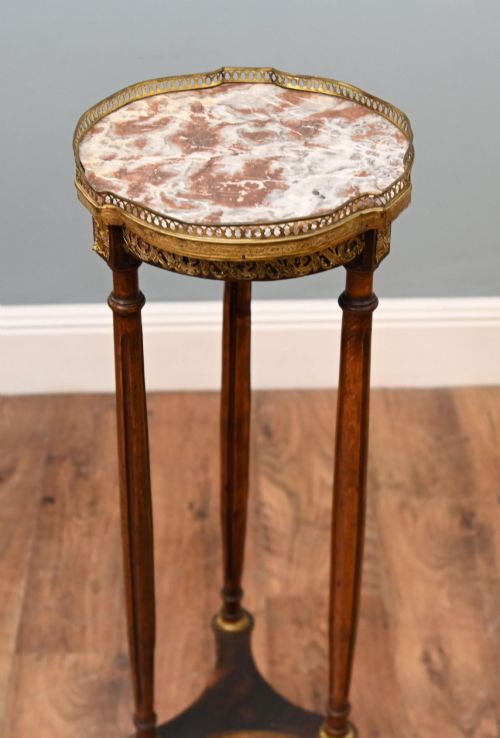
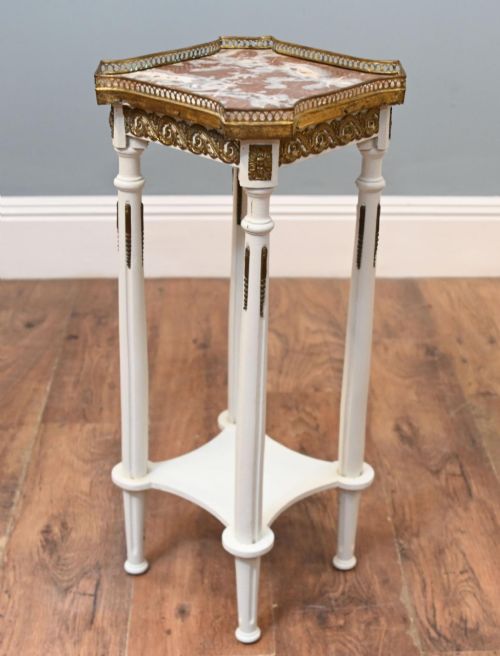
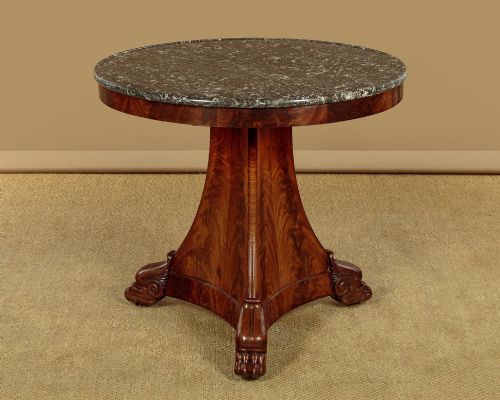
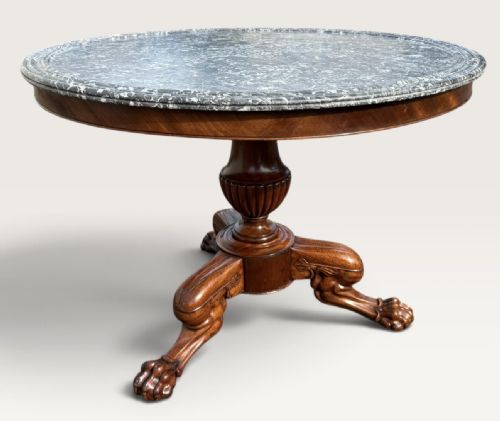
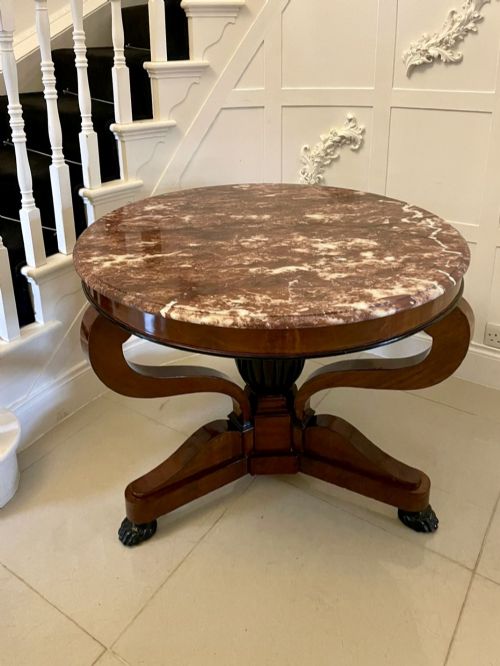
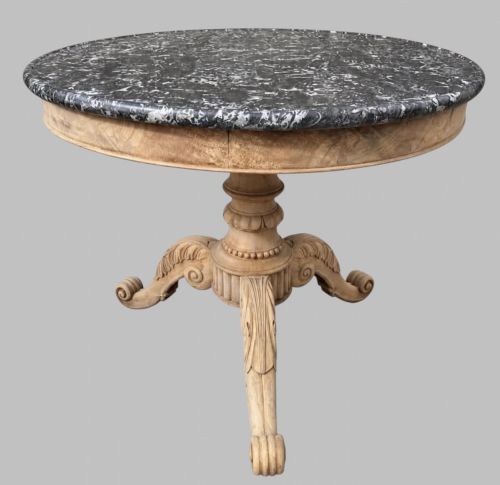
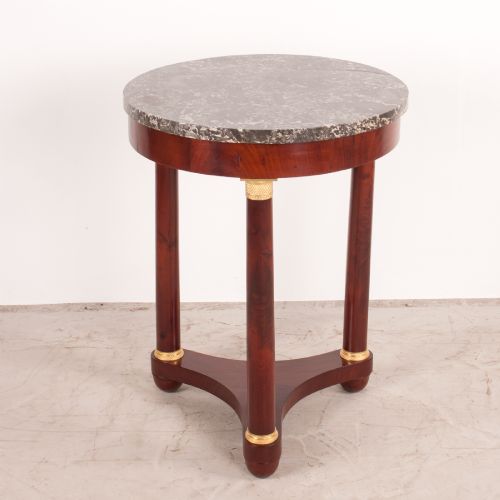
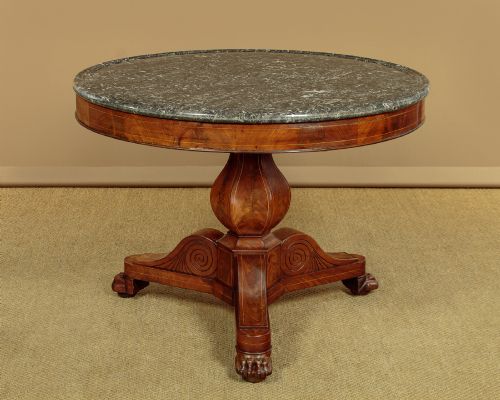
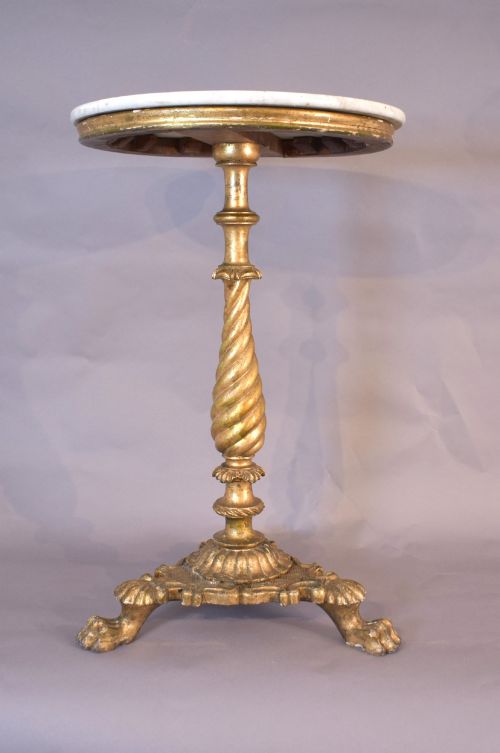
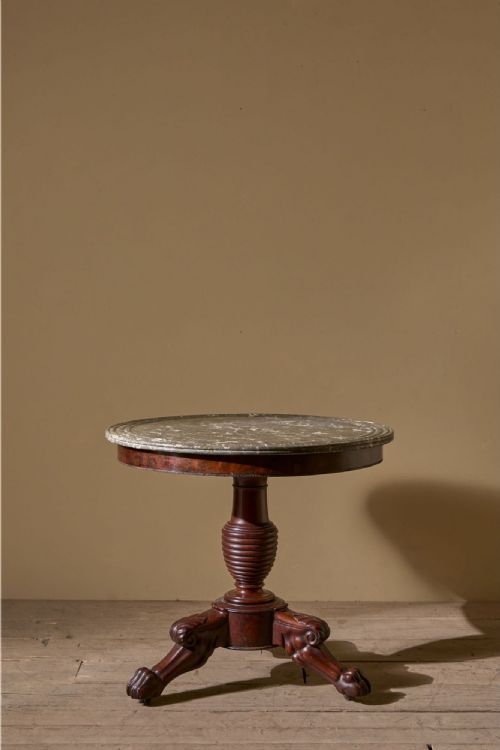
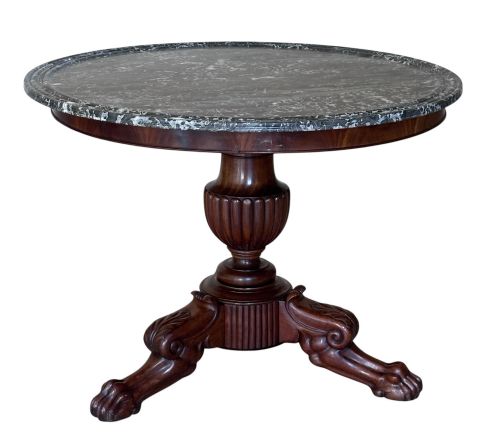
A french marble pedestal table typically takes the form of a round gueridon supported by a central pillar, standing on a tripod base or a circular plinth. These pieces function as centre tables, lamp tables, or occasional stands, designed to occupy the middle of a room or sit quietly beside seating.
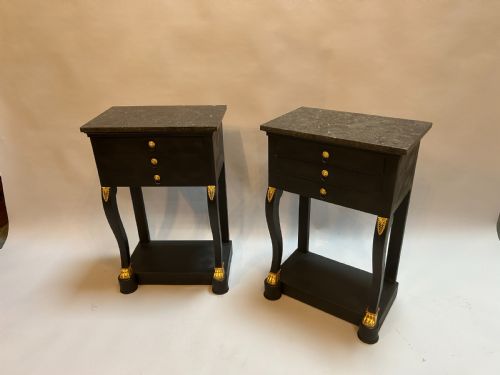
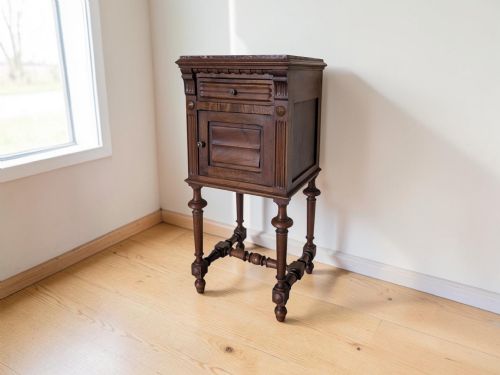
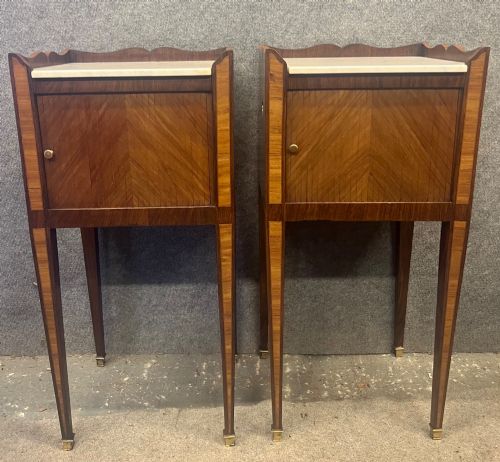
The materials span mahogany, walnut, burr elm, and fruitwood, often paired with inset white, grey, or rouge marble slabs. Examples emerge from various periods including the nineteenth century, alongside later iterations reflecting Louis Philippe, Empire, and Louis XVI styles.
The selection ranges from tall pedestal stands to low cafe tables featuring cast iron or giltwood frames. Buyers encounter both restrained mahogany designs and ornamental pieces embellished with ormolu mounts, brass details, and carved woodwork.
Quality and execution
The distinction between tiers rests upon the selection of timber veneers, such as figured mahogany or burr fruitwood, and the crispness of the carving on the central pillar and feet. Superior examples display tightly matched wood grains and substantial marble tops with well-defined veining rather than plain or uniform stone.
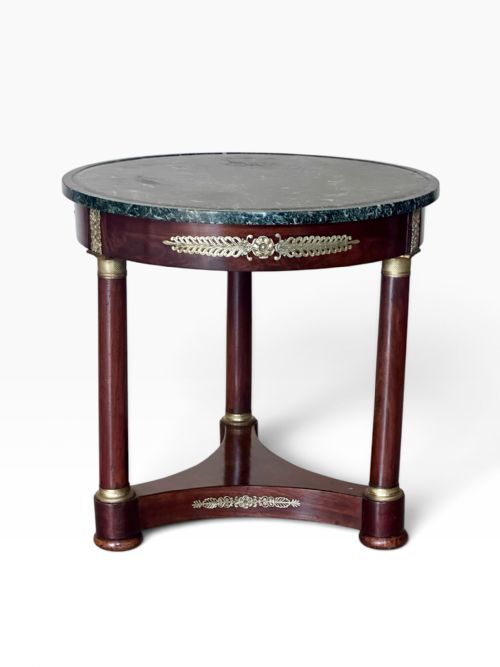
Metal ornamentation separates standard production from finer workshop output, where cast ormolu mounts and chiselled brass details show hand-chased depth and clean fitting. The stability of the central pedestal joint and the accurate turning of the timber column dictate the structural integrity of the piece.
French Marble Pedestal Table Retail Price Guide 2026
Typical asking prices for french marble pedestal table among the pieces listed under this phrase on Sellingantiques today, from the lower quarter to the upper quarter. They describe what is for sale here now, not the wider market.
Listings for a french marble pedestal table feature timber frames in mahogany, walnut, and burr elm alongside cast iron and giltwood.
The French Marble Pedestal Table Glossary
- Guéridon
- A small round table supported by a central pillar or columns, originating in seventeenth-century France and remaining popular throughout the nineteenth century as a centre or occasional table.
- Ormolu
- Gilded bronze used for decorative mounts and accents on furniture, frequently found on French Empire and neoclassical tables to highlight structural lines.
- Tripod base
- A three-legged support system common on pedestal tables, providing stable contact with the floor while allowing clearance around the central column.
- Veneer
- A thin layer of figured wood, such as mahogany or walnut, applied over a secondary timber carcase to create decorative patterned surfaces.
French Marble Pedestal Table: Frequently Asked Questions
Where should a pedestal table go?
These pieces fit well in the centre of a room to hold a lamp or arrangement of books, or positioned beside a sofa as an occasional surface.
Their compact footprint makes them suitable for smaller hallways, landings, or dressing rooms where floor space is limited.
How do I clean marble tops?
Wipe the surface with a soft, damp cloth using mild, neutral soap and dry it thoroughly with a lint-free towel to prevent water spots.
Avoid acidic cleaners, vinegar, or citrus solutions, which etch and dull polished stone over time.
Are these tables sturdy enough for daily use?
The central pillar and tripod base distribute weight effectively, making them stable for holding lamps, decorative objects, and cups.
Care should be taken when moving them across uneven floors to avoid straining the joints where the column meets the base.
How do I identify the period?
Stylistic clues such as restrained mahogany veneers indicate a mid-nineteenth-century Louis Philippe origin, while heavy ormolu mounts point toward the French Empire style.
Construction methods, timber choices, and edge profiles on the marble slabs help narrow the date of manufacture.