



French Mantelpiece Garniture
These French mantelpiece garniture sets bring matched elegance to a chimney breast, pairing a central timepiece with matching urns or candelabra.
French Mantelpiece Garniture
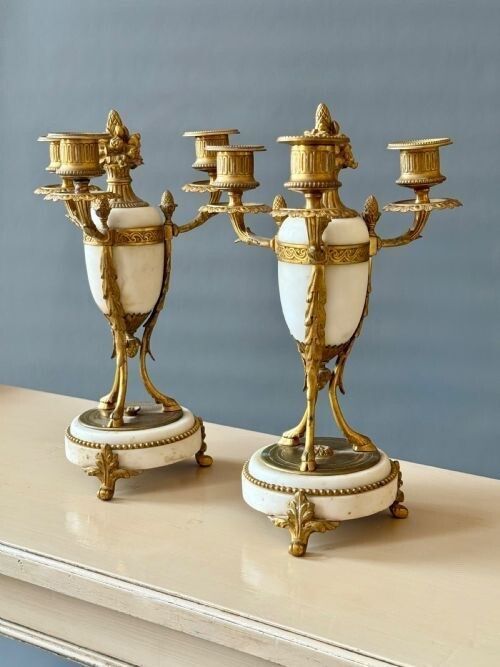
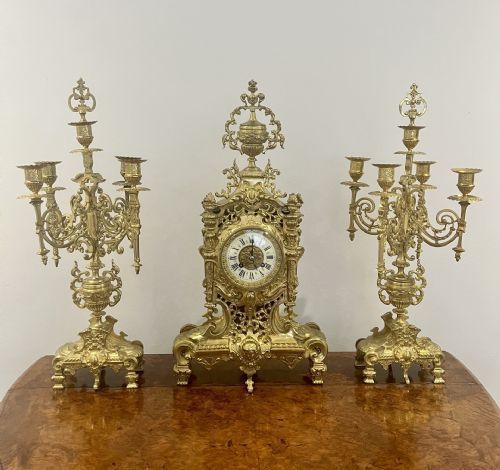
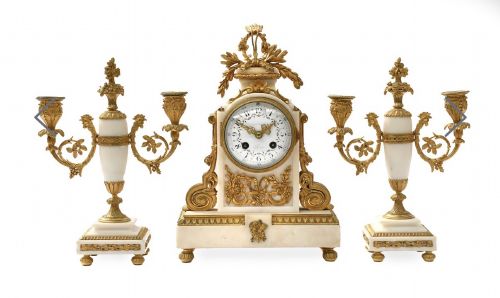
When you search for a french mantelpiece garniture, you are looking at matched arrangements designed to sit together on a fireplace. The central clock is flanked by matching companion pieces such as urns, cassolettes or candelabra.
Most examples encountered here date from the nineteenth century, spanning periods from the 1850s through to 1900, alongside occasional later Art Deco designs. These sets originate from French workshops and incorporate classic styles including Louis XVI, Empire and Rococo Revival.
Sets frequently comprise three distinct components, uniting timekeeping with decorative symmetry. The supporting vases and candelabra repeat the motifs, materials and feet of the central clock to create a unified display.
How they were made
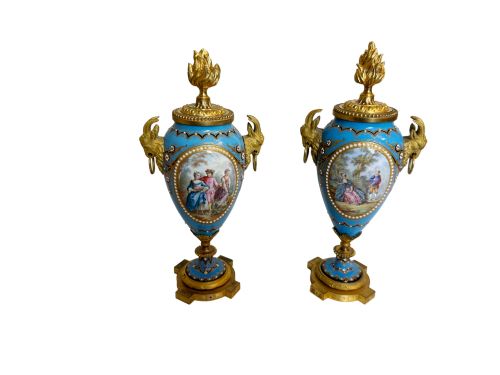
Maker's hands combined cast metals with polished stone, uniting gilt bronze and ormolu mounts with white, red or green marble and onyx bases. Porcelain components, notably Sevres style panels and enamelled details, add colour and painted scenes.
Foundry work shaped the bronze and brass into classical urn figures, cherubs and scrollwork feet, while stone was turned and polished to form plinths and bodies. Gilding and enamel work completed the decorative surface before assembly with mechanical clock movements.
What varies in quality
The standard of a french mantelpiece garniture rests upon the crispness of the metal cast and the depth of the gilding. Finer sets display sharply chiselled ormolu details and substantial marble or onyx bases with balanced proportions.
Hand-painted porcelain panels and intricate enamel dials distinguish superior examples from simpler brass and glass configurations. The harmony between the central clock and its flanking vases dictates the visual impact of the complete ensemble.
Finnigan Manchester·Meissen
The French Mantelpiece Garniture Glossary
- Garniture
- A set of matched ornamental objects designed to be displayed together on a mantelpiece or sideboard. It typically consists of a central clock accompanied by two matching vases or candelabra.
- Cassolette
- A decorative vase with a reversible lid that can function either as an urn or a candle holder. These pieces form the flanking elements in many nineteenth-century sets.
- Ormolu
- Finely ground high-carat gold applied to a bronze base using mercury amalgamation or modern electroplating. This technique gives metallic mounts a warm, enduring golden finish.
- Cloisonne
- An ancient technique where enamel paste is laid within compartments formed by soldered wire on a metal body. It appears on clock dials and decorative urns.
French Mantelpiece Garniture: Frequently Asked Questions
What is a French garniture set?
A French garniture set is a matched group of mantel ornaments consisting of a central clock and two matching side pieces, such as urns or candelabra.
These sets were designed to create a symmetrical, decorative display upon a fireplace mantel.
How were garniture clocks used?
They served both as functional timekeepers and as ornamental centrepieces for grand reception rooms and parlours.
The flanking vases or candelabra balanced the visual weight of the clock on the mantel shelf.
Are the side pieces always clocks?
No, only the central object contains a clock movement. The flanking pieces are typically decorative urns, cassolettes, or candelabra designed to match the central clock's materials and motifs.