


French Mahogany Sideboard
A French mahogany sideboard brings substantial weight and rich grain to a dining room, combining practical storage with classic continental styling.
French Mahogany Sideboard
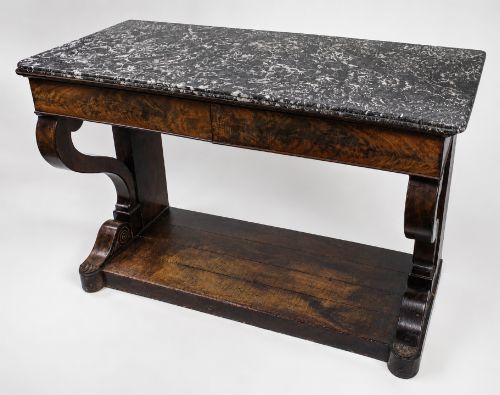
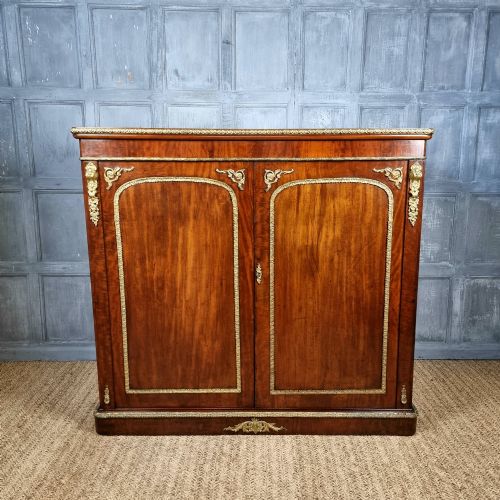
A French mahogany sideboard encompasses related forms such as chiffoniers, commodes, and side cabinets originating predominantly in the nineteenth century. These pieces serve primarily to store tableware or display decorative objects while anchoring the room with dark, polished timber.
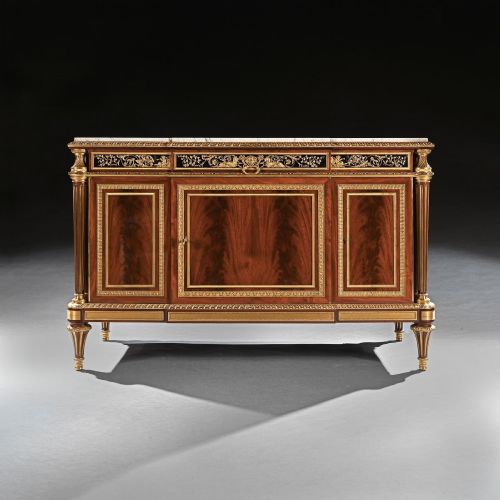
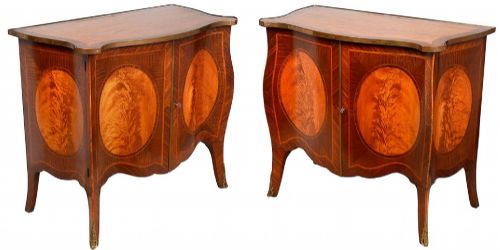
Buyers encountering this selection will frequently meet nineteenth century examples styled after the Louis Philippe, Louis XVI, and French Empire periods. These variations range from austere architectural cabinets to serpentine commodes adorned with marble surfaces.
Materials and Construction
Cabinet makers utilised solid mahogany and flame mahogany veneers over secondary timbers, often pairing the dark timber with contrasting satinwood or walnut inlay. Tops were routinely fitted with heavy slabs of marble in white or coloured varieties.
Metal mounts in ormolu and brass provide structural accents and decorative borders around drawers and doors. Glass panels and parquetry patterns also appear on specific cabinet doors and commode fronts.
The archive includes specialised pieces such as brass and mahogany sideboard wine racks alongside standard commodes.
Evaluating Execution and Detail
Quality rests in the precision of the cabinet work, from the depth of the mahogany grain to the crispness of the gilt bronze mounts. Pieces executed after known makers demonstrate superior proportions and more intricate marquetry.
The integration of heavy marble tops and the fidelity of revival styles, such as Louis XVI or French Empire, separate standard production from exceptional examples. Finer pieces maintain crisp parquetry and well-cast ormolu hardware.
Henry Dasson·Weisweiler·Gillows·Jean-Henri Riesener
The French Mahogany Sideboard Glossary
- Ormolu
- Gilded bronze mounts applied to furniture for decorative effect. This technique was widely utilised in French cabinet making during the nineteenth century.
- Chiffonier
- A tall sideboard or cabinet featuring doors and drawers for storage. It typically includes a marble top and dates from the nineteenth century.
- Marquetry
- Inlaid wood designs creating pictorial or geometric patterns on furniture surfaces. Craftsmen used various timbers like satinwood and walnut to achieve contrast.
- Commode
- A low chest of drawers or cabinet with a flat top, often finished in marble. The form evolved through various French royal periods.
- Parquetry
- Geometric wood flooring or furniture veneer patterns arranged in repetitive motifs. It provides texture to mahogany commodes and cabinets.
French Mahogany Sideboard: Frequently Asked Questions
How do I identify a Louis XVI style piece?
Louis XVI style furniture is characterised by straighter lines, classical symmetry, and restrained ornamentation compared to earlier rococo forms. Look for fluted legs and neoclassical bronze mounts.
Mahogany commodes and side cabinets from this revival period often feature parquetry and marble tops that reflect eighteenth-century Parisian aesthetics.
What is the difference between a chiffonier and a commode?
A chiffonier is generally taller, often incorporating an upper section or enclosed shelving behind doors. It functions as a compact sideboard.
A commode is lower and wider, traditionally built with drawers or doors for general storage beneath a stone or marble surface.
How should I care for a marble top?
Clean marble surfaces with a damp cloth and mild soap, avoiding acidic cleaners that can etch the stone. Coasters should be used to prevent water rings and staining.
Polishing the mahogany frame separately with appropriate furniture wax helps maintain the lustre of the timber without damaging the stone.
Where were these sideboards used historically?
These pieces sat in formal dining rooms and reception rooms of grand houses to store porcelain, silver, and linens. The upper surface served to display serving platters or decorative bronzes.
In contemporary settings, they function effectively in dining spaces or hallways for similar storage and display purposes.