



French Mahogany Bed Frame
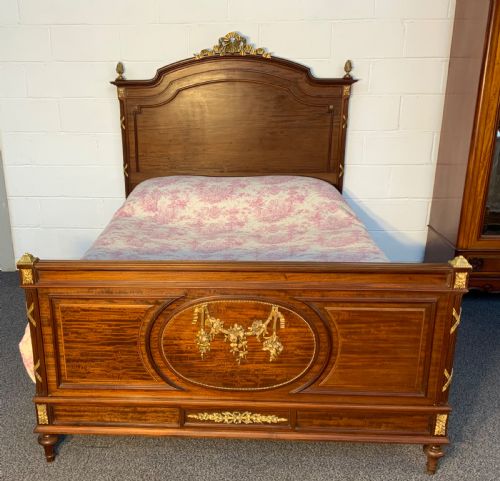
A french mahogany bed frame brings warmth and classic continental proportion to a bedroom, combining rich dark timbers with classical mounts.
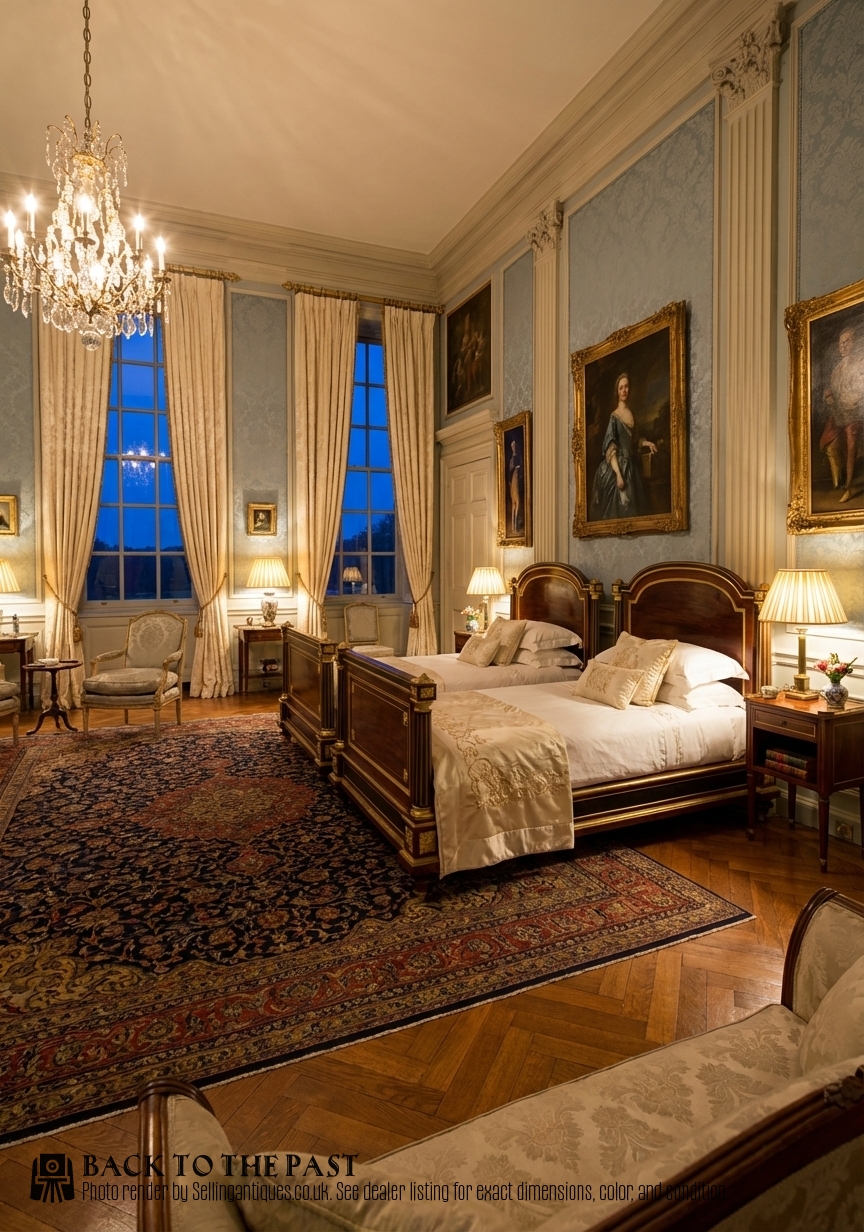
French Mahogany Bed Frame
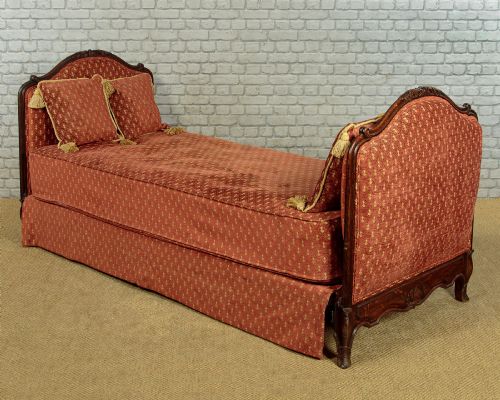
A french mahogany bed frame appears in various sizes from single beds up to king and super king dimensions, often shaped as daybeds or standard bedframes. The listings show a strong presence of the French Empire, Louis XVI, and Art Nouveau styles.
Makers utilised rich timbers including plum pudding mahogany alongside fruitwood and burr walnut, creating substantial centrepieces for period bedrooms. These frames reflect continental design traditions spanning the nineteenth and early twentieth centuries.
Buyers encounter single examples as well as matched pairs, incorporating headboards, footboards, and side rails designed for modern mattress proportions while retaining antique character.
Gradations in Quality
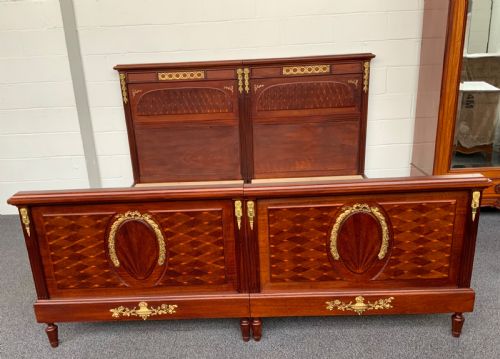
The refinement of the ormolu and brass detailing distinguishes superior examples, where crisp chasing and secure mounting show greater skill than plain cast metal.
The choice of mahogany veneer, such as richly figured plum pudding grain paired with precise fruitwood parquetry, marks out pieces made by skilled workshops.
Structural integrity relies on the original timber joints and the depth of hand-carved mouldings around the headboard and footboard panels.
French Mahogany Bed Frame Retail Price Guide 2026
Typical asking prices for french mahogany bed frame among the pieces listed under this phrase on Sellingantiques today, from the lower quarter to the upper quarter. They describe what is for sale here now, not the wider market.
Several listings note matching bedside cabinets, ensuring your midnight glass of water has an aristocratic neighbour.
Louis Majorelle
The French Mahogany Bed Frame Glossary
- Ormolu
- Gilded bronze applied as decorative mounts to furniture. This technique creates bright metallic highlights against dark mahogany timber.
- Parquetry
- Geometric wood inlay forming patterned surfaces on furniture. Artisans arrange contrasting timbers like fruitwood to achieve these designs.
- Plum Pudding Mahogany
- A figured mahogany variety displaying mottled circular markings resembling fruitcake. Cabinetmakers prized this timber for high-status furniture.
- Empire Style
- A neoclassical design movement favouring symmetrical classical motifs and rich mounts. This aesthetic dominated French decorative arts in the nineteenth century.
French Mahogany Bed Frame: Frequently Asked Questions
Will a standard mattress fit a french mahogany bed frame?
Many antique french mahogany bed frames accommodate modern mattress sizes, though exact dimensions can vary from standard British or metric lengths. Buyers should check the internal rail measurements before purchasing a new mattress.
Some larger frames listed as king or super king size offer generous sleeping areas, but historical sizing conventions differ slightly from current manufacturing standards.
How do I care for the mahogany and ormolu?
Regular dusting with a soft, dry cloth preserves the polished mahogany surface and prevents moisture buildup on the timber. Avoid commercial silicone sprays that can damage antique French finishes.
Brass and ormolu mounts require gentle cleaning without harsh metal polishes to protect the surrounding wood and the original gilding.
How do I distinguish Louis XVI style from Empire style?
Louis XVI style pieces feature restrained classical proportions, straight fluted legs, and subtle carved ribbons or floral motifs. They present a lighter, more geometric elegance compared to later nineteenth-century designs.
Empire style frames are heavier and more monumental, incorporating bold architectural columns, rich ormolu mounts, and darker mahogany veneers with martial or classical symbols.
Can these beds be easily dismantled for transport?
Most antique french mahogany bed frames utilise standard iron bed bolts connecting the headboard, footboard, and side rails. This construction allows the frame to be taken apart for moving.
Care is required during assembly to protect the timber tenons and ensure the side rails square up correctly with the head and foot panels.