

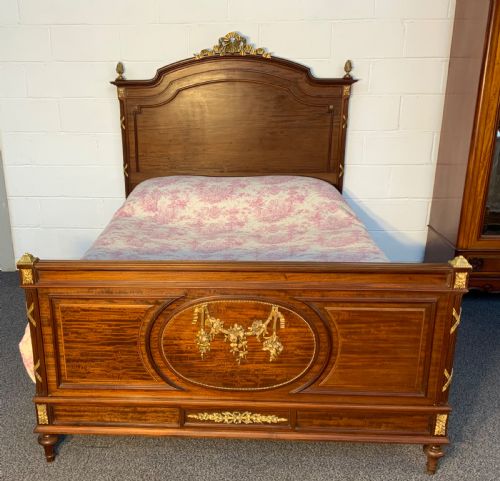


Neoclassical Mahogany Beds
Neoclassical mahogany beds bring structural symmetry and classical hardware to the bedroom, combining figured timbers with gilt bronze mounts.
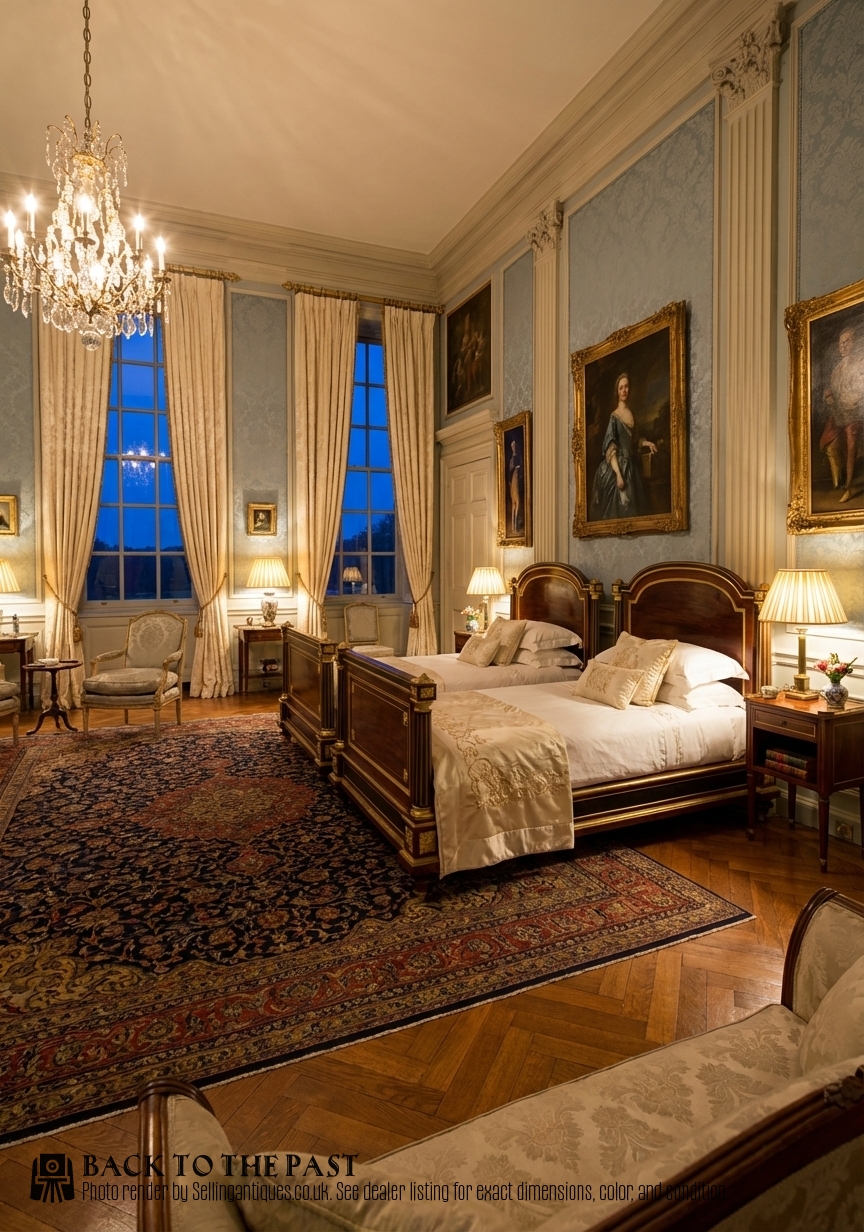
Neoclassical Mahogany Beds
Neoclassical mahogany beds combine architectural proportion with the dense grain of mahogany timber, often drawing on French Empire, Louis XVI, and Regency design vocabulary. Buyers searching for neoclassical mahogany beds will encounter tall headboards, rectilinear forms, and symmetrical details that echo classical antiquity.
The selection on this page spans the eighteenth, nineteenth, and early twentieth centuries, encompassing grand marriage beds alongside later interpretations in the Louis XVI style. Alongside full-sized bedframes, the inventory includes associated seating forms such as window seats and benches that share the same stylistic roots.
Construction and materials
Cabinetmakers utilised solid mahogany and rich veneers like plum pudding mahogany over supportive secondary woods, building substantial frames designed to anchor a room. Surface enrichment relied on precision-cast or gilt orrmolu and brass mounts, which trace classical motifs along headboards and footboards.
Upholstery fabrics and parquetry veneer frequently complement the timberwork, while select pieces incorporate marble elements on accompanying side furniture to complete the neoclassical scheme.
Neoclassical Mahogany Beds Retail Price Guide 2026
Typical asking prices for neoclassical mahogany beds among the pieces listed under this phrase on Sellingantiques today, from the lower quarter to the upper quarter. They describe what is for sale here now, not the wider market.
Listings feature mahogany, ormolu, and parquetry veneer across pieces dating from the eighteenth century to the early twentieth century.
Markers of quality
Quality rests upon the crispness of the timber carving and the depth of figure within the mahogany veneer, separating standard production from finer cabinet work. The weight and chasing of the ormolu or brass detailing further distinguish superior examples, as does the structural integrity of large bed frames built to support modern proportions.
The Neoclassical Mahogany Beds Glossary
- Ormolu
- Gilded bronze mounts applied to furniture. This technique adds metallic contrast to dark mahogany surfaces.
- Parquetry veneer
- Geometric patterns formed by fitted pieces of wood veneer. It creates decorative surface geometry on headboards and panels.
- Louis XVI style
- A French design aesthetic defined by straight lines and classical symmetry. It provides the architectural framework for many beds in this category.
Neoclassical Mahogany Beds: Frequently Asked Questions
What periods do these beds date from?
The pieces span from the late eighteenth century through the nineteenth century and into the early twentieth century. They include period examples as well as later revivals.
Craftsmanship traditions evolved across these decades while retaining classical proportions and decorative motifs derived from French and English design vocabulary.
Do these beds take standard modern mattresses?
Many antique frames require custom mattress sizes or subtle internal adjustments to accommodate contemporary dimensions. King and super king proportions appear frequently in the listings.
Buyers should verify internal rail measurements carefully before sourcing a mattress to ensure a proper fit within the wooden surrounds.
How do I care for mahogany bed frames?
Maintain the timber by dusting with a soft, dry cloth and avoiding direct sunlight or excessive heat sources that dry out veneer. Natural wax finishes protect the grain over time.
Keep brass and ormolu mounts free of abrasive cleaners to preserve their original metallic lustre.
What styles are included alongside the beds?
The selection encompasses French Empire, Regency, Adam, and Louis XVI styles alongside broader neoclassical designs. These share a common heritage rooted in classical antiquity.
Matching window seats and benches often accompany the larger bedframes to create a unified bedroom interior.