





French Lid Porcelain Urn
A french lid porcelain urn brings heavy 19th century decorative presence into a room, combining painted ceramic bodies with ornate gilt metal mounts.
French Lid Porcelain Urn
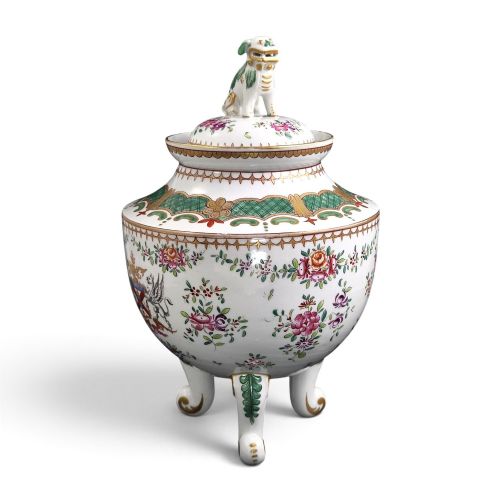
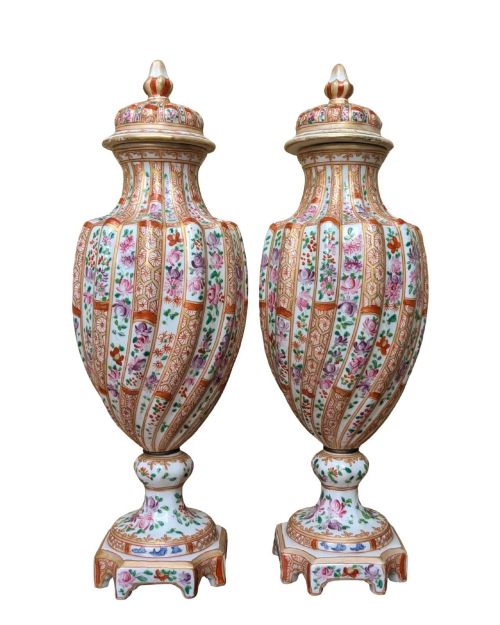
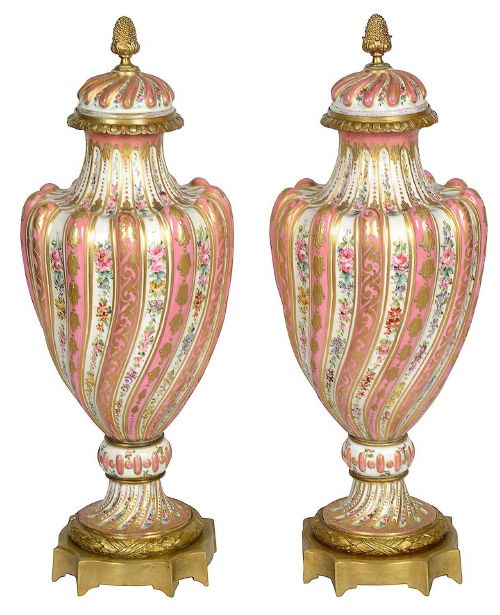
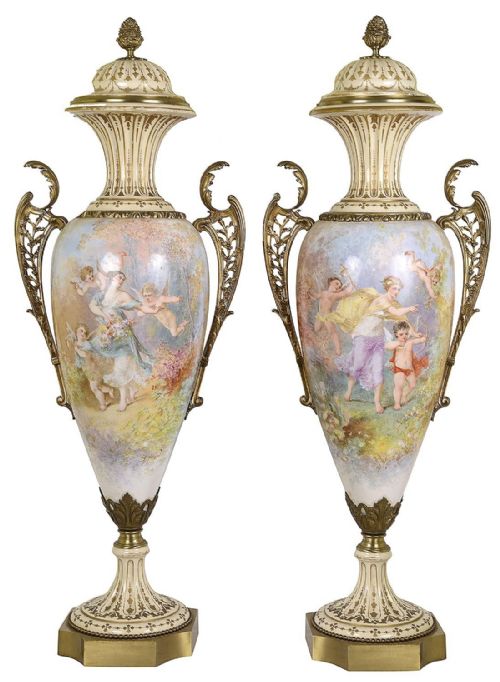
A french lid porcelain urn is typically encountered as a lidded vase or covered vessel dating from the 19th century, drawing heavily on French Rococo Revival, Empire, and Chinoiserie styles. These decorative pieces range from compact lidded dishes on stands to monumental floor-standing pairs created for display.
The ceramic bodies often emulate earlier production centres like Sèvres or Chinese export wares, frequently finished with hand-painted bird, floral, or armorial motifs. Many examples incorporate fitted lids that complete the symmetrical silhouette of the vase.
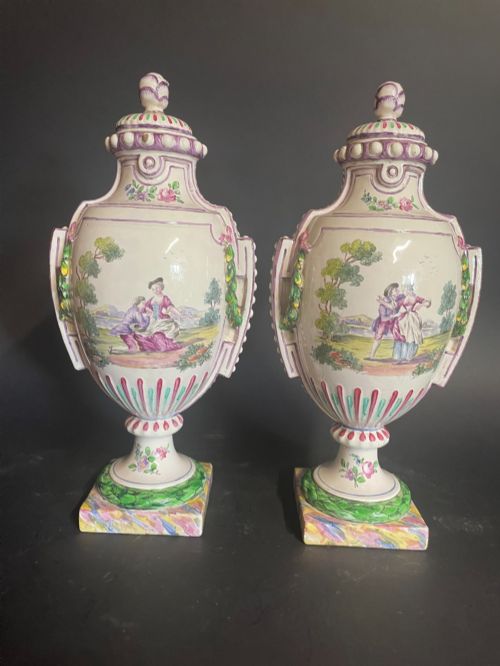
Makers such as Samson of Paris and factories in Limoges produced these covered vessels alongside factories making faience and tin-glazed earthenware. Buyers will frequently find pairs designed symmetrically for mantelpieces or side tables.
Materials and construction methods
The manufacture of these decorative vessels relies on fired porcelain or tin-glazed earthenware combined with cast metal mounts. Artisans shaped the ceramic bodies by hand or mould before applying coloured enamel glazes and detailed overglaze hand painting.
Ormolu, gilt bronze, gilt metal, and gold leaf provide the structural mounts, handles, and feet that secure the porcelain bodies and their removable lids. These metal elements were cast and chased separately before being fitted mechanically to the ceramic.
French Lid Porcelain Urn Retail Price Guide 2026
Typical asking prices for french lid porcelain urn among the pieces listed under this phrase on Sellingantiques today, from the lower quarter to the upper quarter. They describe what is for sale here now, not the wider market.
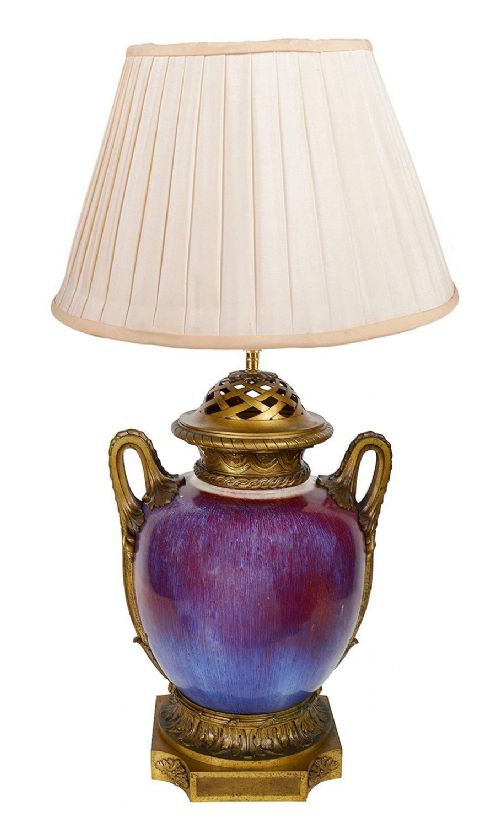
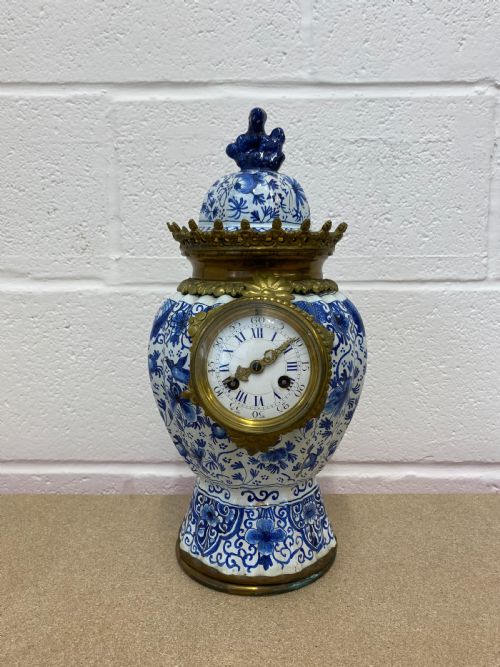
Several lidded vessels disguise their true identity by doubling as functional table lamps or desktop clocks.
Assessing quality in covered porcelain vessels
Quality reveals itself in the crispness of the chased ormolu mounts and the precision of the hand-painted enamels on the porcelain body. Superior pieces exhibit deeply detailed metalwork and finely rendered brushwork rather than flat, stencilled decoration.
The weight and stability of the assembled vessel, particularly on monumental pairs, indicate the robustness of the internal fixing and the thickness of the ceramic body. Pieces produced for exhibition or by major houses maintain cleaner firing results with minimal surface distortion.
Samson Paris·Limoges·Sceaux Faience
The French Lid Porcelain Urn Glossary
- Ormolu
- Gilded bronze used for decorative mounts on furniture and ceramics. This technique involves applying a gold amalgam to a bronze base before heating.
- Faience
- Tin-glazed earthenware produced across continental Europe. The opaque white glaze provides a smooth ground for painted decoration.
- Chinoiserie
- European artistic style reflecting Chinese aesthetic traditions. Artisans applied these decorative motifs to porcelain and pottery during the 19th century.
- Famille rose
- Palette of opaque enamel colours dominated by pink shades. This classification originates from Chinese ceramic decoration adopted by later European makers.
French Lid Porcelain Urn: Frequently Asked Questions
How do you clean gilt bronze mounts?
Gilt bronze and ormolu mounts require gentle dusting with a soft, dry brush to prevent the accumulation of dirt in recessed chased areas.
Moisture and commercial metal cleaners should be avoided because they can strip the delicate gold leaf or gilt surface.
Are these urns waterproof?
Most decorative covered urns and vases from the 19th century were created solely for visual display on furniture rather than practical use with water.
Thermal shock from water or heavy cleaning agents can damage aged ceramic bodies and internal adhesives.
What does Sèvres style mean?
The designation indicates that a piece follows the aesthetic, colour palettes, or decorative forms associated with the historic Sèvres porcelain factory.
Many 19th-century French workshops produced these revival pieces to capture the elegance of earlier royal court designs.