




French Landscape Drawing
These french landscape drawing examples capture rural vistas and urban scenes across centuries on paper.
French Landscape Drawing
A french landscape drawing captures scenes ranging from Provençal farmhouses to Parisian streets on supports like paper and card. The selection includes works executed during the nineteenth and twentieth centuries, spanning periods such as the Victorian era and the nineteen-fifties.
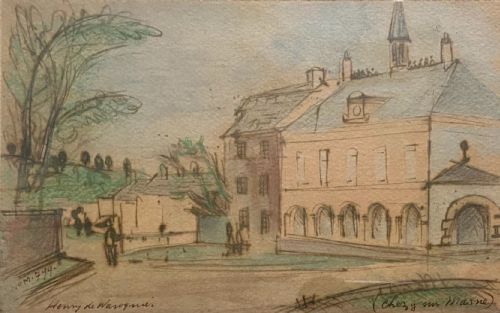
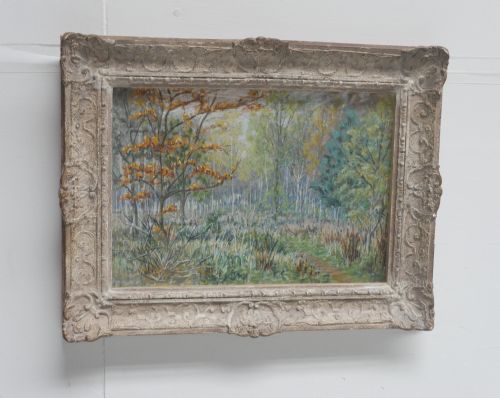
Makers record subjects including woodland scenes, river views, and architectural prints depicting pavilions and town halls. Compositions vary from Impressionist and Post-Impressionist interpretations to traditional depictions of farming life and coastal harbours.
How they were made
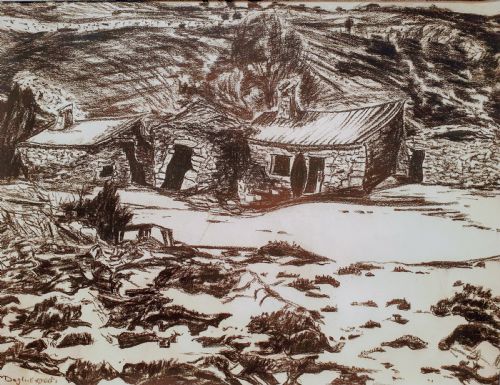
Artists utilise paper as the primary support, applying media such as ink, watercolour, pastel, charcoal, graphite, and coloured pencils. Mixed-media pieces combine several of these materials on a single sheet to build depth and texture within the composition.
Framed artworks often incorporate glass and wood to protect the delicate surfaces of works on paper from environmental damage. Draftsmen apply line and tone through careful handling of dry charcoal or fluid watercolour washes.
A mule and a squirrel share the stage with a woman artist in a folk scene.
What varies in quality
The sophistication of line work and the handling of atmospheric light separate accomplished examples from simpler sketches. Mastery over mediums such as pastel or two-coloured ink determines how convincingly an artist renders foliage, water, and sky.
The distinction of the hand behind the work elevates certain pieces, particularly those bearing the documented signatures of known artists from specific regional schools. Preservation of the paper and the integrity of the media also influence the standing of an individual piece.
Henry de Waroquier·Eduard Leon Cortes·Irene Lagut·Donald Wood·Yves Brayer·Fred Lawson·Henri Joseph Harpignies·Alexandre Pau de Saint Martin
The French Landscape Drawing Glossary
- Pastel
- A dry drawing medium consisting of powdered pigment and a binder, frequently utilised for soft atmospheric effects in landscapes. It allows artists to blend colours directly on the paper surface.
- Mixed-media
- An artwork combining two or more distinct materials, such as ink and watercolour used together on a single sheet. This approach exploits the qualities of different substances.
- Barbizon School
- A nineteenth-century French movement focused on realistic landscape painting and drawing inspired by nature. Artists associated with this group preferred working outdoors.
- Post-Impressionism
- A French art movement following Impressionism that extends its use of vivid colours while emphasising geometric forms and expressive brushwork. It shapes many twentieth-century works on paper.
- Charcoal
- A form of dry carbonised organic material used for making bold, dark marks and deep shadows on paper. It remains a primary medium for expressive landscape studies.
French Landscape Drawing: Frequently Asked Questions
What periods do these drawings cover?
The selection spans from the early nineteenth century through the Victorian period and into the mid-twentieth century, including pieces from the nineteen-twenties, thirties, forties, fifties, and sixties.
These dates reflect the active periods of the artists and the styles prevalent during those decades, capturing shifts in French art history.
Which materials appear most frequently?
Works commonly feature paper supports combined with ink, pastel, charcoal, graphite, and watercolour. Some examples incorporate mixed media or oil on board and canvas.
Framing often involves wood and glass to safeguard these delicate works on paper against light and moisture.
How do regional subjects differ?
Subjects range from Parisian street scenes and Rouen architectural prints to rural vistas in Provence and the South of France. Olive trees, farmhouses, and river views recur across the southern landscapes.
Northern locations often introduce winter conditions, harbours, and town halls, reflecting the diverse geography captured by the artists.
How are these artworks framed?
Many examples are presented behind glass within wooden frames suited to works on paper and architectural prints. This presentation protects the charcoal, pastel, and ink from physical wear.
Buyers should examine the framing to ensure the artwork remains stable and properly distanced from the glass surface.