

French Inlay Side Tables
French inlay side tables bring together walnut, kingwood and rosewood with intricate marquetry and parquetry, offering functional surfaces defined by continental revival styles.
French Inlay Side Tables
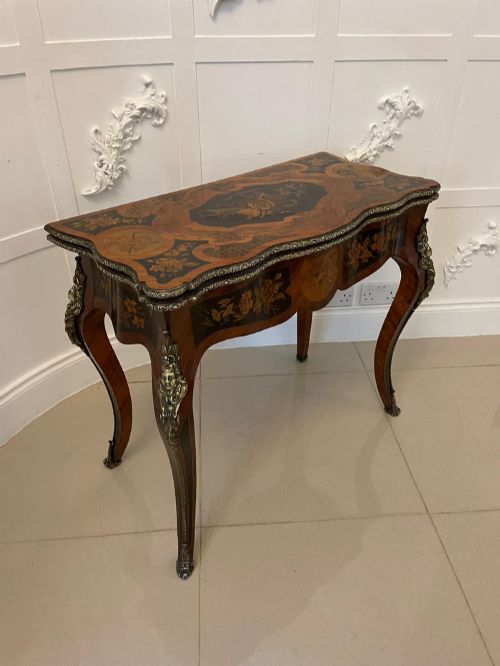
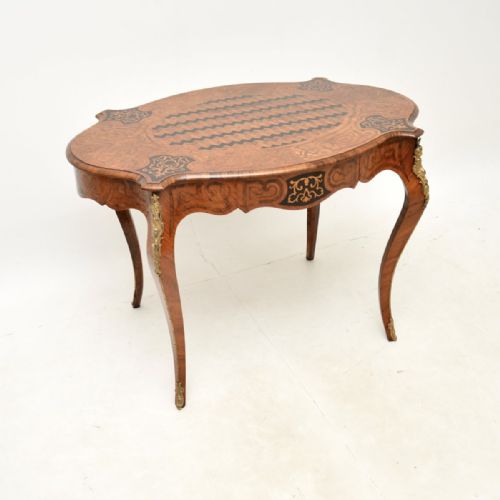
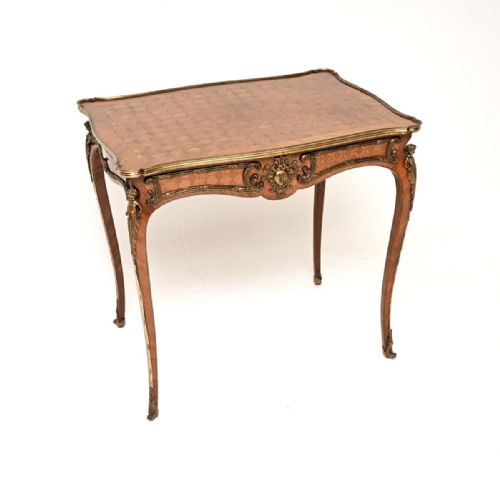
French inlay side tables encompass side tables, bedside tables, occasional tables and centre tables produced across the nineteenth and twentieth centuries. These pieces emerge in styles including Louis XV Revival, Louis XVI Revival and French Rococo, reflecting continental design influences popular in Britain and France.
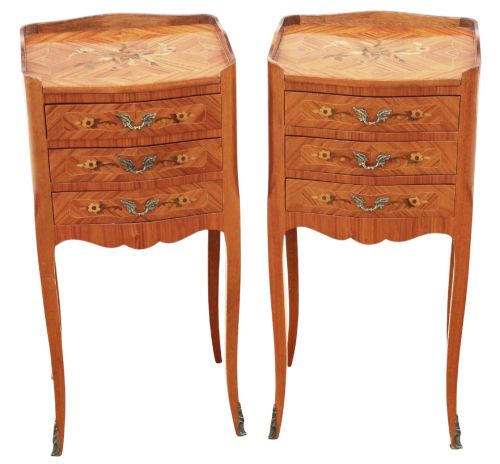
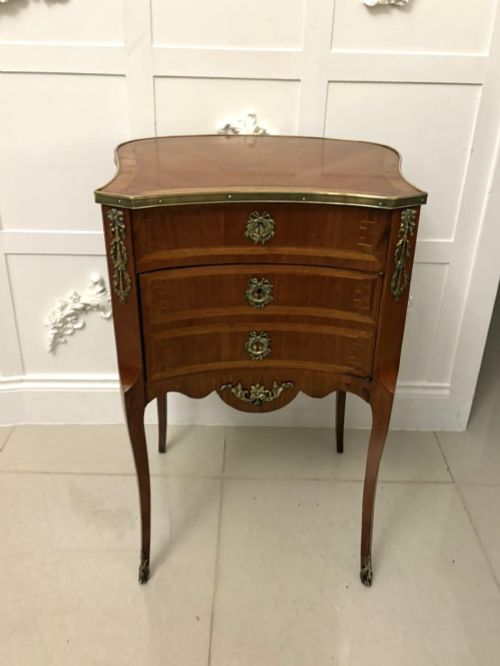
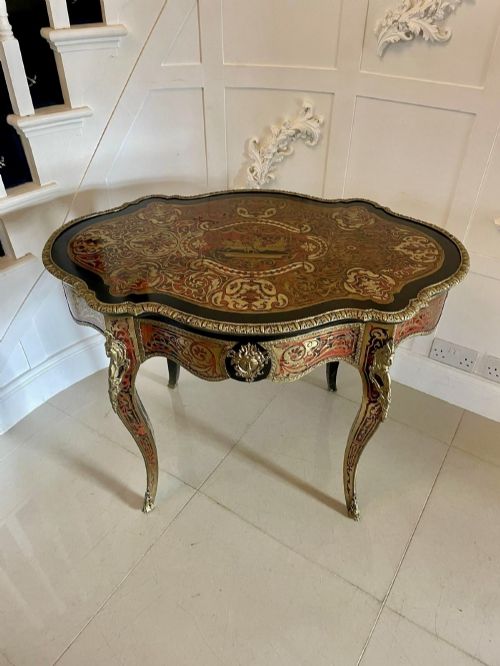
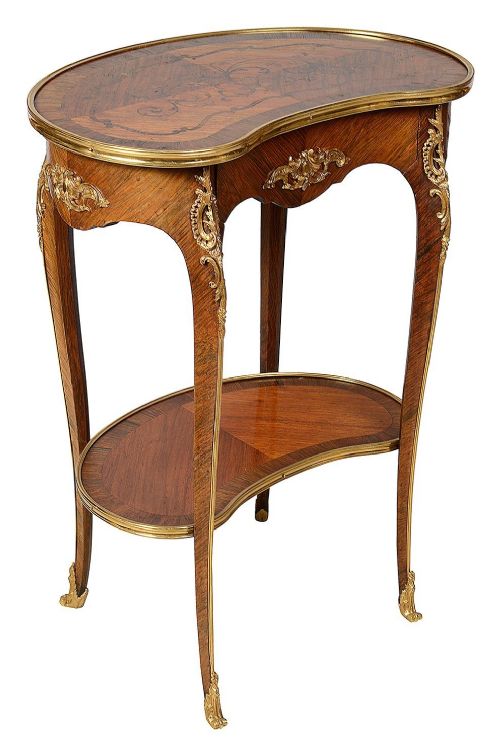
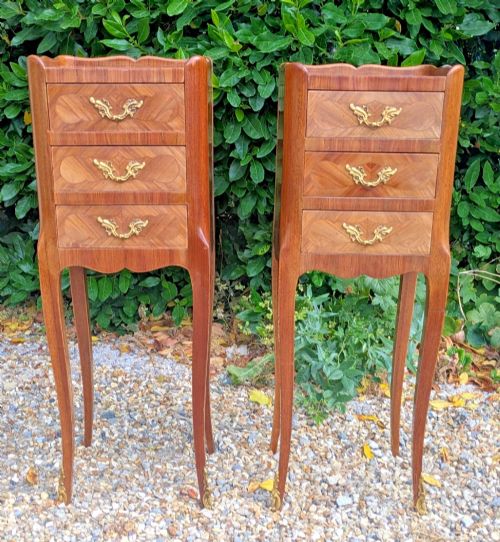
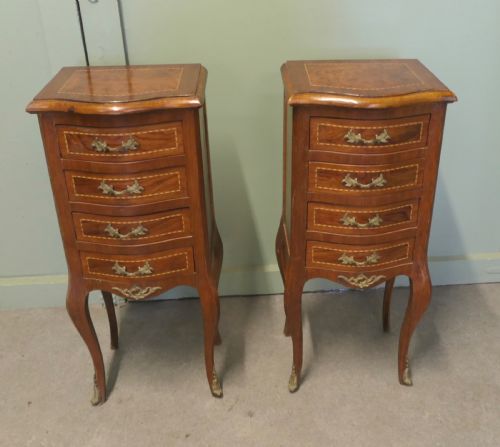
The versions most commonly met on this page span from mid-nineteenth century walnut examples to 1930s bedside cabinets and lamp tables. Forms range from freestanding centre tables and kidney-shaped tables to compact bedside chests fitted with drawers or marble tops.
Materials and Technique
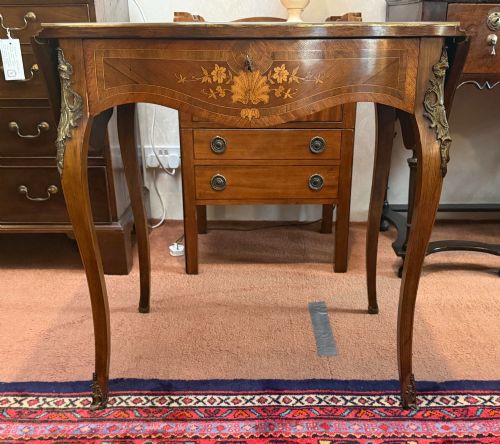
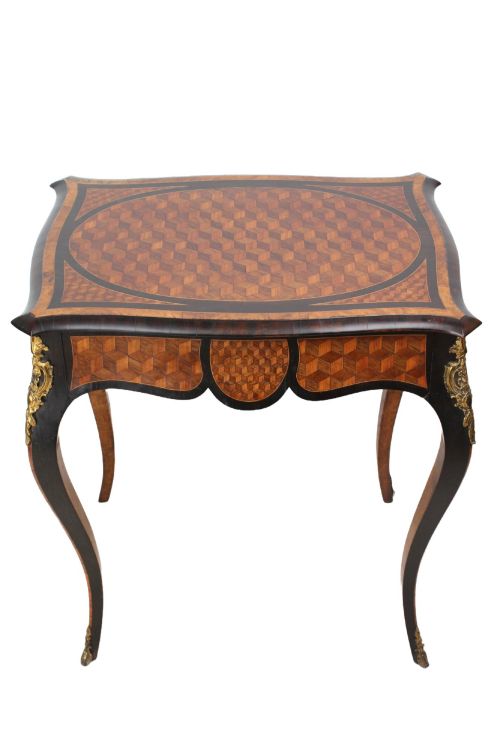
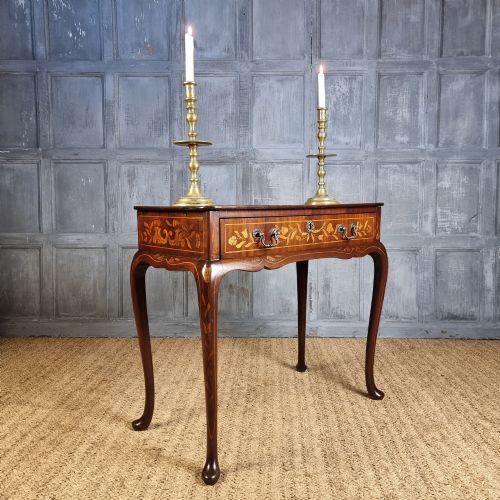
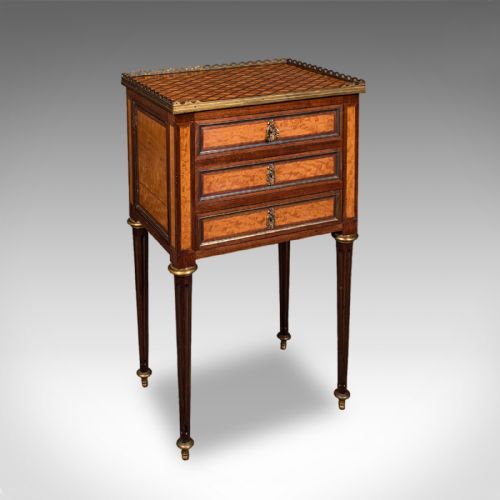
Construction relies on timber foundations of walnut, kingwood, rosewood, satinwood and mahogany, often enhanced by ebonised wood surfaces. Craftsmen applied intricate marquetry patterns and geometric parquetry using contrasting veneers to form floral or abstract motifs.
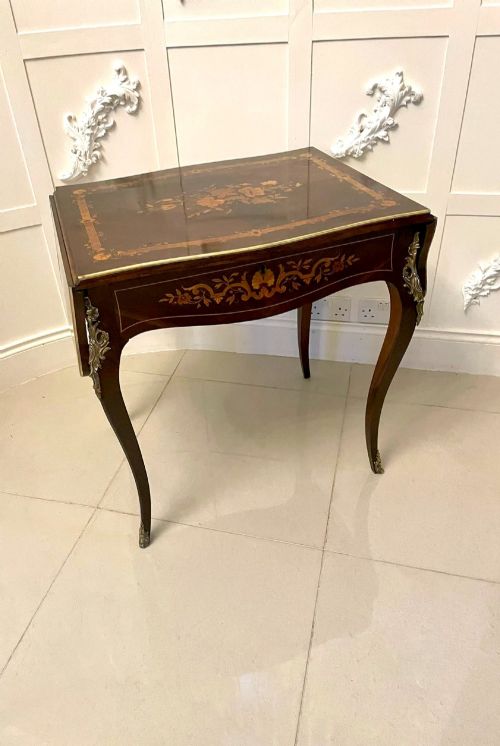
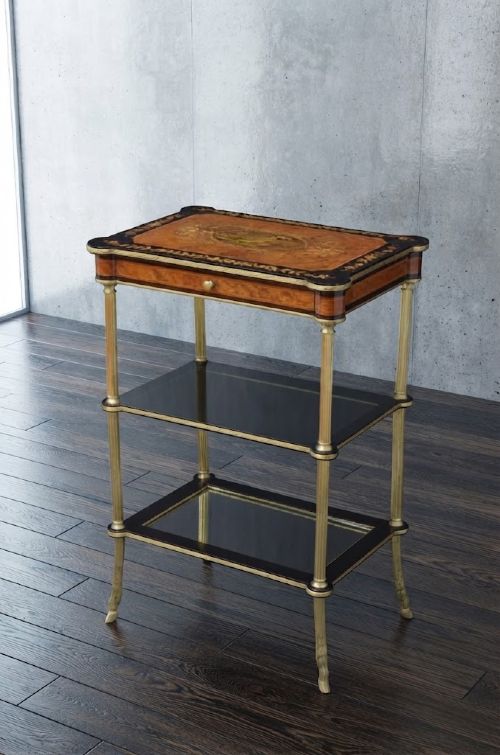
Metal enrichment forms a distinct element, with cast or chased brass and ormolu mounts fitted to corners, legs and edges. Certain pieces incorporate inset marble tops or mirrored tiers, combining decorative hardware with cabinetmaking techniques.
Several bedside cabinets arrive in matched pairs, proving that even French furniture appreciates a dependable companion.
Distinctions in Execution
The standard of a piece rests upon the precision of the veneer work and the integration of the mounts. Finer examples display tightly fitted parquetry and naturalistic marquetry where individual wood grains create depth without lifting at the borders.
The execution of the ormolu or brass mounts dictates visual success, separating workshop productions with hand-chased detail from simpler cast hardware. Proportions also define quality, particularly in smaller bedside cabinets and kidney-shaped tables where balanced curves remain essential.
JAS Shoolbred·Millet
The French Inlay Side Tables Glossary
- Marquetry
- Decorative veneer work arranged in pictorial designs or floral motifs using various coloured woods. This technique creates detailed surfaces across tabletops and drawer fronts.
- Parquetry
- Geometric wood inlay forming patterns such as cubes or chequers. It provides a structured decorative scheme distinct from organic marquetry scenes.
- Ormolu
- Gilded bronze used for mounts and decorative accents on furniture. The material adds metallic contrast to polished timber surfaces.
- Etagere
- A set of open shelves for displaying small items or books. These tiered tables often incorporate mirrored panels or inlaid wood.
- Bureau Plat
- A flat-topped writing desk fitted with drawers. These freestanding desks typically feature finished backs and inlaid tops.
French Inlay Side Tables: Frequently Asked Questions
What is a French inlay side table?
A French inlay side table is a small occasional table, bedside cabinet or centre table decorated with contrasting wood veneers arranged in geometric or floral patterns.
These pieces draw on eighteenth-century revival styles and frequently incorporate ormolu mounts, marble tops or serpentine fronts.
How do I identify the period?
Dating relies on timber choices, construction methods and revival styles visible in the woodwork. Mid-nineteenth century pieces often utilise kingwood or rosewood with heavy ormolu, while 1930s examples lean towards compact bedside formats.
Cabinetry details such as drawer linings and veneer thickness help separate Victorian interpretations from earlier French work.
Where were these tables used?
These tables served practical roles in salons, drawing rooms and bedrooms as lamp stands, writing surfaces or bedside storage. Centre tables stood freestanding in room interiors to display decorative objects.
Smaller bedside cabinets and lamp tables provided enclosed storage and topped surfaces next to seating or sleeping areas.
How do I care for inlaid wood?
Inlaid surfaces require stable environmental conditions away from direct sunlight and strong heat sources to prevent veneer lifting. Regular dusting with a dry cloth maintains the polished finish without risking moisture damage.
Periodic application of suitable furniture wax preserves the timber and protects delicate brass or ormolu mounts from tarnishing.