

French Inlay Desk
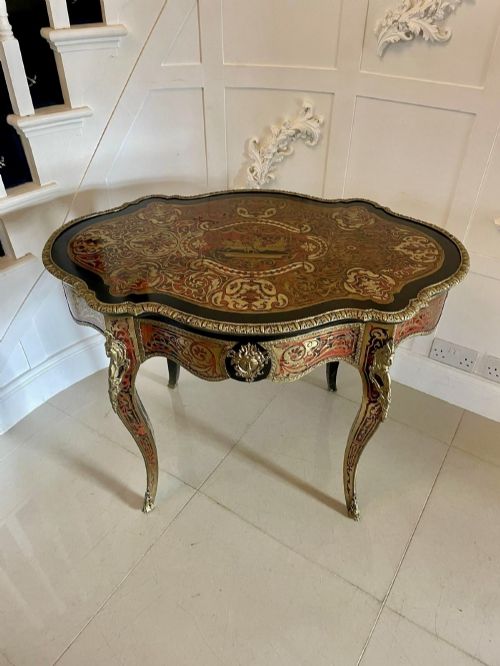
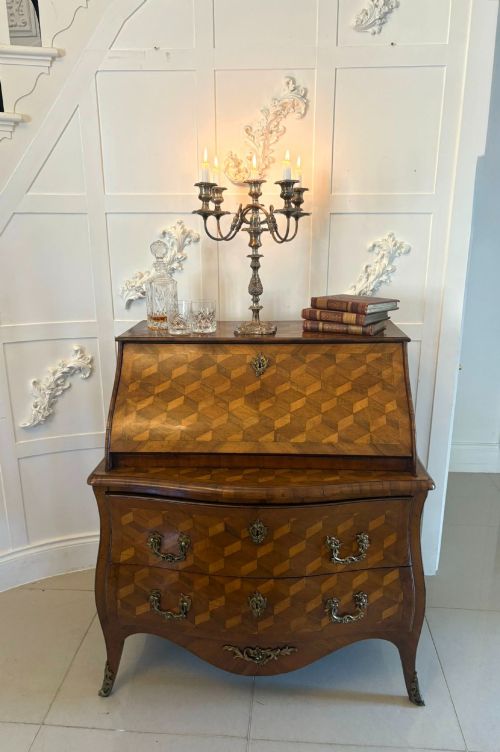
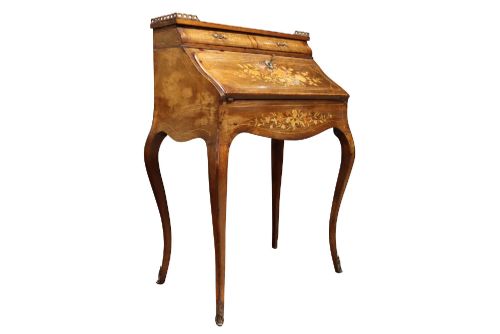
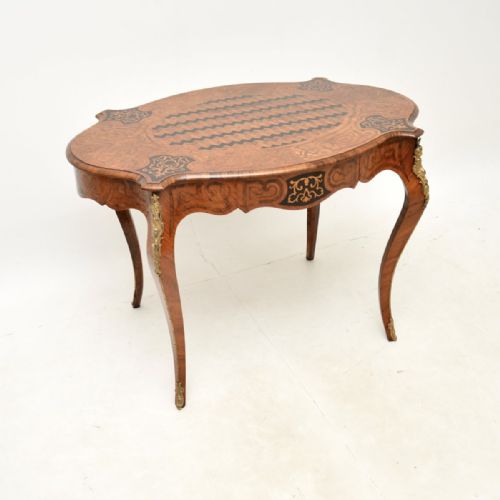
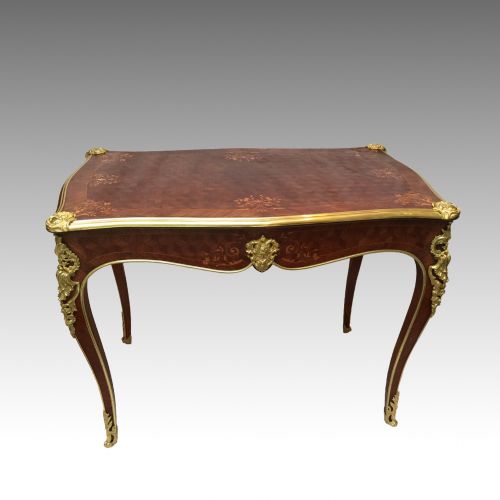
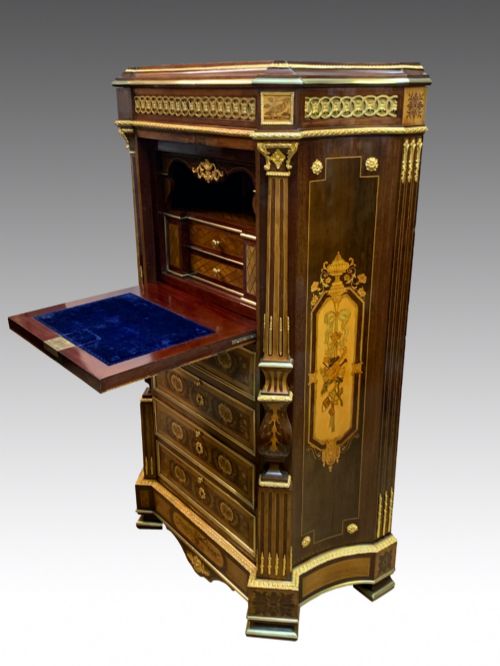
When you search for a french inlay desk, you encounter nineteenth-century walnut, kingwood, and rosewood writing pieces styled in revival forms.
French Inlay Desk
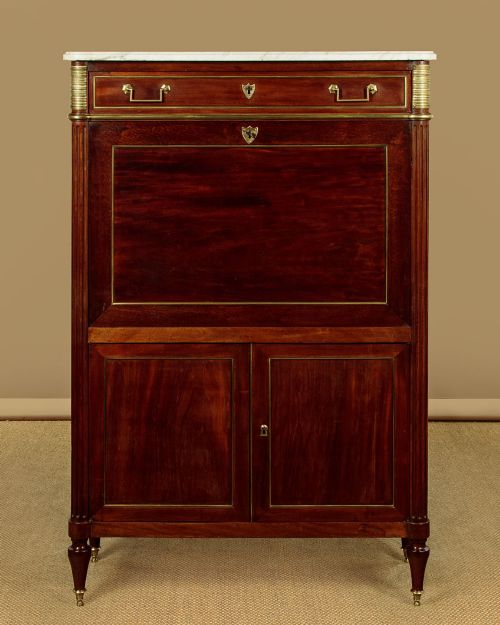
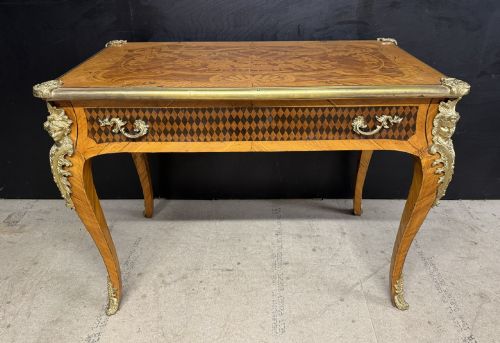
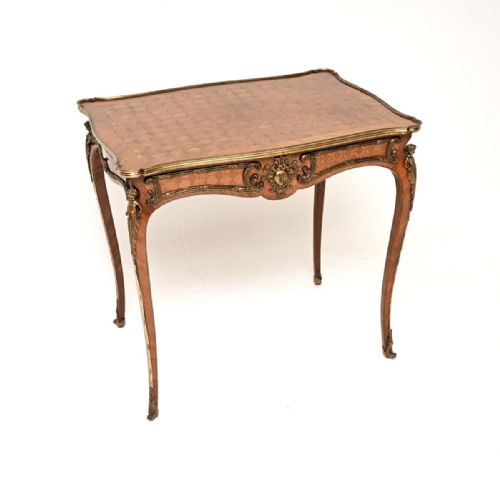
A french inlay desk encompasses writing tables, bureau plats, and bonheur-du-jours originating primarily from the nineteenth century. These forms reflect revival movements such as Louis XV, Louis XVI, and Napoleon III styles.
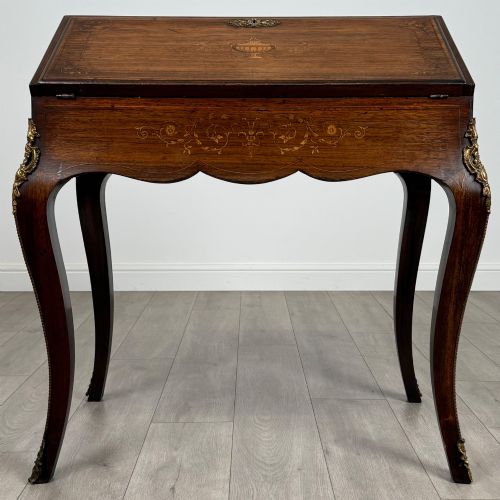
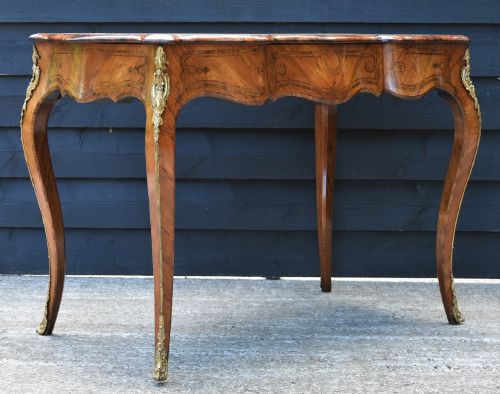
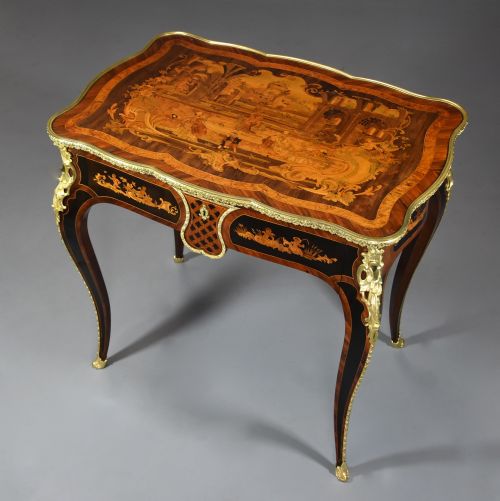
Most examples you encounter on this page employ timbers like kingwood, walnut, and rosewood. They combine writing surfaces with inlaid decoration, sometimes retaining original leather inserts and ormolu mounts.
How they were made
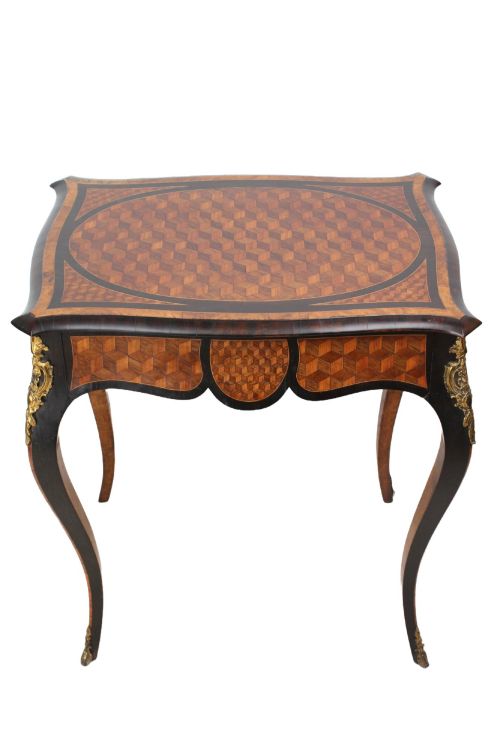
Cabinetmakers constructed these pieces using native and exotic timbers including kingwood, rosewood, walnut, and satinwood. These woods formed the base structure for intricate parquetry and marquetry surface patterns.
Metal elements such as brass, ormolu, and gilt bronze appear alongside mother of pearl and tortoiseshell in boulle work. These materials integrate with leather writing inserts and glass components on related desk stands.
Materials span ormolu mounts, brass inlay, tortoiseshell, mother of pearl, and leather writing inserts across Victorian and revival periods.
What varies in quality
The precision of the marquetry and parquetry cutter determines the visual sharpness of the floral and geometric motifs. Higher grade pieces show meticulous wood selection and tight joints in the timber veneers.
The execution of the cast ormolu mounts and bronze accents separates standard workshop output from exceptional examples. Substantial bronze work retains crisp chiselling and secure fitting to the desk body.
JAS Shoolbred·Maison Krieger·Millet
The French Inlay Desk Glossary
- Marquetry
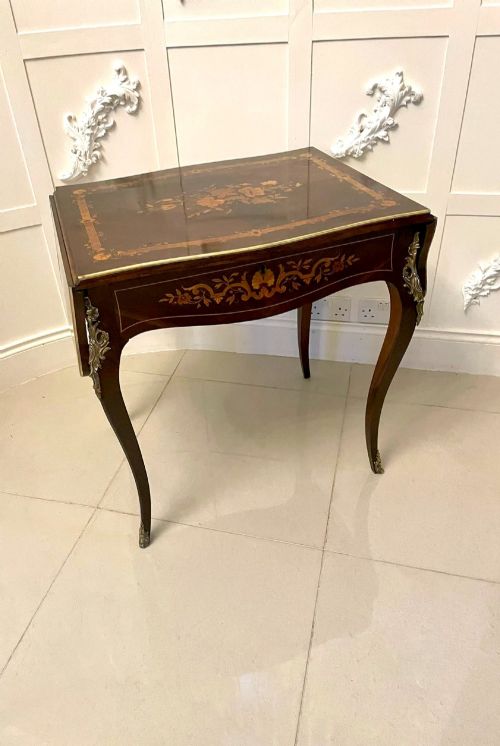
- Decorative veneer work arranged in pictorial or floral patterns across the surface of the wood. This technique utilises contrasting timber grains to create depth.
- Parquetry
- Geometric mosaic woodwork forming repeating patterns like cubes or chequers. It creates a structured pattern distinct from floral marquetry.
- Bureau Plat
- A freestanding writing table fitted with drawers and typically a leather top. These tables lack an upper superstructure.
- Bonheur-du-Jour
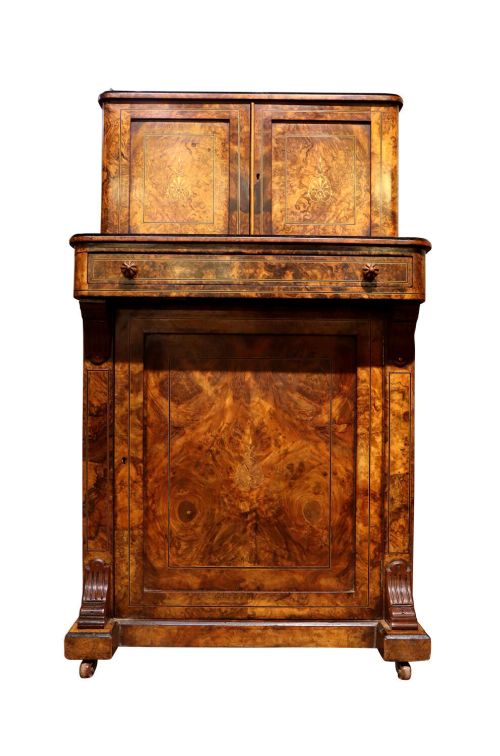
- A small lady's writing desk featuring a tiered superstructure with shelves or small drawers above the writing surface. These compact desks date frequently to the nineteenth century.
- Ormolu
- Gilt bronze mounts applied to furniture edges and corners for ornamentation. The metal undergoes mercury gilding or modern electroplating.
French Inlay Desk: Frequently Asked Questions
What is a bureau plat?
A bureau plat is a freestanding writing table with a finished back, designed to sit in the centre of a room rather than against a wall.
These desks usually feature shallow drawers beneath the writing surface and often retain a leather writing panel.
How do I identify Louis XV style?
Louis XV style pieces exhibit asymmetrical curves, cabriole legs, and naturalistic floral marquetry without rigid straight lines.
Ormolu mounts on these desks typically follow the contours of the serpentine aprons and curved leg shoulders.
What is the difference between marquetry and parquetry?
Marquetry uses varying veneers to form pictorial scenes, scrolls, or floral arrangements across the timber surface.
Parquetry relies on geometric shapes like squares, triangles, and diamonds to build repeating mathematical patterns.
Where should I place a bonheur-du-jour?
A bonheur-du-jour suits smaller spaces or a bedroom setting because of its compact footprint and upper shelving.
These desks work well against a wall where the raised superstructure and small drawers remain easily accessible.