
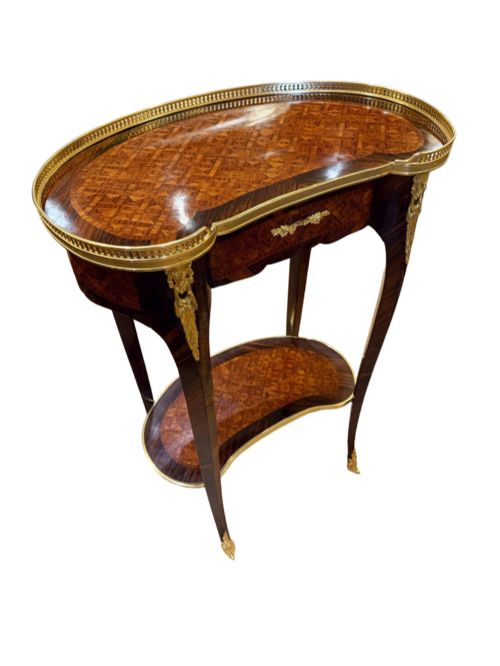
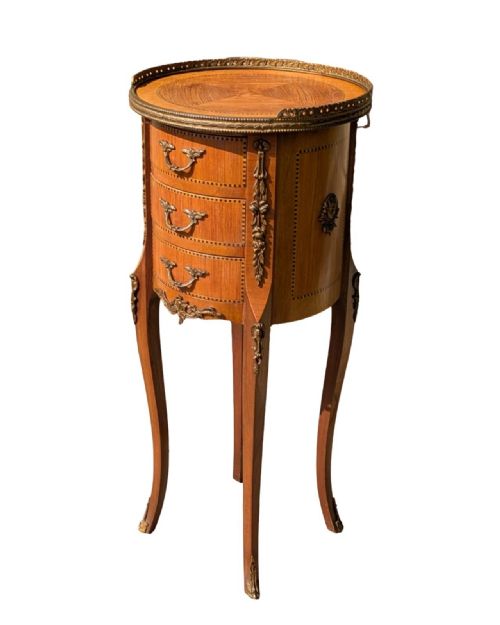

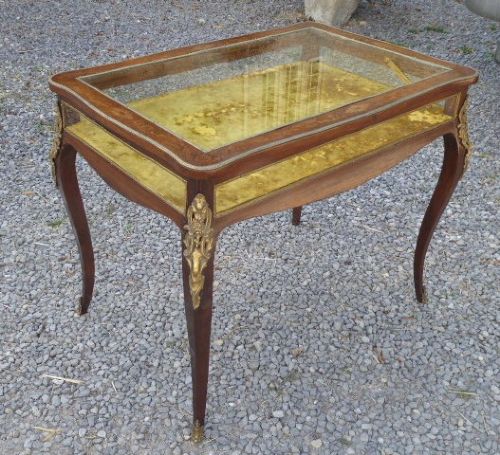
Ormolu Brass Mounted Table
An ormolu brass mounted table brings together French polish, gilt metal, and hardwoods like walnut and kingwood to anchor a formal interior.
Ormolu Brass Mounted Table
An ormolu brass mounted table encompasses side tables, writing desks, and occasional pieces that use cast metal trim to frame their surfaces. These furnishings appear frequently in nineteenth-century interpretations of French design, drawing on Louis XV, Louis XVI, and Napoleon III revival styles.
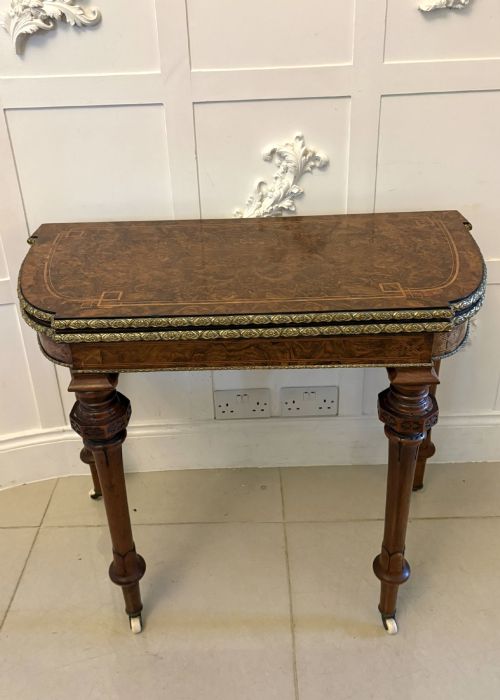
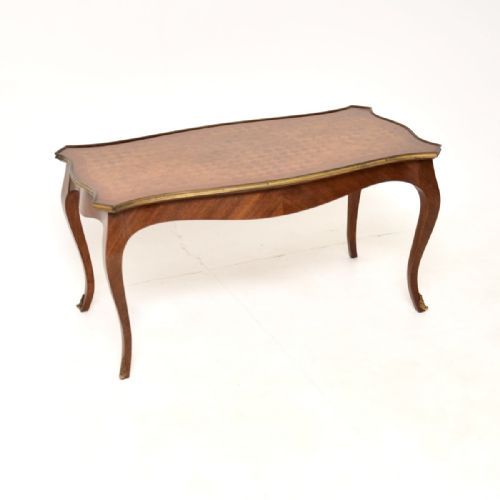
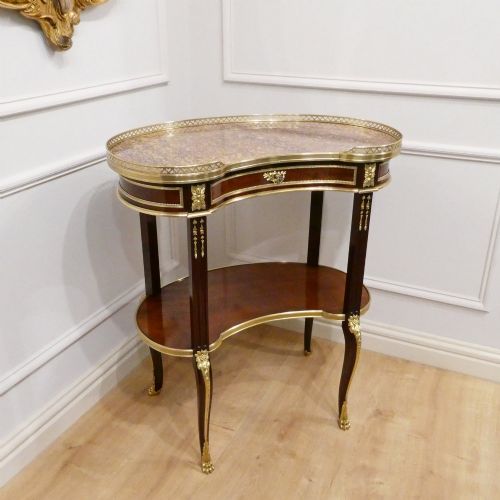
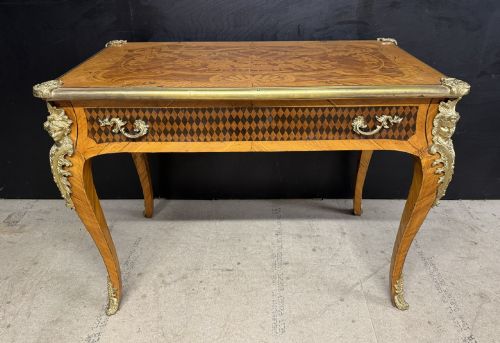
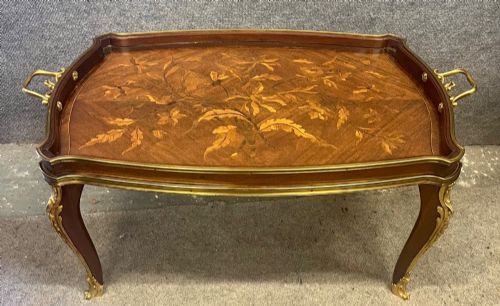
Buyers encounter forms ranging from kidney-shaped writing tables and parquetry coffee tables to card tables and console pieces. Walnut, mahogany, kingwood, and ebonised woods provide the primary timber foundations across the selection.
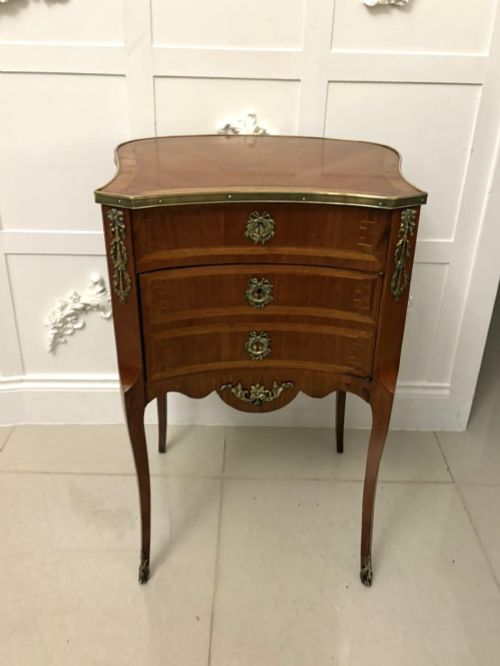
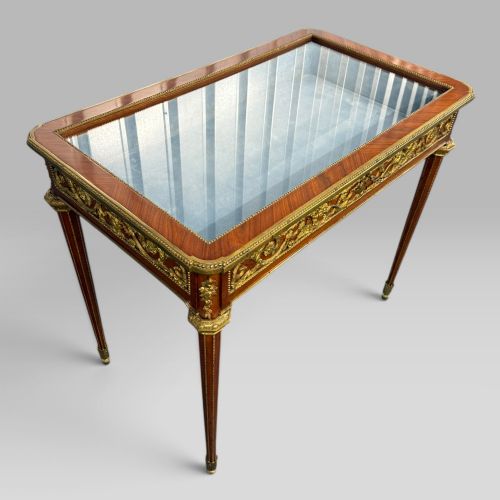
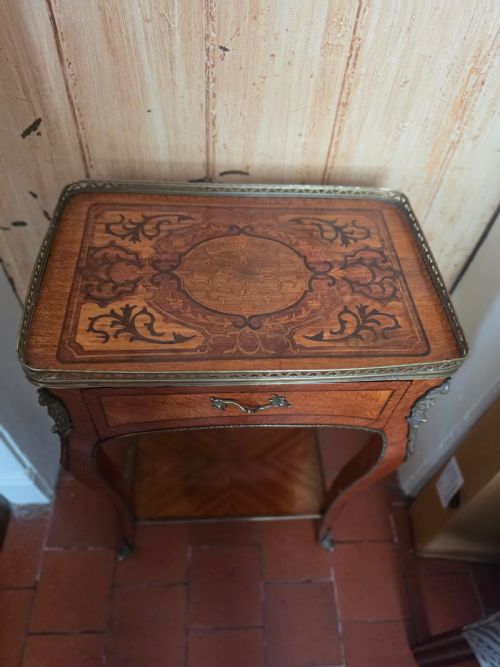
The integration of brass and gilt bronze mounts defines the visual language of these items, often paired with marble tops or intricate marquetry inlay. Such tables served as functional display and writing surfaces in formal reception rooms.
How they were made
Cabinetmakers constructed these forms using dense hardwoods such as mahogany, walnut, and rosewood, frequently applying kingwood and amboyna veneers in parquetry or marquetry patterns. Brass and bronze components were cast, chased, and gilded to produce the characteristic ormolu mounts that edge the timber structures.
Surfaces often incorporate inset marble slabs, glass display panels, or delicate brass wire inlay set flush into the wood. Joinery techniques relied on traditional framing and veneering methods designed to support heavy metal mounts without warping the underlying carcase.
Periods represented span from the early nineteenth-century Empire style through the Victorian era into early twentieth-century revivals.
What varies in quality
The crispness and depth of the ormolu chasing separate standard commercial items from exceptional workshop productions. Superior pieces display sharply defined foliage and scrolls on the gilt mounts rather than soft, flat casting.
The precision of the wood veneers and marquetry work dictates the grade of the piece, with complex geometric parquetry or pictorial floral inlays requiring advanced carpentry skill. Structural integrity in the attachment of heavy bronze mounts to curved surfaces like kidney-shaped tables also marks the maker's competence.
Maison Millet·François Linke·Thuret·Antoine Lampre·Tehan
The Ormolu Brass Mounted Table Glossary
- Ormolu
- Gilt bronze ornamentation applied to furniture and clocks. The technique involves coating cast bronze in a gold amalgam and heating it to leave a durable metallic finish.
- Marquetry
- Decorative veneer patterns formed from thin pieces of wood, shell, or ivory arranged to create pictorial or abstract designs. Craftsmen applied these veneers to tabletops and cabinet fronts before mounting metal trim.
- Parquetry
- Geometric wood inlay patterns such as cubes, chequered squares, or lozenges. This technique creates rhythmic patterns across flat surfaces on tables and desks.
- Bureau plat
- A flat-topped freestanding writing desk, typically finished with leather or wood and edged with brass or ormolu mounts. These desks often feature multiple drawers along the frieze.
- Etagere
- Open shelving units or side tables with multiple tiers supported by slender columns. They were utilised for displaying decorative objects and porcelain.
Ormolu Brass Mounted Table: Frequently Asked Questions
What woods are used on an ormolu brass mounted table?
Makers employed a range of dense timbers including mahogany, walnut, rosewood, and ebonised wood for the primary frames. Exotic veneers such as kingwood and amboyna were frequently applied to tabletops in geometric parquetry patterns.
These woods provided a stable dark background that contrasted with the bright metallic finish of the brass and gilt bronze mounts.
How do I identify a Napoleon III ormolu mounted table?
Napoleon III pieces, dating from the mid to late nineteenth century, often revive earlier French court styles like Louis XV and Louis XVI. They make heavy use of Boulle marquetry, ebonised finishes, and ornate ormolu mounts.
These tables frequently feature serpentine forms, kidney shapes, and inset marble tops supported by slender cabriole legs.
Where were these tables placed in a nineteenth-century home?
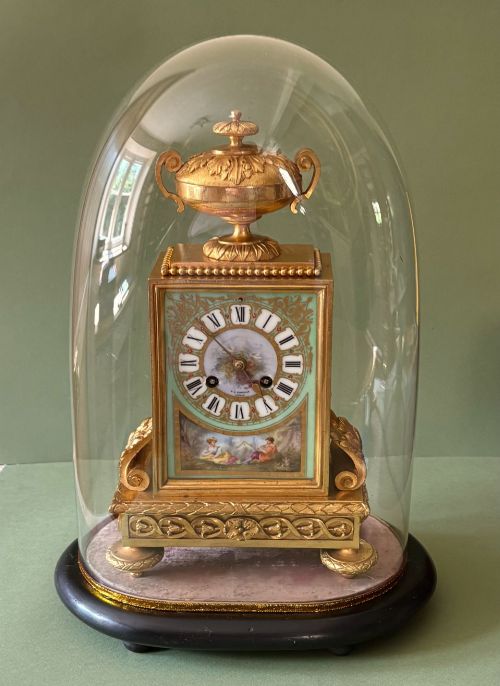
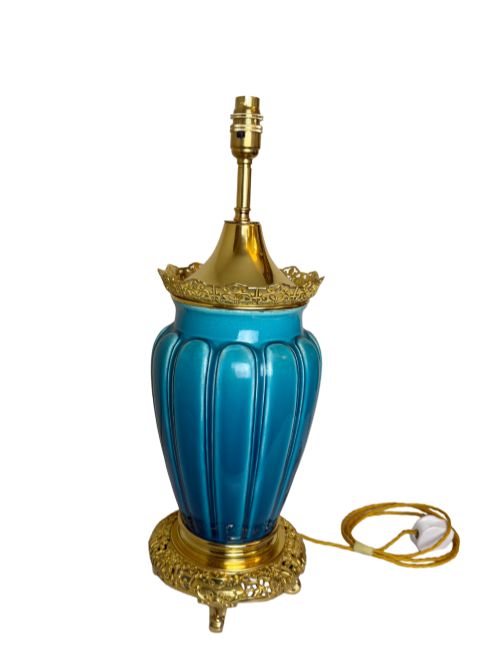
Such furnishings typically stood in formal drawing rooms, libraries, or boudoirs as centre tables, writing desks, or side consoles. Occasional tables and etageres were positioned to hold table lamps, clocks, or porcelain ornaments.
Their finished backs allowed them to sit in the middle of a room rather than strictly against a wall.
What is the difference between brass and ormolu?
Brass is an alloy of copper and zinc used for structural mounts, wire inlay, and hardware. Ormolu refers specifically to gilt bronze, where a layer of gold is applied to a cast bronze base to give a rich, warm golden lustre.
Many listings combine both metals, using cast ormolu for prominent decorative mounts and brass for structural trim or fine inlay lines.