




French Inlaid Study Desk
A french inlaid study desk brings continental elegance and practical writing space into a room.
French Inlaid Study Desk
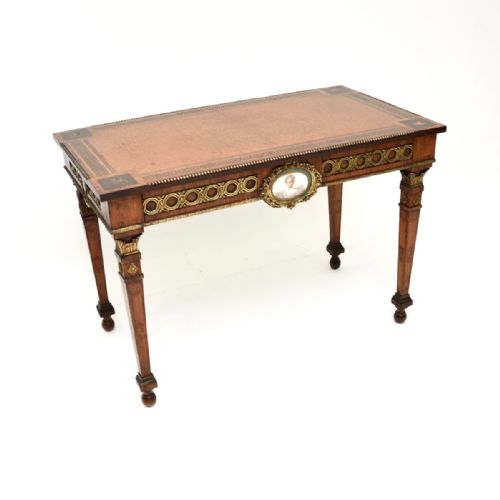
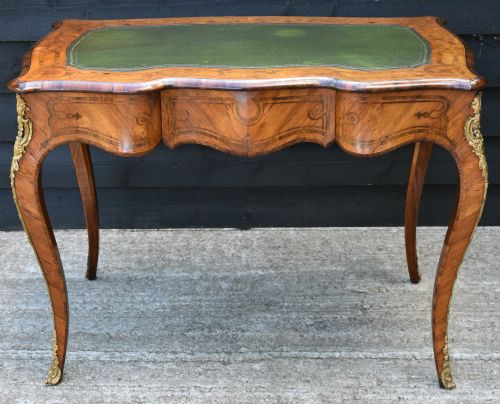
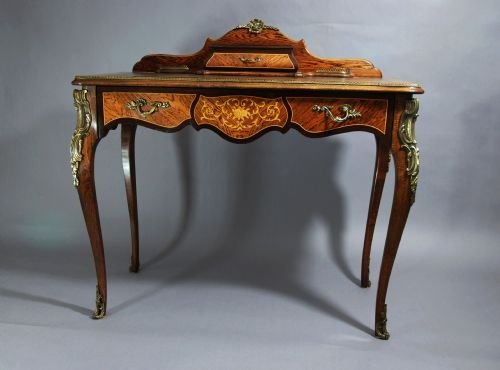
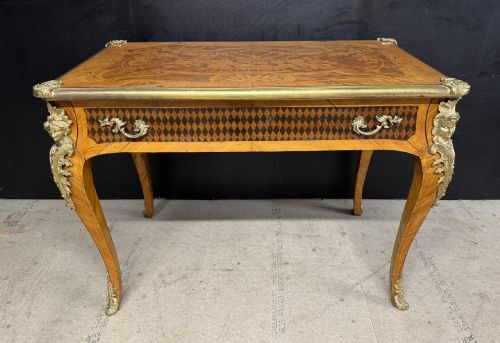
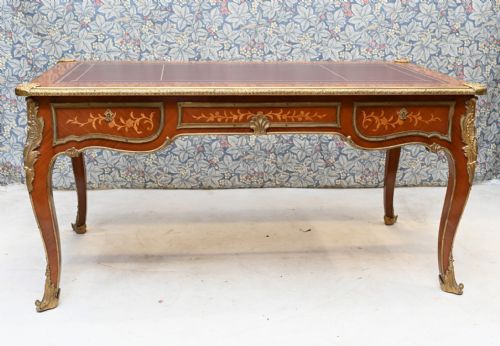
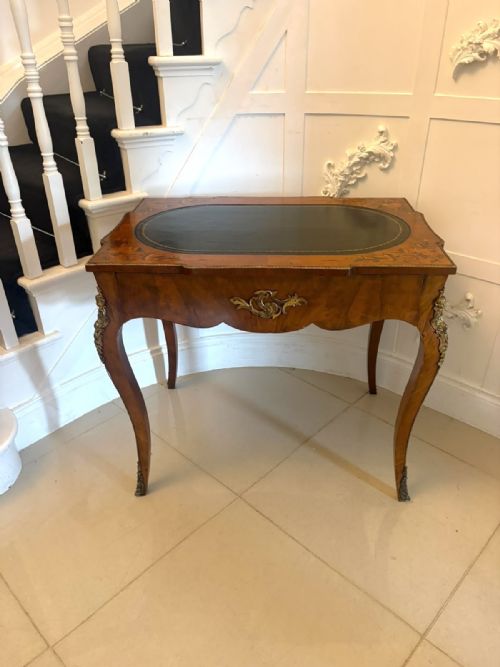
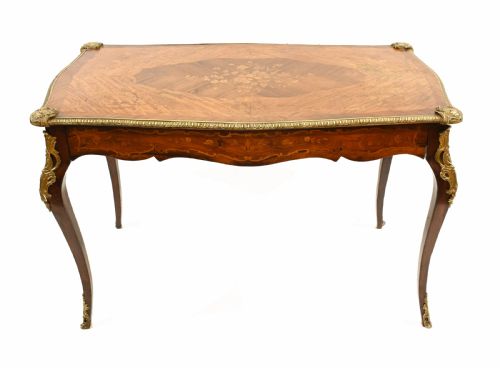
When searching for a french inlaid study desk, buyers encounter sophisticated writing tables, bureau plats, and freestanding desks originating from the nineteenth and early twentieth centuries. These pieces reflect revival aesthetics including Louis XV, Louis XVI, and French Rococo styles, designed for refined domestic study and correspondence.
The most common forms on this page include walnut and kingwood writing tables decorated with intricate marquetry and parquetry patterns. Many examples feature serpentine fronts, leather writing surfaces, and distinct continental proportions tailored for gracious interiors.
Materials and construction
Cabinet makers utilised choice hardwoods such as walnut, kingwood, mahogany, and satinwood as foundations for detailed floral marquetry and geometric parquetry patterns. These timber surfaces are frequently enhanced with contrasting brass and calamander inlay.
Structural embellishments rely on cast ormolu and gilt bronze mounts, which frame drawers and accentuate the curved contours typical of Louis XV and Rococo revival pieces.
French Inlaid Study Desk Retail Price Guide 2026
Typical asking prices for french inlaid study desk among the pieces listed under this phrase on Sellingantiques today, from the lower quarter to the upper quarter. They describe what is for sale here now, not the wider market.
Floral marquetry desks often conceal hidden floral motifs within their geometric table tops.
Standards of quality
Quality in these desks is measured by the precision of the timber inlay and the crispness of the ormolu mounts rather than superficial embellishment alone. Finer examples display seamless marquetry integration across curved serpentine forms and drawer fronts.
The distinction between standard production and exceptional work rests on the choice of cabinet timbers like burr walnut and kingwood, alongside the weight and detail of the cast bronze mounts.
Donald Ross·Maison Millet
The French Inlaid Study Desk Glossary
- Bureau plat
- A formal freestanding writing table with drawers, typically finished on all sides so it can sit in the centre of a room. This form is central to French decorative furniture.
- Marquetry
- Decorative veneer patterns formed by fitting together small pieces of wood, shell, or ivory to create pictorial or floral designs. Cabinet makers use this technique to adorn table tops and drawer fronts.
- Parquetry
- Geometric wood inlay arranged in repetitive patterns such as cubes, chequers, orlozenges. This method creates a structured, architectural surface texture.
- Ormolu
- Gilded bronze mounts applied to furniture edges, corners, and legs for decorative accent. The term derives from the French for ground gold.
- Serpentine
- A curved line or shape that bends inward and outward in a continuous wave. This contour defines the profile of many refined desk tops and rails.
French Inlaid Study Desk: Frequently Asked Questions
Can these desks be used daily?
Many examples feature durable leather writing inserts and sturdy hardwood frames suitable for regular correspondence and study tasks.
Careful placement away from direct heat sources helps preserve the delicate marquetry veneers and polished timber finishes.
Where should a bureau plat sit?
These freestanding tables are finished on all sides, allowing them to float in the middle of a study or library rather than pushed against a wall.
This placement showcases the detailed parquetry and ormolu mounts from every angle.
How do I identify the period?
Stylistic cues such as Louis XV Revival curves, ormolu mounts, and floral marquetry point to nineteenth-century manufacturing.
Materials like kingwood, satinwood, and burr walnut further help date pieces to specific Victorian and Edwardian decades.
What is a bonheur du jour?
This form is a small, light lady's writing desk featuring a tiered superstructure with compartments and small drawers above the main writing surface.
Such pieces combine decorative inlay with compact proportions suited for private sitting rooms.