
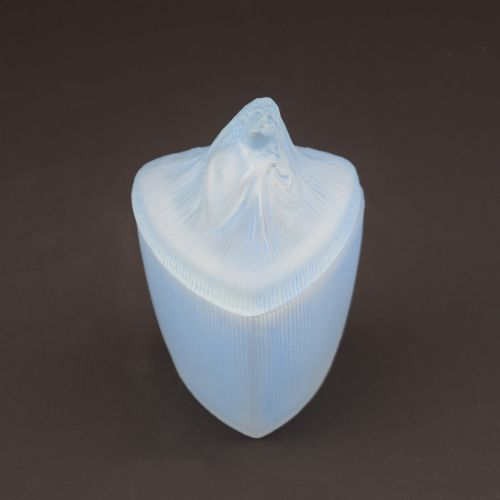
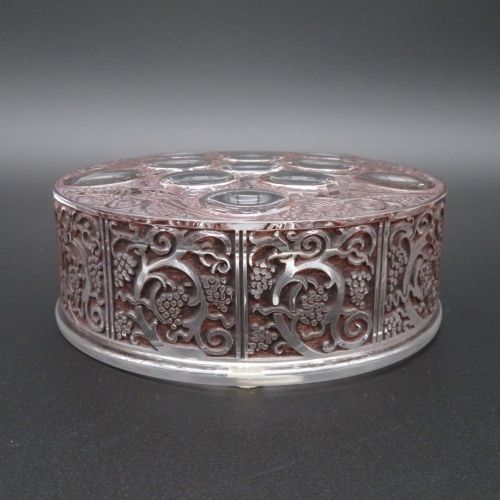
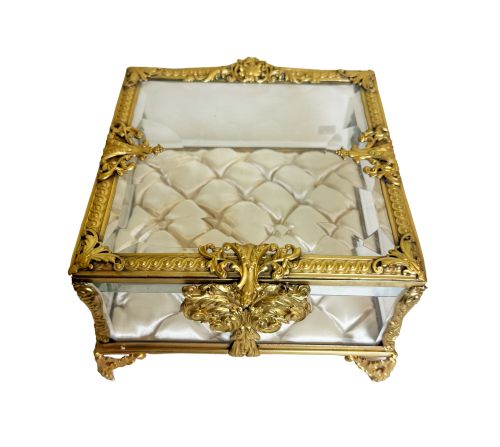


French Glass Trinket Box
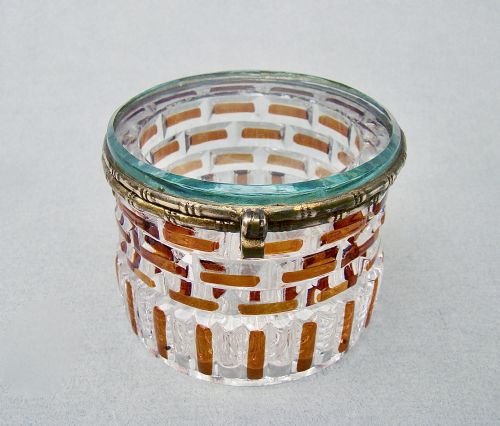
A French glass trinket box holds dressing table secrets and vanity treasures from the nineteenth and early twentieth centuries.
French Glass Trinket Box
A french glass trinket box serves as a small container designed to hold jewellery, pins, and cosmetics on a dressing table or desk. These pieces originate primarily from the nineteenth century through the art deco period, reflecting changing domestic fashions in France.
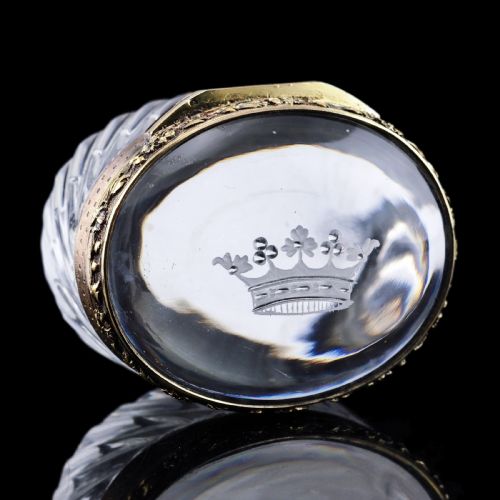
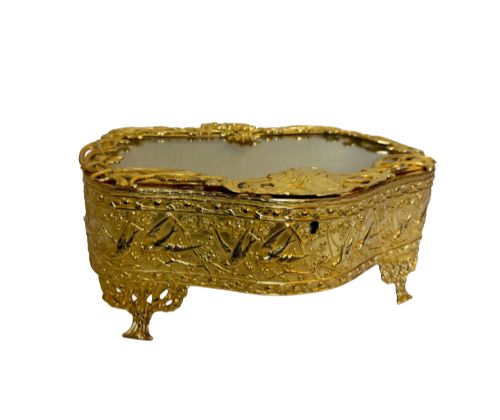
The most common examples on this page are nineteenth-century hinged caskets featuring coloured glass panels mounted in metal frames. Alongside traditional rectangular boxes, buyers will encounter circular powder jars, egg-shaped novelties, and vanity jars.
Makers and manufacturers ranged from large prestigious glassworks producing heavy cut crystal to specialised ateliers creating delicate opaline and enamelled novelties. Grand tour souvenirs from Palais Royal also appear, representing the portable luxury of the period.
How They Were Made
Glass production relied on blowing, moulding, and cutting techniques to form heavy crystal or delicate opaline bodies. Coloured glass was achieved by adding minerals to the molten batch, producing rich shades of blue, green, cranberry, and amber.
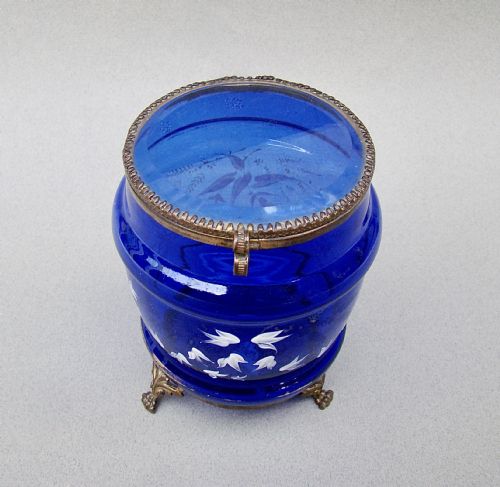
Metal mounts utilised brass, ormolu, gilt bronze, and silver-gilt frames fitted with hinges and clasps to secure the glass panels. Enamel decoration was applied by hand, often featuring white silhouette figures or floral motifs fired onto the glass surface.
Tiny glass coaches and porcelain eggs from Palais Royal let Victorian travellers carry miniature fantasies inside their luggage.
What Varies in Quality
The thickness and clarity of the glass set the foundation for a piece, alongside the precision of the cut crystal or the even saturation of coloured glass. Heavy, unblemished crystal and evenly toned opaline demonstrate superior material selection.
Metal mountings distinguish standard commercial items from exceptional luxury goods through the crispness of the casting in the ormolu or gilt bronze. Hand-painted enamel work shows variation in detail and durability, where finely delineated figures indicate skilled artisan output.
Rene Lalique·Baccarat·Clichy
The French Glass Trinket Box Glossary
- Ormolu
- Gilt bronze mounted on decorative objects, created by applying a mercury and gold amalgam to cast bronze. This technique produced a durable golden finish characteristic of nineteenth-century French luxury goods.
- Opaline glass
- An opaque or translucent art glass developed in nineteenth-century France, typically found in soft pastel shades of blue, pink, and yellow. It mimics the appearance of natural opal and porcelain.
- Mary Gregory
- A style of glassware decorated with white enamel silhouettes depicting children in natural settings, popular in the late nineteenth century. The technique gained wide distribution across various coloured glass bodies.
- Bijouterie
- A small display table or glass-topped cabinet designed for showing jewellery and small decorative objects. These pieces often feature glazed lids and velvet-lined interiors.
- Palais Royal
- A shopping district in Paris associated with luxury novelties, souvenirs, and vanity items sold during the nineteenth century. Items from this origin often include miniature carriages, eggs, and portable caskets.
French Glass Trinket Box: Frequently Asked Questions
What were french glass trinket boxes used for?
These containers held precious items such as rings, brooches, and hairpins on Victorian and Edwardian dressing tables. Some variations functioned specifically as powder jars or cosmetic containers for daily grooming.
Wealthy owners displayed them openly in bedrooms and boudoirs as decorative objects that signaled personal refinement and taste. Their portable nature also suited travel and grand tour collections.
How do I identify a nineteenth-century piece?
Nineteenth-century examples typically feature hand-cut crystal, heavy ormolu mounts, or applied enamel decoration typical of Victorian and Napoleon III manufacturing. Look at the construction of the metal hinges and the depth of the glass tint.
Later pieces from the twentieth century often display distinct art nouveau organic lines or geometric art deco styling associated with makers like Lalique.
How should I clean my glass trinket box?
Dust the glass surfaces gently with a soft, dry cloth to prevent accumulation without disturbing fragile enamelled decoration or gilt finishes. Avoid submerging mounted boxes in water, as moisture can damage the internal linings or weaken historic adhesives.
Metal mounts benefit from careful wiping with a dry microfiber cloth rather than harsh chemical polishes that strip original patination.
What is the difference between opaline and crystal?
Crystal is transparent and relies on light refraction through precise cutting or moulding to create brilliance. It emphasises clarity and weight.
Opaline glass is opaque or semi-translucent, diffusing light softly through its tinted or milky body. It served as a smooth canvas for hand-painted gilding and enamel work.