


French Glass Display Cabinet
A french glass display cabinet brings light and refined storage to a room, holding precious objects behind curved or bevelled glass panels.
French Glass Display Cabinet
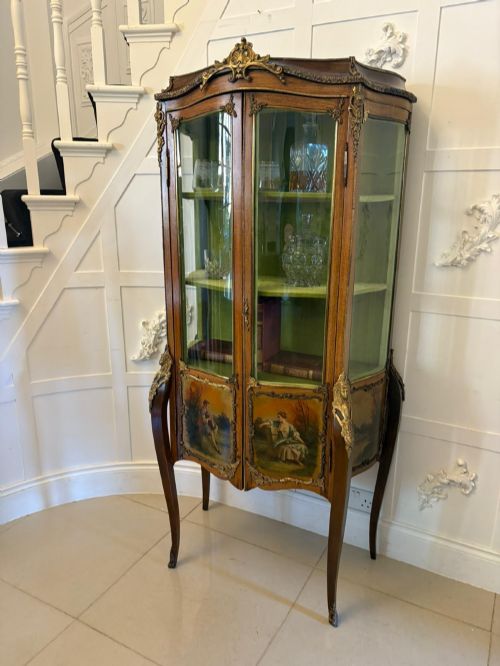
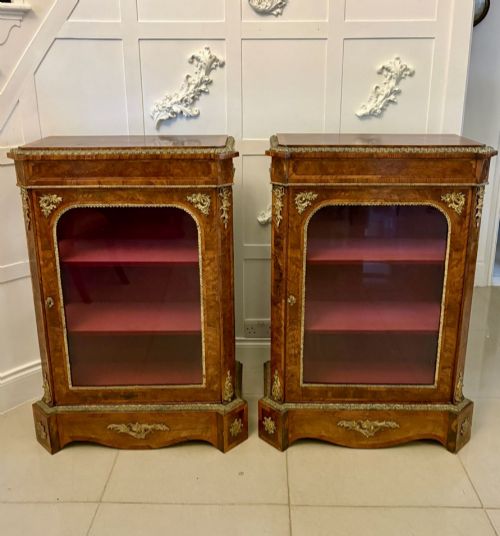
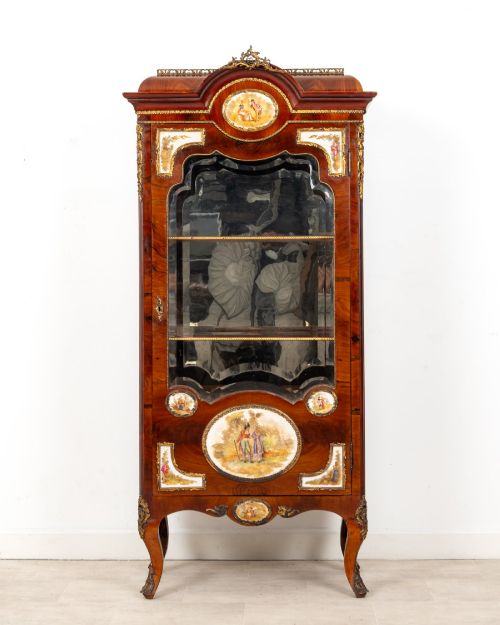
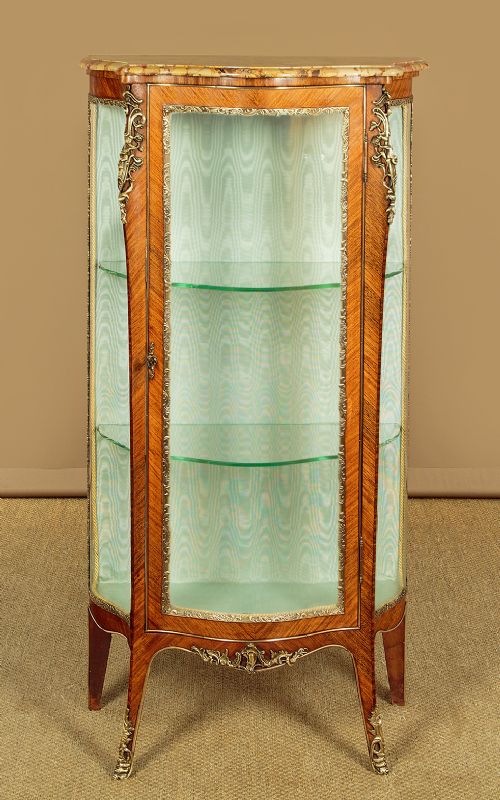
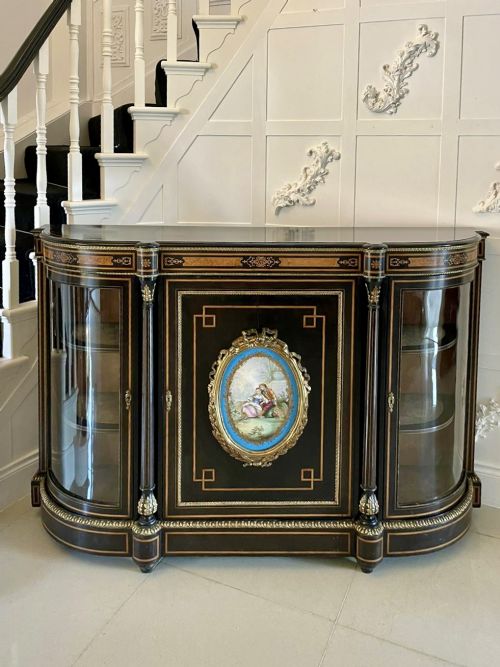
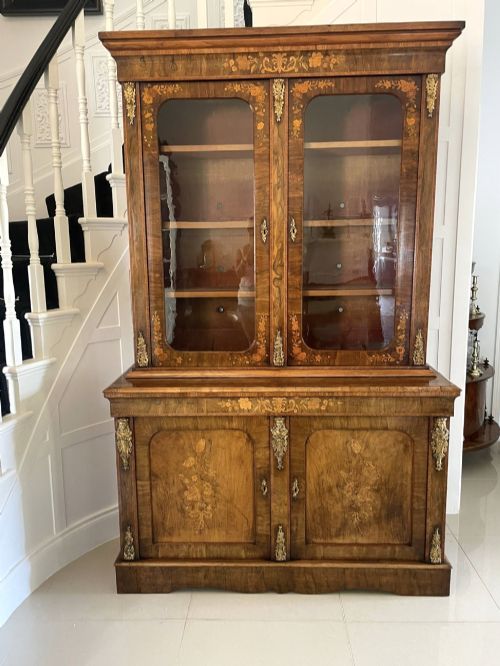
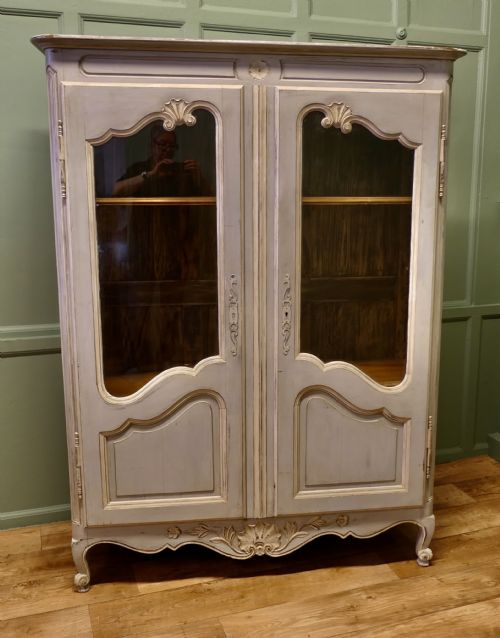
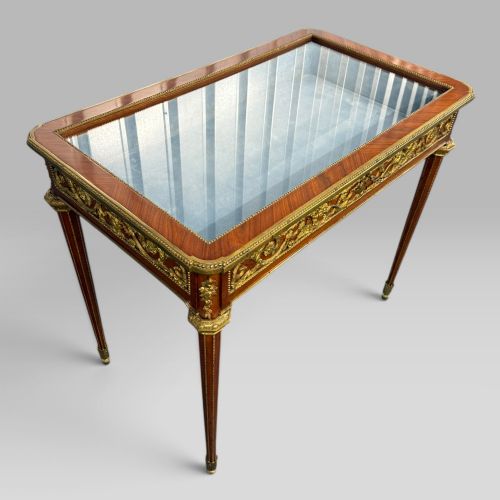
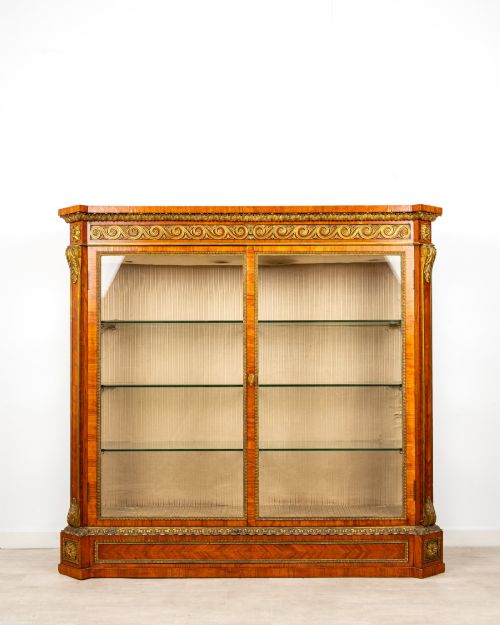
A french glass display cabinet serves primarily to showcase porcelain, silver and small curiosities while protecting them from dust. These pieces range from tall freestanding vitrines to low credenzas and tabletop bijouterie cases designed for closer inspection.
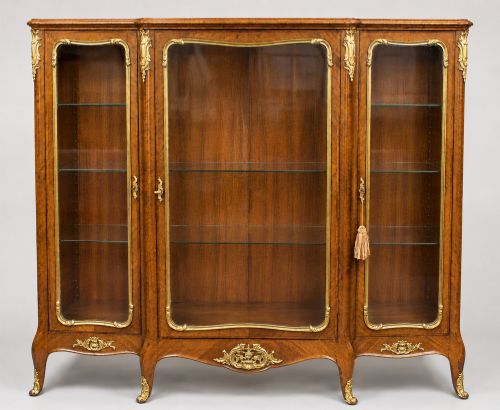
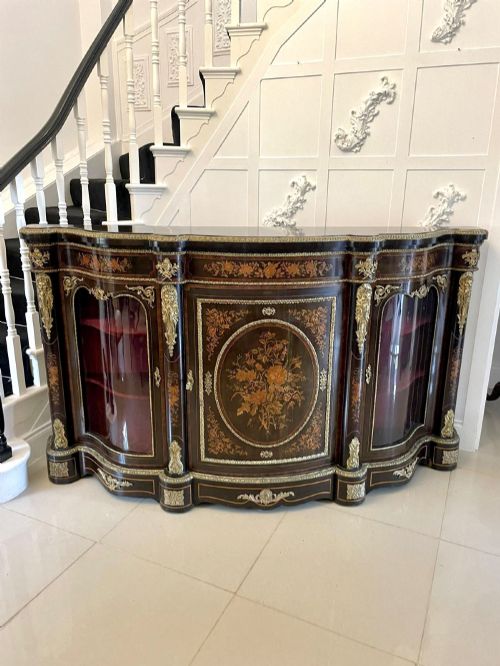
The selections on this page span the nineteenth century and the Edwardian era, incorporating revival styles such as Louis XV, Louis XVI and French Rococo. Makers utilised forms like serpentine cabinets, music cabinets and marble-topped sideboards.
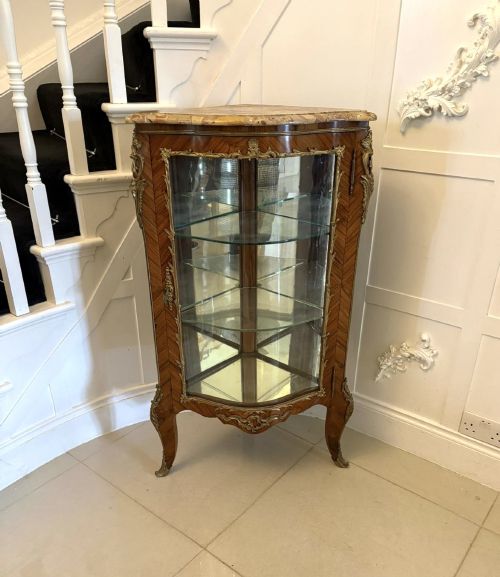
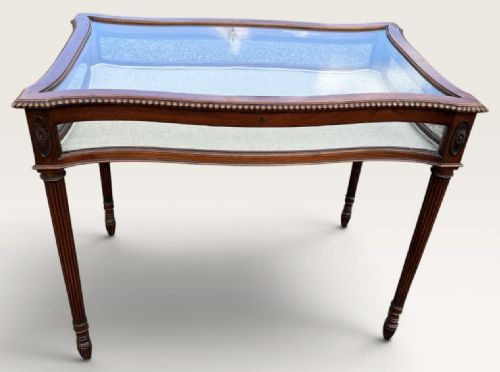
Most examples rely on glazed doors and sides to maximise light reflection onto the interior shelves. Smaller table-format vitrines provide horizontal display surfaces suited to medals, miniatures and jewellery.
How They Were Made
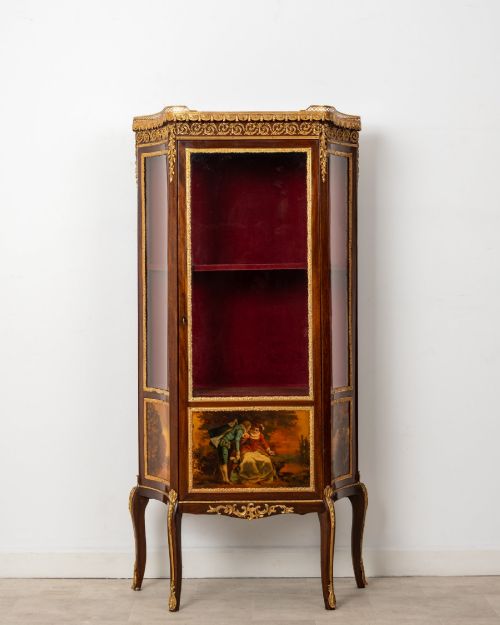
Cabinetmakers built foundational carcases from dense timbers such as mahogany, walnut and kingwood, frequently applying intricate marquetry or amboyna and ebonised veneers. Surfaces often feature painted Vernis Martin panels depicting pastoral scenes.
Gilt-bronze and ormolu mounts punctuate the corners, feet and friezes, providing structural accent and decorative contrast against the dark timber. Marble tops appear frequently on nineteenth-century pieces, adding weight and a cool stone surface.
Glazing relies on curved or flat glass secured within rebated timber frames. Brass and gilt-metal hardware finishes the doors, hinges and locks.
Listings feature pieces spanning from the 1850s through to the Edwardian period, constructed in mahogany, walnut, kingwood, and marble.
What Varies in Quality
The refinement of the ormolu mounts separates standard production from exceptional work attributed to makers like François Linke or Maison Gagneau. Crisp chasing and heavy fire-gilding indicate superior foundry skill.
Timber selection and marquetry precision dictate value, with master cabinetmakers choosing dense, highly figured kingwood and burr walnut arranged in symmetrical patterns. Hand-painted Vernis Martin panels display greater artist control in finer examples.
Structural integrity depends on the precision of the joinery, particularly in serpentine-fronted cabinets and curved glass installations. The weight and thickness of the marble top also reflect the original investment in materials.
Gabriel Viardot·H. J. Hatfield & Sons·François Linke·Maison Gagneau
The French Glass Display Cabinet Glossary
- Vitrine
- A glass-fronted cabinet designed for displaying fine porcelain and objets d'art. These pieces frequently feature glazed sides to allow light to enter from multiple angles.
- Ormolu
- Gilded bronze mounts applied to furniture for decorative effect. The technique involves treating bronze with a gold amalgam and firing it to leave a rich finish.
- Vernis Martin
- A simulated Japanese lacquer technique developed in eighteenth-century France and emulated later. It uses layered translucent varnishes over painted scenes.
- Bijouterie table
- A glass-topped display table intended for jewellery, medals and small ornaments. The glazed compartment sits at a comfortable viewing height.
- Marquetry
- Inlaid wood veneers forming decorative patterns or pictorial scenes. Cabinetmakers cut contrasting woods to fit flush within a background veneer.
- Credenza
- A low cabinet or sideboard used for storage and display. Nineteenth-century versions often incorporate central glazed doors flanked by cupboards.
French Glass Display Cabinet: Frequently Asked Questions
What is a French glass display cabinet used for?
These cabinets were originally designed to display porcelain, silver, and precious collectibles in formal drawing rooms. The glass panels allowed light to illuminate the collection while protecting fragile items from dust and handling.
Today, they serve the same purpose in modern interiors, offering an elegant focal point for curated objects. Low table versions, known as bijouterie cases, suit flat items like letters, medals, and jewellery.
How do I tell Louis XV style from Louis XVI style?
Louis XV style pieces, often associated with Rococo revival, feature flowing asymmetrical curves, cabriole legs, and elaborate scrolling ormolu mounts. The overall silhouette feels organic and dynamic.
In contrast, Louis XVI style embraces symmetry, straight lines, and neoclassical restraint. You will notice fluted columns, rectangular proportions, and architectural details derived from classical antiquity.
Where should I place a vitrine in my home?
A tall vitrine works best against a solid wall where natural light from a window can strike the side glass panels. This placement highlights the interior contents without creating harsh glares.
Avoid positioning antique wood and gilt mounts in direct, strong sunlight, which can fade delicate veneers and painted Vernis Martin panels over time. Low credenza and table formats sit well beneath paintings or in hallways.
What is the difference between a vitrine and a credenza?
A vitrine is primarily a vertical display case with extensive glass glazing on the doors and sides. Its main function is visibility.
A credenza is a low, substantial sideboard or cabinet that may include glazed display sections alongside enclosed wooden cupboards. Credenzas offer more concealed storage space combined with a top surface suitable for decorative arrangements.