





Marble Top Curio Cabinet
A marble top curio cabinet brings polished stone and glass together to showcase precious objects.
Marble Top Curio Cabinet
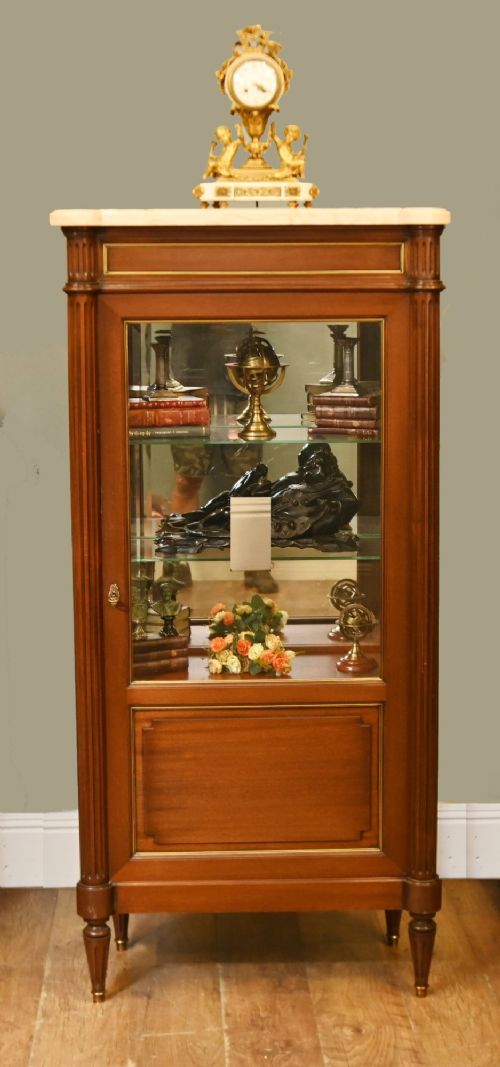
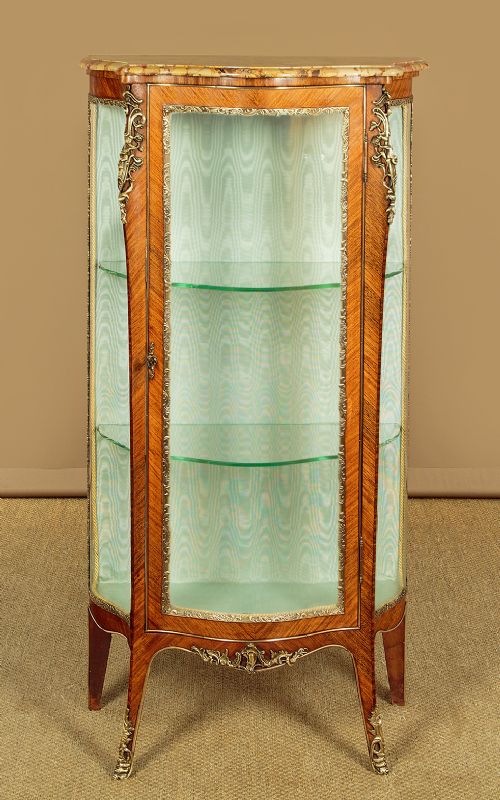
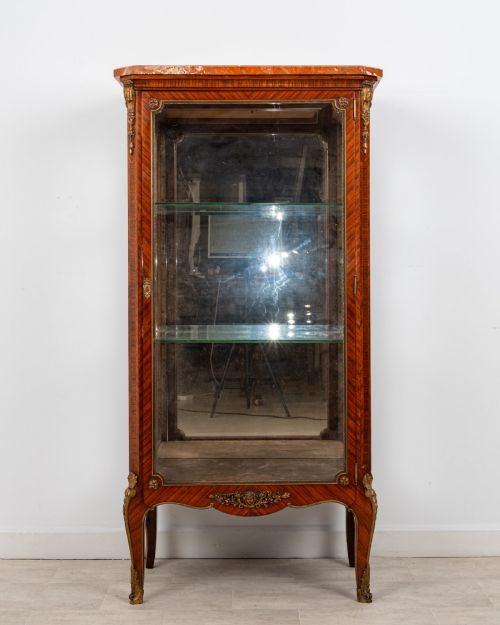
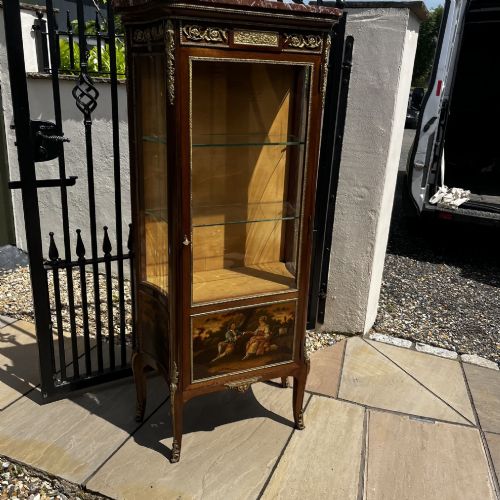
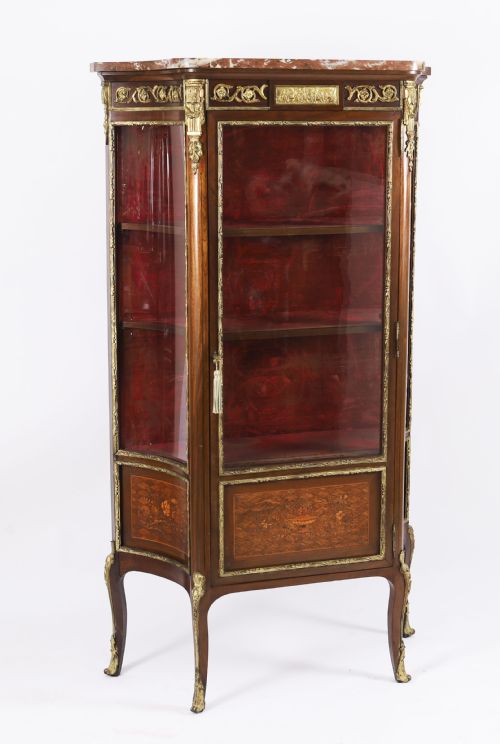
A marble top curio cabinet is a glazed display piece designed to house fragile or decorative objects while offering a solid stone surface to the top. The examples seen here belong predominantly to the nineteenth century, including Victorian pieces and items bearing specific dates such as 1870, 1890, 1900, and 1930.
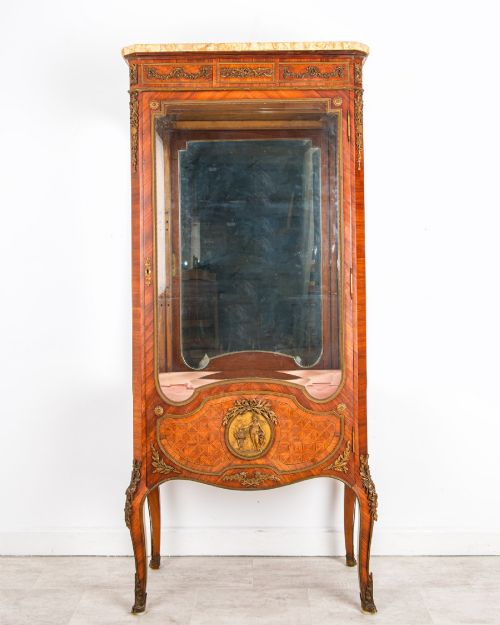
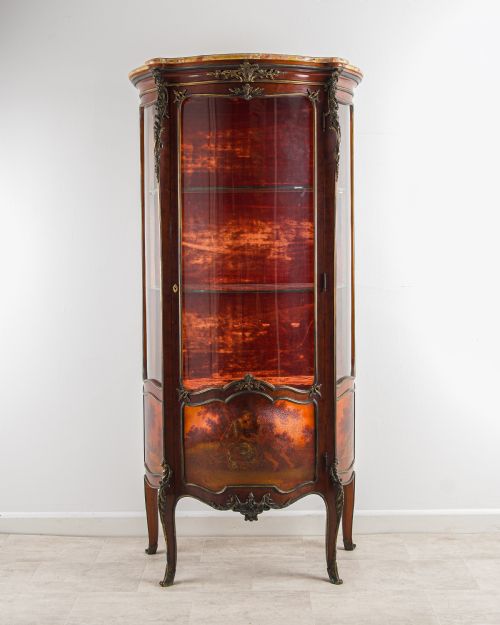
Most pieces follow French revival idioms, notably Louis XV Style, Louis XVI Style, Rococo Revival, and general Louis Revival forms. These cabinets utilise serpentine fronts, parquetry, and marquetry to create decorative impact within a room.
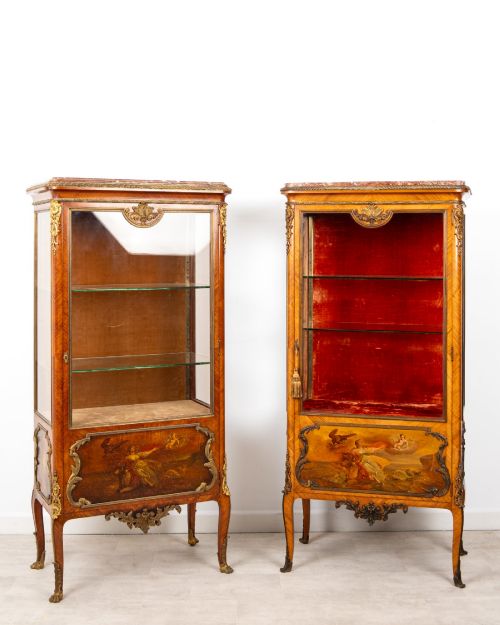
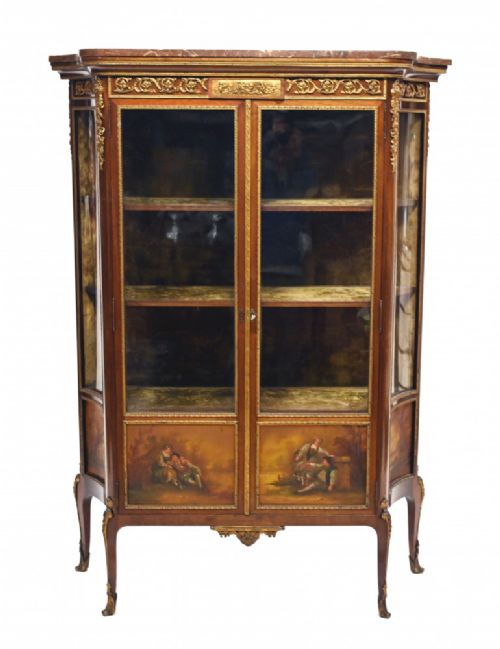
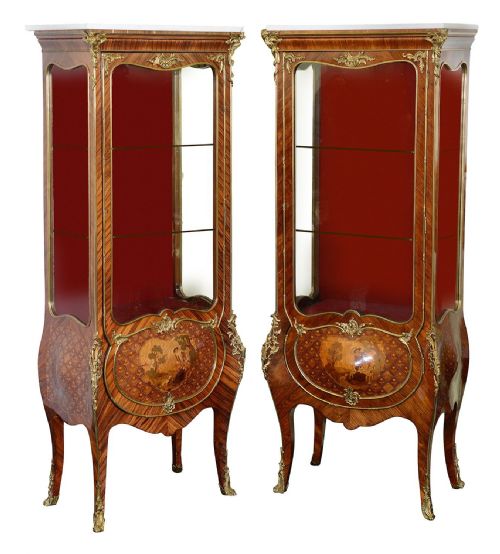
Makers and workshops including François Linke, G. Durand, and Maison Krieger appear in the evidence alongside pieces created in the manner of makers such as Gouffel. Cabinets vary from small vitrines to matched pairs with painted Vernis Martin panels.
How They Were Made
The construction of these cabinets relies on timber frameworks veneered in exotic woods such as kingwood, rosewood, and mahogany, often arranged in intricate parquetry or marquetry patterns. Painted panels in the Vernis Martin technique appear on selected examples, adding pictorial detail to the lower sections.
Mounts of ormolu, gilt bronze, and gilt-metal are cast and chased to embellish corners, feet, and cornices. Marble slabs are fitted precisely to the upper surface, providing a contrasting heavy stone top above the glazed display compartments and fabric-lined interiors.
The listings show nineteenth-century pieces spanning the Victorian era and revival periods, predominantly utilising marble, glass, ormolu, and kingwood.
What Varies in Quality
The standard of the ormolu mounts and gilt bronze decoration dictates much of the visual distinction across these cabinets. Finely chased mounts show crisp detail and careful fitting to the timber, whereas simpler work lacks depth and precision.
The choice of cabinet timber and the complexity of the parquetry or marquetry veneer indicate the workshop's investment in the piece. Cabinets bearing signatures from notable makers or workshops demonstrate higher precision in joinery and overall design execution.
François Linke·G. Durand·Maison Krieger·Gouffel
The Marble Top Curio Cabinet Glossary
- Vitrine
- A glass-fronted display cabinet intended for the exhibition of small objects and curiosities. These pieces often feature glazed side panels to maximise light transmission.
- Ormolu
- Gilt bronze or brass mounts applied to furniture for decorative effect. The technique involves a mercury-gilding process on cast bronze components.
- Vernis Martin
- A simulated Japanese lacquer technique developed in France, utilised for decorative painted panels on fine furniture. It creates a lustrous, translucent surface.
- Parquetry
- Geometric patterns formed by fitting small pieces of veneer onto a wooden substrate. This technique creates patterned surfaces on cabinet doors and sides.
- Marquetry
- The art of applying pieces of veneer to a structure to form decorative pictures or designs. It differs from parquetry through its pictorial and curving motifs.
Marble Top Curio Cabinet: Frequently Asked Questions
What is a marble top curio cabinet used for?
These cabinets serve to display porcelain, small sculptures, and precious collectibles behind glass doors while protecting them from dust. The glazed sides and shelves allow light to reach the items from multiple angles.
The marble top provides a firm, decorative surface that complements the gilded metal mounts and polished wood veneers of the cabinet body.
How do I distinguish Louis XV and Louis XVI styles?
Louis XV style furniture is characterised by curving lines, serpentine fronts, and asymmetrical rococo motifs. The legs typically sweep outward in cabriole shapes.
Louis XVI style introduces straight lines, symmetry, and neoclassical details such as fluted columns and rectilinear frames, reflecting a shift in taste toward classical antiquity.
What timber is commonly found on these cabinets?
Kingwood is the primary timber seen across the listings, often paired with rosewood or mahogany. These exotic woods provide rich grain patterns that complement the parquetry and marquetry designs.
Selected cabinets also incorporate painted panels or gilt bronze mounts to enhance the colourful wood surfaces.
How should I care for the marble top?
The marble surface requires gentle cleaning with a soft cloth and neutral soap to preserve the polish and prevent staining. Avoid acidic liquids and harsh commercial cleaners that can etch the stone.
Regular dusting keeps the surface clear, while periodic waxing of the wooden frame maintains the surrounding veneer.