



French Giltwood Ottoman
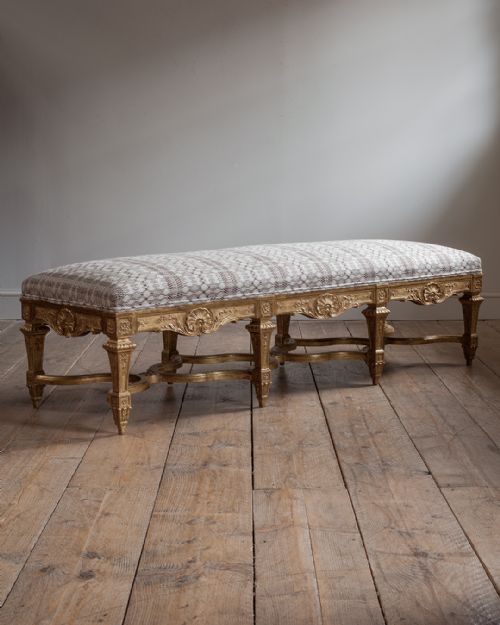
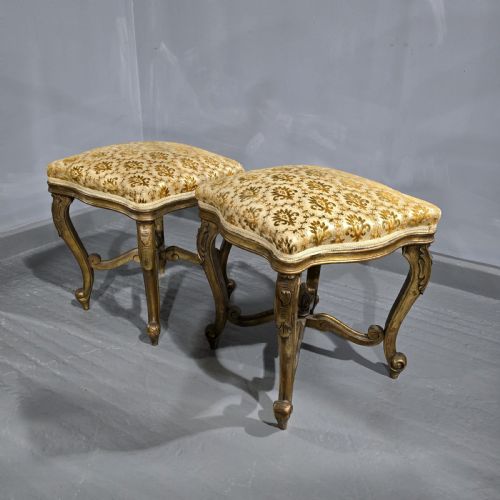
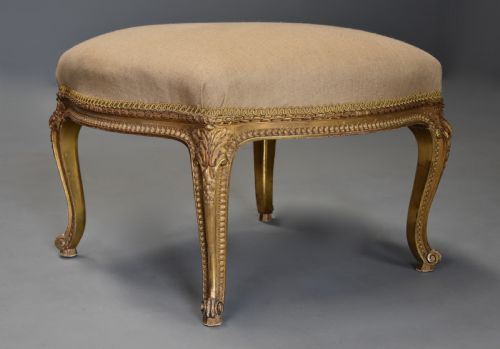
These french giltwood ottoman pieces bring carved wooden frames and rich textiles together to anchor a classic seating arrangement.
French Giltwood Ottoman
A french giltwood ottoman search brings up nineteenth century stools, footstools, benches, and window seats finished in gold leaf or gilt paint. Most examples on this page date from the nineteenth century, including specific years from eighteen hundred to nineteen twenty, alongside Victorian interpretations.
The forms range from simple footstools and curule stools to large carved centre stools, window seats, and multi piece duchesse brisee suites. Makers and designers sometimes utilised beech and other timbers beneath the gilded surface to support the heavy textile upholstery.
Revival styles dominate the selection, showing distinct influences from Louis XIV, Louis XV, Louis XVI, and French Rococo aesthetics. Buyers frequently encounter pairs of stools alongside single large armchairs accompanied by matching footstools.
How they were made
Carved wood and timber provide the structural core for these items, with beech frequently employed by makers for its strength and fine grain. Artisans applied thin layers of gold leaf or gilt coatings over a prepared gesso and bole base to achieve the characteristic metallic sheen.
Textiles and fabrics complete the upholstery work, utilising velvet, linen, and red silk to pad the seats. Traditional techniques involved deep buttoning and hand carving to shape the wooden frames and secure the soft coverings.
The selection spans from eighteen hundred through the nineteenth century, capturing various Victorian and French Neoclassical revivals.
What varies in quality
The depth and crispness of the hand carving on the wooden frame separate standard production from superior work. Makers who invested time in detailed floral or scroll motifs produced pieces with greater visual weight and definition.
The application and preservation of the gilding alter the overall character of an item. Intact gold leaf reflecting light evenly displays a higher level of original craftsmanship than worn or poorly restored surfaces.
LOIDRAULT FRERES PARIS·A.M.E. Fournier
The French Giltwood Ottoman Glossary
- Giltwood
- Wood that has been coated with gold leaf or a gold coloured finish. This decorative technique protects the timber while providing a bright metallic appearance.
- Duchesse brisee
- A multi part chaise longue consisting of a chair and one or two footstools that combine to form a single resting place. It allows the user to recline fully with support beneath the legs.
- Curule stool
- An ancient Roman magistrate form of seat featuring a cross shaped X frame. Nineteenth century revival makers reinterpreted this historic shape in gilded timber.
- Gesso
- A plaster mixture applied to wooden furniture frames to create a smooth surface for gilding. It holds fine carved details before the gold leaf is laid down.
French Giltwood Ottoman: Frequently Asked Questions
What is a french giltwood ottoman?
These items are nineteenth century upholstered seats featuring carved wooden frames coated in gold leaf or gilt paint. They include footstools, window seats, and larger centre pieces designed for formal reception rooms.
Most examples reflect French revival styles such as Louis XIV or Louis XVI, combining exposed gilded timber with soft fabric upholstery.
How do I clean the giltwood frame?
Gilt surfaces require gentle maintenance to preserve the delicate gold leaf layer over the gesso and wood. Use a soft, dry cloth to remove dust without rubbing the metallic finish.
Avoid liquid cleaners, polishes, and abrasive cloths, as these substances can strip the thin gilt coating from the carved timber beneath.
Are these pieces comfortable for daily use?
Many nineteenth century stools and window seats were built with substantial padding, linen, or velvet upholstery for resting feet or sitting. Some feature deep buttoning designed to maintain firm support over time.
Buyers should assess the internal webbing and padding condition if the piece is intended for regular seating rather than display.
How do I identify a revival style?
Nineteenth century makers often copied earlier French court aesthetics, incorporating Louis XIV symmetry or Louis XV curves into their furniture. Look at the boldness of the carved scrolls and the proportion of the legs to determine the specific historical influence.
Stamps or attribution marks on the wooden frame can also point to the specific Parisian workshop or designer responsible for the creation.