
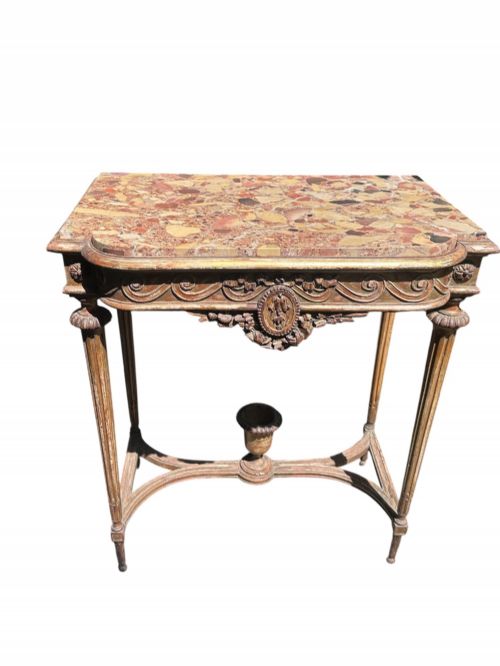


French Giltwood Console Table
A french giltwood console table brings ornate continental character to an interior, combining gilded surfaces with shaped marble tops.
French Giltwood Console Table
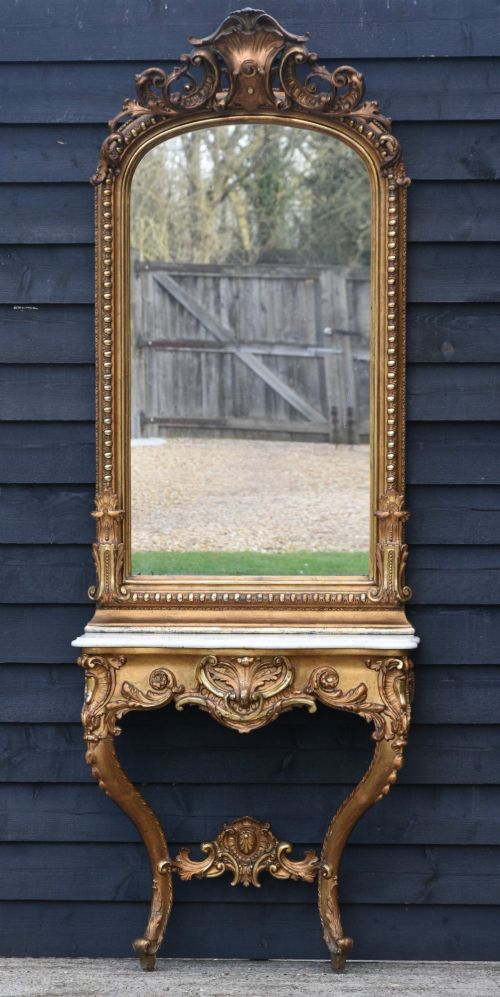
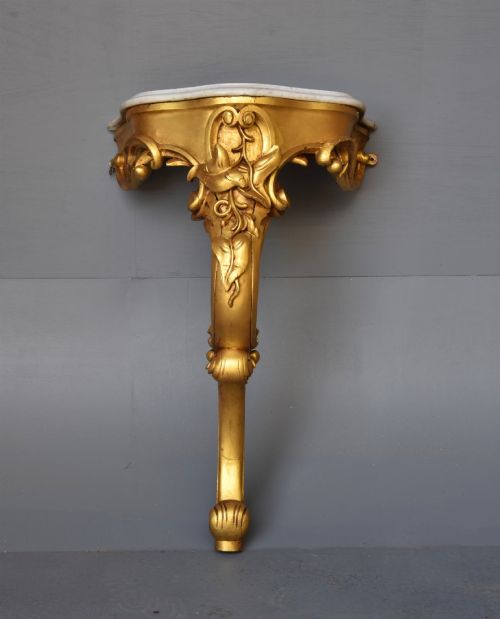
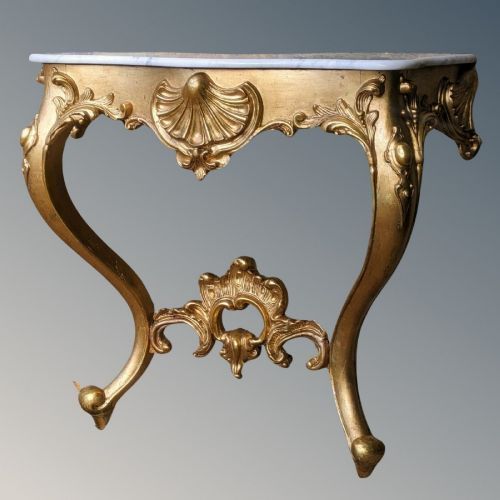
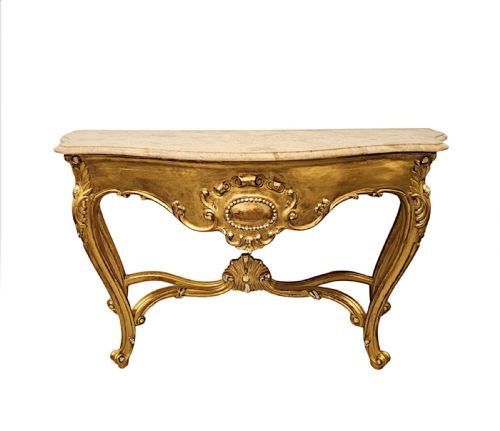
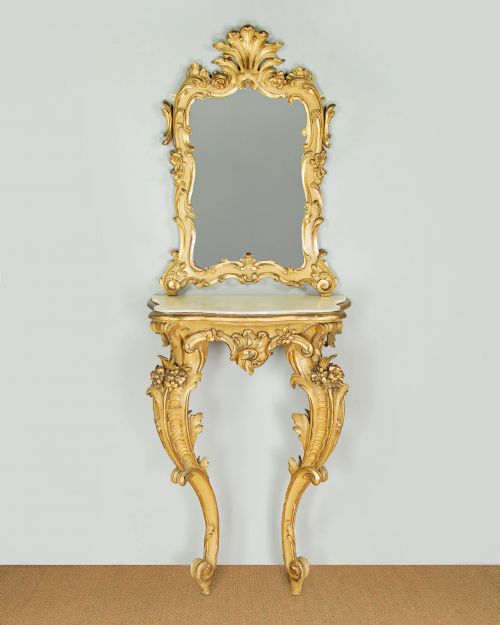
A french giltwood console table is a decorative wall-mounted or freestanding support designed to stand in a hallway or principal room, often paired with a matching pier mirror. The examples found here span the eighteenth, nineteenth, and early twentieth centuries, reflecting enduring design revivals.
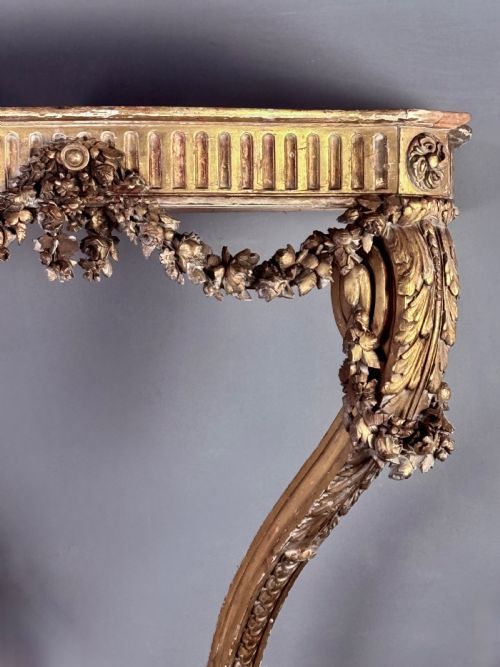
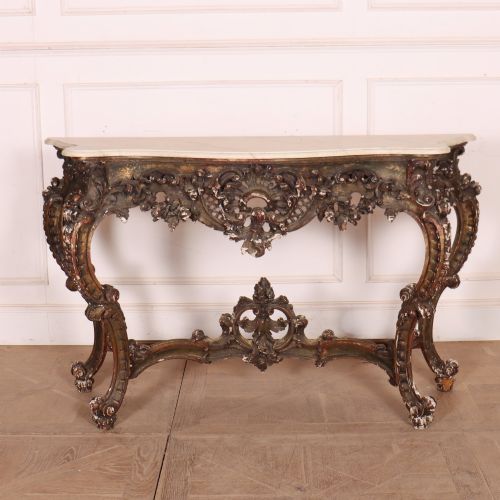
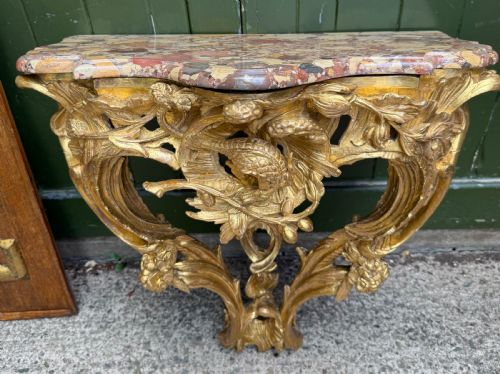
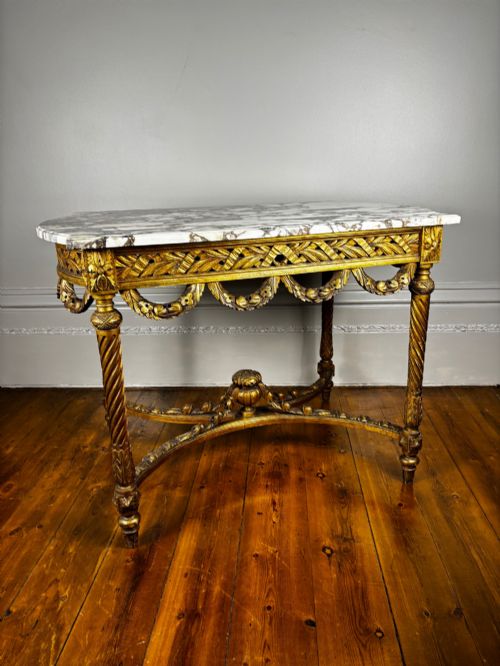
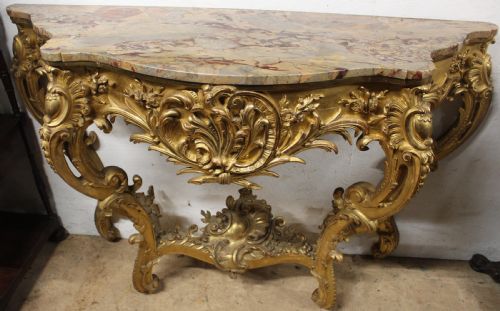
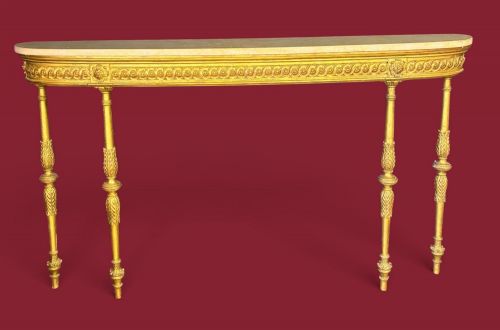
The dominant form on this page pairs a carved wooden framework with an inset marble top, such as white Carrara or figured varieties like breche d'alep and sienna. Many pieces adopt serpentine fronts or demi-lune shapes, drawing directly on historical French Rococo and Louis XVI vocabularies.
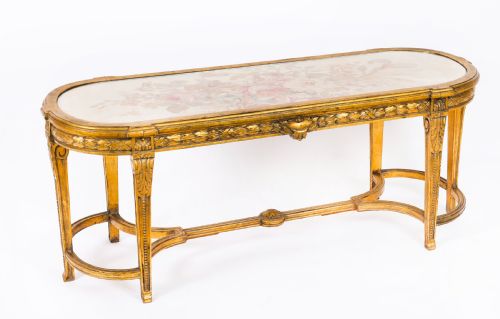
Makers and workshops produced variations ranging from simple side tables and centre tables to monumental console tables with trumeau style mirrors. These furnishings served as theatrical focal points in period reception rooms, designed to display decorative objects or reflect light from windows.
How they were made
Carved wood and gesso form the structural base of these surfaces, providing the relief work necessary for elaborate scrolls, foliage, and classical motifs. Artisans applied gold leaf or paint over the gesso preparation to achieve the signature reflective finish.
Marble slabs, shaped to follow the serpentine or rectilinear contours of the wooden base, rest on top without complex mechanical fixings. The stone surfaces often feature distinct natural figuration, contrasting with the brilliant metallic sheen of the gilded frame.
Listings feature periods spanning from the eighteenth century through to the 1920s, dominated by nineteenth-century Rococo and Neoclassical revivals.
What varies in quality
The depth and crispness of the hand-carving define the upper tiers of production, separating fluid, deeply undercut foliage from softer, more mechanical moulding. Master carvers achieved a sense of movement in the wood that lesser workshops missed.
The choice of marble and the weight of the gilt application dictate the overall presence of the table. Thicker slabs of figured marble and meticulous multi-layered gilding distinguish the grander salon pieces from smaller domestic variants.
Felix-Alfred Ternisien
The French Giltwood Console Table Glossary
- Giltwood
- Wood coated with gold leaf or metallic powder applied over a prepared gesso ground. This technique creates a luminous surface finish characteristic of formal continental furniture.
- Console Table
- A table designed to be fixed against a wall, historically supported by front legs or wall brackets. They often feature elaborate underframes and flat backs.
- Serpentine Front
- A furniture front characterised by a central convex curve flanked by concave curves, or the reverse. This undulating shape adds visual movement to the piece.
- Pier Mirror
- A tall mirror designed to hang on the wall space between two windows, frequently positioned directly above a matching console table. It helps amplify natural light within a room.
- Rococo
- An exuberant artistic style originating in France, defined by asymmetrical ornamentation, C-scrolls, and naturalistic plant motifs. It experienced major revvivals during the nineteenth century.
French Giltwood Console Table: Frequently Asked Questions
Where should I place a console table?
These tables traditionally occupy entrance halls, grand corridors, or principal reception rooms where their decorative profiles can be appreciated. Because many versions were designed to stand against a wall beneath a mirror, they suit narrow spaces that benefit from added visual weight and reflected light.
Placement depends heavily on whether the table is freestanding or relies on wall support for stability. Pairing the piece with a matching pier mirror creates a cohesive architectural feature on a blank wall.
How do I care for giltwood surfaces?
Giltwood requires gentle maintenance to preserve the delicate gold leaf and gesso layers applied over the carved timber. Dusting should be done lightly with a dry, soft cloth, avoiding commercial polishes or moisture that can lift the metallic leaf.
Because historical gilding is sensitive to environmental changes, keeping the table away from direct heat sources and strong sunlight prevents the wood beneath from warping and cracking the surface.
How do I tell Louis styles apart?
Louis XV pieces, often associated with the Rococo revival, favour asymmetrical lines, curving C-scrolls, and organic floral motifs without rigid symmetry. The woodwork flows continuously without straight structural interruptions.
Louis XVI design shifts toward neoclassical order, featuring straight fluted legs, geometric symmetry, and classical motifs such as urns, swags, and acanthus leaves. Proportions become more rectilinear and restrained.
Are marble tops original to the tables?
Most surviving examples retain their heavy stone slabs, which were cut specifically to follow the undulating serpentine or demi-lune contours of the wooden frame. The marble rests securely within the carved wooden rebate under its own considerable weight.
Varieties like white Carrara or figured breche d'alep align with the specific period aesthetic of the table, whether nineteenth-century revival or eighteenth-century original.