


Carved Gilt Hallway Table
When a carved gilt hallway table catches the light, it brings immediate architectural presence and a sense of historic grandeur to an entrance hall.
Carved Gilt Hallway Table
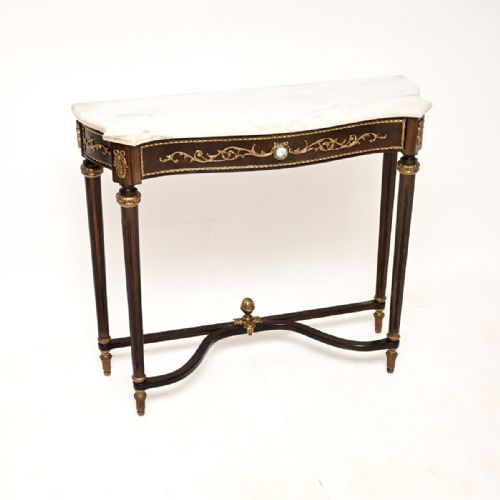
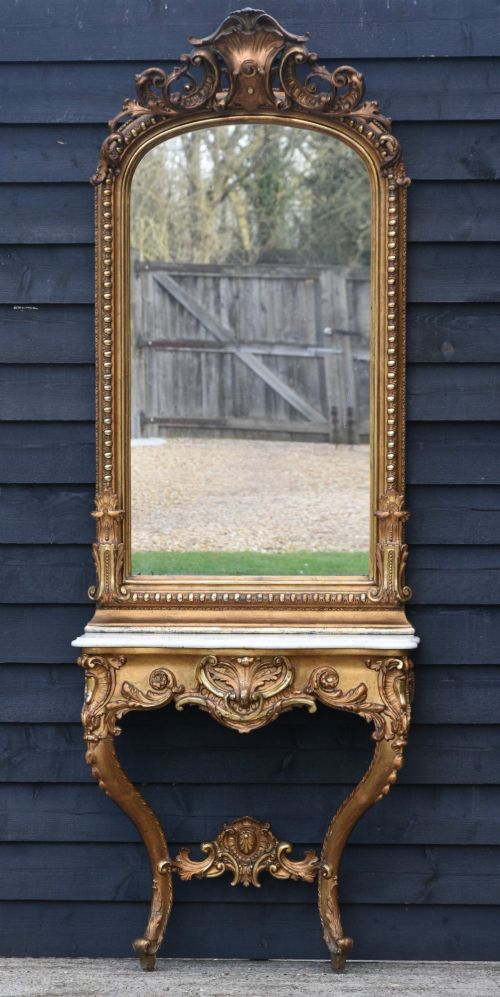
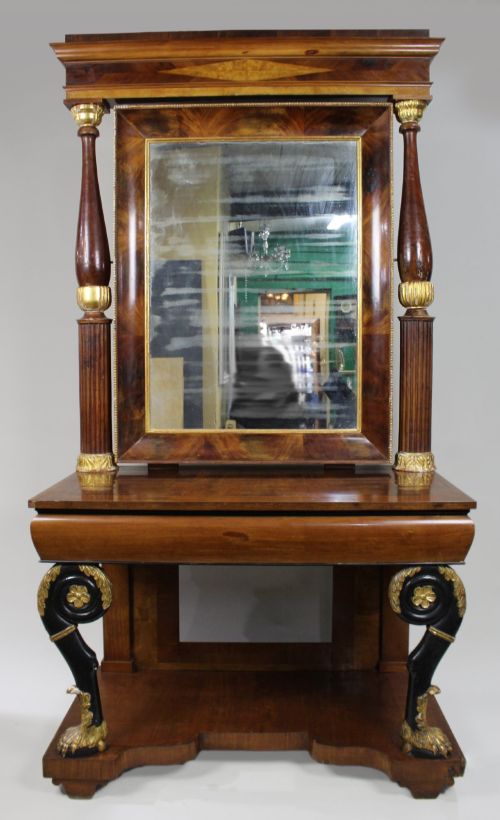
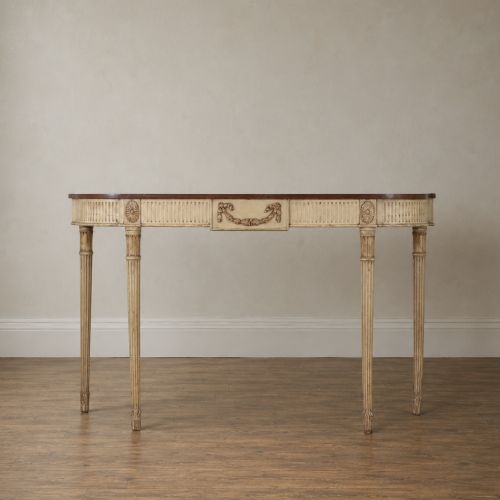
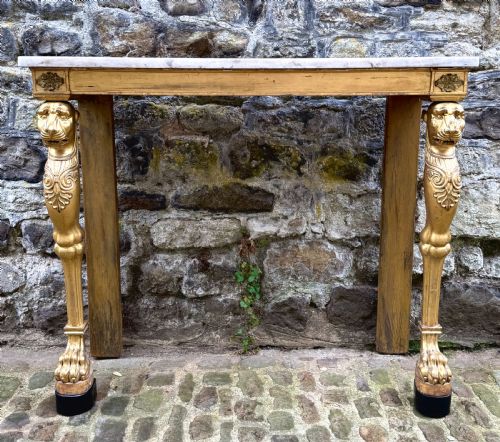
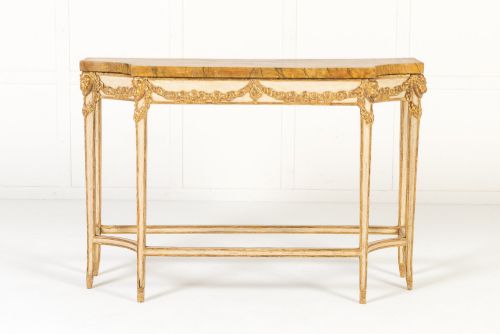
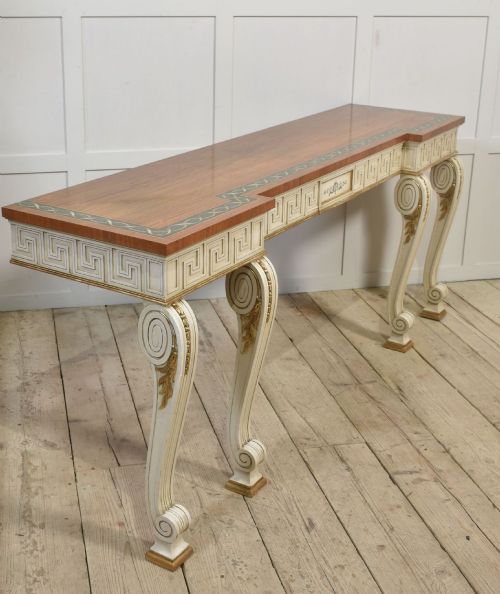
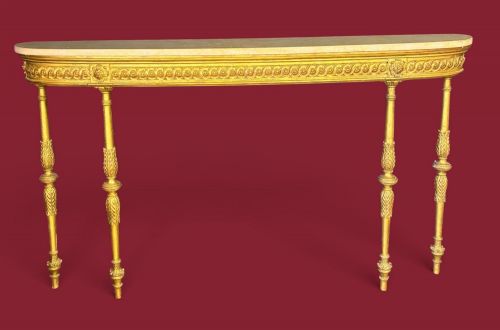
A carved gilt hallway table primarily manifests as a console table, often paired with a matching pier mirror or topped with marble. These pieces serve as striking focal points in entrance spaces, designed to sit flush against a wall.
The selections span from the nineteenth century through to the early twentieth century, incorporating revival aesthetics such as French Rococo, Neoclassical, Regency, and Louis XVI period styles. Many examples exhibit serpentine outlines or demi-lune forms.
Origins represented in the evidence stretch across English, French, and Italian workshops. Buyers encounter everything from painted and parcel gilt surfaces to heavy, solid giltwood frames.
Materials and construction methods
Craftsmen built these tables using carved wood, mahogany, and gesso as a base for intricate surface decoration. Gold leaf and paint were then applied to achieve the characteristic gilded finish.
Slabs of marble, including rouge and Sienna varieties, frequently form the tabletops, providing a cool, hard-wearing surface. Glass is integrated into accompanying pier mirrors and wall mirrors to complete the matched sets.
The current selection spans multiple decades of the nineteenth and early twentieth centuries, featuring both English and continental origins.
Distinguishing quality across the range
The depth and crispness of the wood carving distinguish finer examples from simpler production. Hand-chiseled details and well-defined gesso relief work demonstrate superior craftsmanship.
The choice and thickness of the marble top, along with the purity of the gold leaf application, mark the upper tiers of the range. Complete sets featuring both the console table and the original pier mirror also represent a higher tier of historic cohesion.
Gillows
The Carved Gilt Hallway Table Glossary
- Giltwood
- Wood that has been coated with gold leaf or gold dust. This finish creates a brilliant reflective surface characteristic of formal period furniture.
- Console table
- A table supported by wall brackets or console legs, designed to stand against a wall. These tables often feature narrow depths suited for hallways.
- Pier mirror
- A tall mirror designed to hang in the pier, which is the wall space between two windows. They are frequently paired directly above console tables.
- Demi-lune
- A half-moon shape used for table tops and furniture footprints. This silhouette allows the table to fit snugly against flat hallway walls.
- Gesso
- A plaster-like mixture applied to wood surfaces to create a smooth base for gilding. Skilled carvers model intricate relief designs directly into this layer.
Carved Gilt Hallway Table: Frequently Asked Questions
Where should a console table go?
These tables are traditionally placed in entrance halls, corridors, or principal reception rooms against a flat wall. Their shallow depth ensures they do not obstruct narrow passageways while providing a surface for decorative objects.
Pairing the table with a matching wall mirror or pier mirror enhances the sense of space and light in a narrow hallway.
How do I care for a marble top?
Marble surfaces require gentle cleaning with a damp cloth and mild, pH-neutral soap to preserve the polish. Avoid acidic liquids and harsh chemical cleaners that can etch the stone.
Use coasters and felt pads under decorative items to prevent scratches on the antique marble.
What is parcel gilt?
Parcel gilt refers to furniture where only specific carved details or raised elements are highlighted with gold leaf. The rest of the piece is painted or finished in exposed wood, such as mahogany.
This technique creates a subtle contrast between the gilded highlights and the darker wood or painted ground.
How do I identify a revival style?
Revival pieces produced in the nineteenth or early twentieth century borrow decorative motifs from earlier eras, such as Louis XVI or Regency periods. Look at the boldness of the carving and the construction techniques to date the actual manufacture.
Labels like Georgian Revival or French Rococo Revival indicate the historical design vocabulary utilised by later makers.