
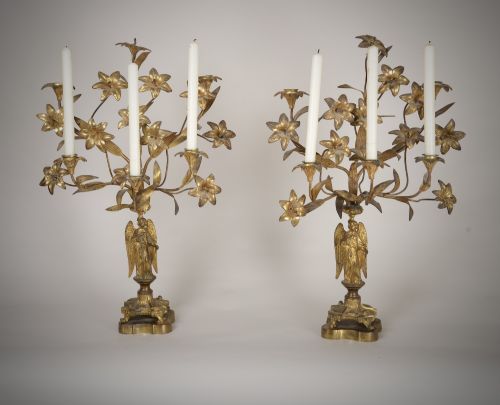
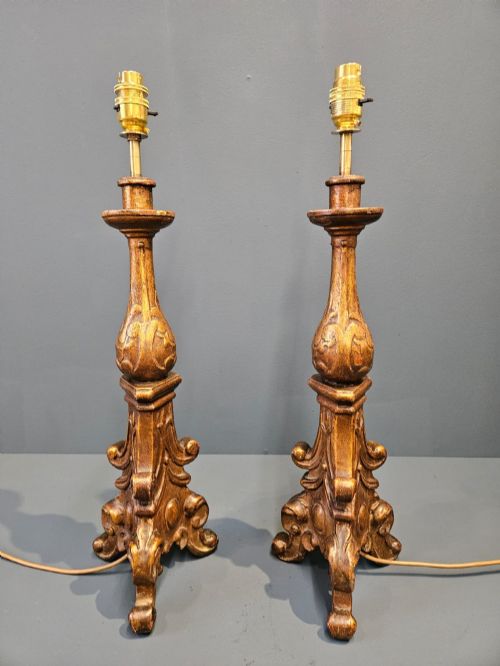


French Gilt Altar Candlesticks
French gilt altar candlesticks combine ecclesiastical grandeur with rich metallic warmth, bringing dramatic height and historic surface texture to any room.
French Gilt Altar Candlesticks
When you search for french gilt altar candlesticks, you encounter items designed for church altars alongside domestic conversions like table lamps. These pieces span periods from the eighteenth century through the nineteenth century, encompassing Victorian interpretations and continental designs.
The forms vary from standard candlesticks and tall pricket sticks to multi-branched candelabra and converted lamp bases. Brass, carved wood, giltwood, gesso, and gold leaf dominate the physical evidence across these listings.
Stylistically, pieces draw upon Baroque, Rococo Revival, and Gothic Revival traditions. Pairs and larger sets frequently emerge, reflecting their original ecclesiastical deployment.
How they were made
Maker techniques rely heavily on carved wood foundations finished with gesso and gold leaf or gilt layers. Metal alternatives utilise cast brass and gilt bronze, providing robust structural integrity for taller ecclesiastical forms.
Surface ornamentation is achieved through manual carving or metal casting before the application of the gilt finish. Subsequent conversions into table lamps often integrate electrical wiring through the original wooden or metallic shafts.
The current selection spans multiple periods from the eighteenth century to nineteen-twenty, featuring both carved wood and brass materials.
What varies in quality
The standard of carving and casting separates robust examples from simpler iterations. Crisp detail in the gesso work and the depth of the hand-carved wooden elements dictate visual impact.
The preservation of the original gold leaf or gilt surface determines the character of the piece. Patina accumulated across centuries alters the reflective quality of the metal and wood.
The French Gilt Altar Candlesticks Glossary
- Pricket stick
- A candlestick featuring a central metal spike designed to secure a candle rather than a socket. This form is common in church settings.
- Giltwood
- Timber treated with a thin layer of gold leaf or gilt finish. It forms the primary structural material for many continental decorative objects.
- Gesso
- A plaster mix applied to wood surfaces to prepare them for gilding. It allows for intricate relief ornamentation before the gold leaf is laid.
- Candelabra
- A branched candleholder holding multiple candles simultaneously. These pieces often match the decorative language of single altar sticks.
French Gilt Altar Candlesticks: Frequently Asked Questions
What is a pricket stick?
A pricket stick is a specific type of candleholder that uses an upward-pointing metal spike to impound the base of a candle. This design originates from traditional church altars where large wax candles required secure mounting.
Such pieces often appear converted into modern table lamps while retaining their distinctive central spike and wider drip pan base.
How are these candlesticks dated?
Dating relies upon stylistic markers such as Baroque scrollwork, Gothic revival motifs, and the specific composition of the timber and gesso substrates. Examining the wear patterns on the gold leaf provides additional context regarding age.
Listings attribute these items across the eighteenth and nineteenth centuries based on these physical characteristics.
Were they used in homes?
Originally manufactured for ecclesiastical environments like churches and chapels, many examples transitioned into domestic spaces over subsequent centuries. This movement accounts for the prevalence of converted lamp bases found today.
Their substantial height and decorative presence made them popular choices for grand domestic interiors during the Victorian era and beyond.
What materials are most common?
The listings show a split between carved timber constructions finished with gesso and gold leaf, and cast metal pieces utilising brass and gilt bronze. Iron also appears in specific structural contexts.
Surface finishes range from bright metallic leaf to muted patinated giltwood and treen.