
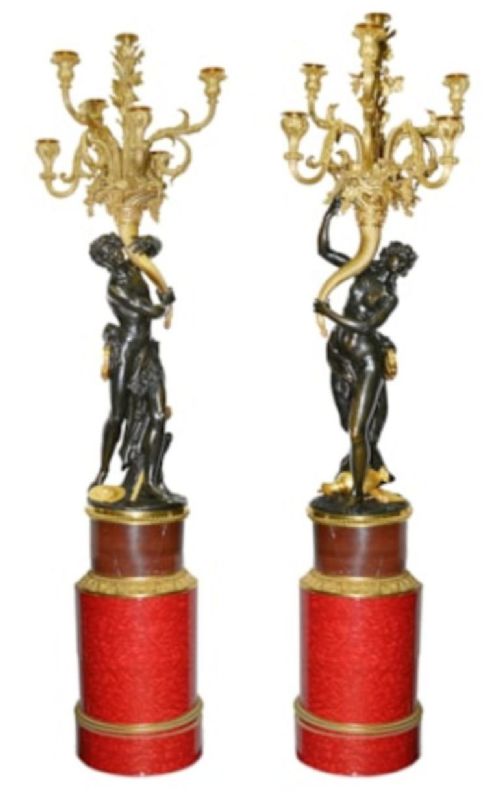
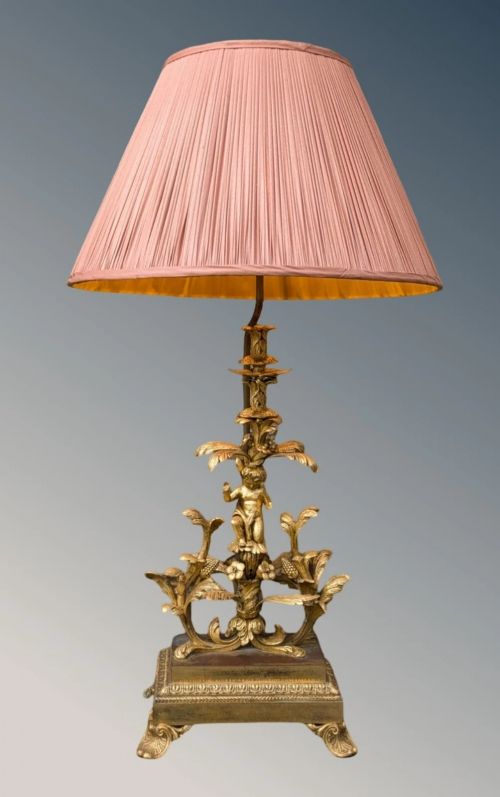


Large Gilt Candlesticks
Large gilt candlesticks bring scale and rich metallic warmth to a room, spanning grand French Rococo Revival designs and heavy Victorian brass pairs.
Large Gilt Candlesticks
Large gilt candlesticks are substantial lighting pieces designed for tabletop or altar placement, often converted to electric lamps over time. When exploring large gilt candlesticks on this page, the most frequent encounters are nineteenth-century French and English pairs rendered in cast metals.
The selection ranges from ecclesiastical pricket sticks and towering Corinthian columns to ornate candelabra branching into multiple lights. Makers drew heavily upon Louis XVI, Rococo Revival, and Neoclassical vocabularies, incorporating decorative motifs like putti, foliage, and classical drapery.
Origin points span English, French, and Italian workshops, reflecting diverse regional tastes in domestic and church interiors. Dating stretches from the eighteenth century through the Edwardian era, with nineteenth-century Revival periods heavily represented in the current selection.
Materials and construction methods
Foundry casting formed the structural core of bronze, ormolu, and brass pieces, allowing makers to achieve intricate relief work and sculptural forms. Molten metal was poured into complex moulds before undergoing chasing and gilding to create a brilliant, reflective surface.
Carved wooden examples utilise gesso and gold leaf over timber bases, particularly seen in Italian altar-style and French giltwood items. Combinations of marble, toleware, and cloisonné also appear, introducing contrasting textures to the primary metallic finishes.
Several pairs feature chubby putti and cherubs hoisting up candle sockets as if lighting is heavy lifting.
Distinctions in quality and execution
Artisanal assembly methods, such as screw-threaded internal rods holding multi-part bronze castings together, indicate superior manufacturing standards. The integration of decorative elements like hand-painted porcelain plaques or inlaid marble bases further elevates the distinction of a pair.
The Large Gilt Candlesticks Glossary
- Ormolu
- Gilded bronze, typically produced using a mercury amalgamation process on French decorative objects. This technique yields a deep, warm metallic lustre characteristic of eighteenth and nineteenth-century luxury pieces.
- Pricket stick
- An ecclesiastical candlestick featuring a sharp central spike rather than a socket to hold the wax taper. These are commonly found on older altar-style pieces.
- Candelabra
- A branched candlestick holding multiple candles or light fittings simultaneously. They often feature removable branches to allow use as simple candlesticks.
- Giltwood
- Timber carved and subsequently coated with fine gold leaf over a prepared gesso ground. This finish is frequently encountered on Italian and French ecclesiastical furnishings.
- Corinthian column
- A classical architectural order featuring an ornate capital decorated with acanthus leaves. This motif appears frequently on nineteenth-century brass and bronze column candlesticks.
Large Gilt Candlesticks: Frequently Asked Questions
Were these originally electric?
Most pieces began life holding wax candles, tapers, or oil lamps before later conversion to electricity.
Wiring is typically added through existing hollow channels without compromising the antique structure.
How do I tell church sticks apart?
Ecclesiastical candlesticks often feature taller proportions, pricket spikes, or Masonic symbols cast into the metal.
Domestic pairs tend to incorporate domestic lighting bobeches, removable drip pans, and more decorative domestic motifs.
What periods are represented here?
The selection includes items spanning from the eighteenth century through the Edwardian period.
Nineteenth-century pieces heavily feature Revival styles such as Louis XVI, Rococo, and Neoclassical.