


French Folk Art Ceramics
French folk art ceramics bring rustic warmth and regional charm to any room through hand-painted earthenware figures and serving dishes.
French Folk Art Ceramics
French folk art ceramics encompass a delightful array of utilitarian and decorative regional pieces originating from provincial kilns. When you browse french folk art ceramics, you encounter charming earthenware vessels, sculptural animal figures, and hand-painted dishes rooted in traditional village life.
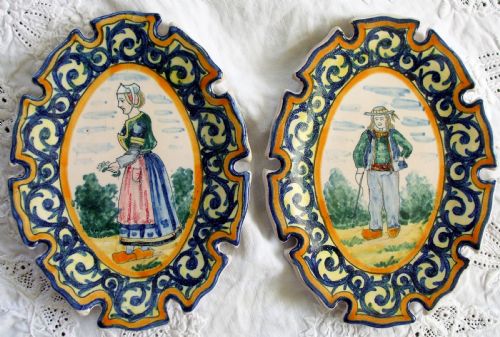
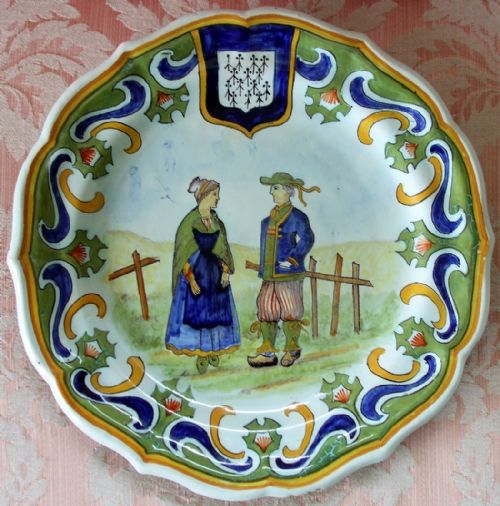
The selection on this page leans heavily towards provincial faience from Quimper and Desvres, alongside architectural terracotta figures from Normandy. These pieces reflect the distinct decorative idioms of their respective towns, often featuring traditional motifs and robust regional forms.
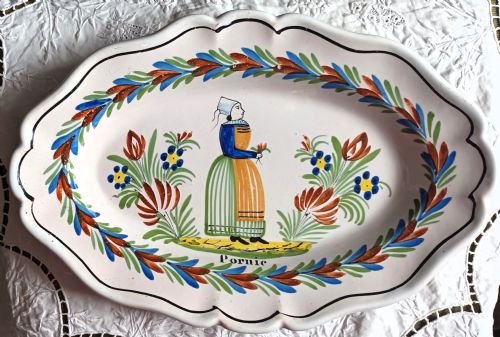
Buyers will find domestic objects ranging from decorative bowls and pin trays to serving platters and sculptural cats or pigs. Each item displays the hand of the regional artisan, moving far beyond mass-produced factory wares to offer genuine domestic history.
How they were made
Potters shaped local clays by hand or wheel before applying tin glazes to create smooth, opaque white surfaces suited for painting. Artisans then brushed pigments directly onto the unfired or raw glaze, capturing lively rural scenes and floral patterns with loose, expressive strokes.
Sculptural items like roof tile felines and animal figures utilise durable earthenware and terracotta, designed to withstand external elements while displaying fine surface modelling. Firing took place in regional kilns where temperature fluctuations often imparted subtle, individual quirks to the finished glaze.
Listings feature ceramics primarily in 19th Century, 1910, and 1900 dates, using materials such as earthenware, faience, and glass.
What varies in quality
Quality in these regional pieces rests primarily on the confidence and expressiveness of the hand-painted decoration rather than technical perfection. Superior examples display brisk, assured brushwork on the tin glaze, where figures and floral borders possess genuine character and balance.
Quimper·HB Quimper·HR Quimper·Desvres·Bavent
The French Folk Art Ceramics Glossary
- Faience
- Tin-glazed earthenware decorated with metal oxides over an opaque white enamel. This technique allowed provincial potters to achieve bright colours and intricate designs on local clay bodies.
- Tin Glaze
- An enamel glaze rendered opaque by the addition of tin oxide, providing a clean white background for painted decoration. It formed the foundational surface for much traditional European folk pottery.
- Earthenware
- Porous pottery fired at relatively low temperatures, requiring a glaze to become impermeable to liquids. It serves as the primary body material for nearly all provincial folk ceramics.
- Sabot
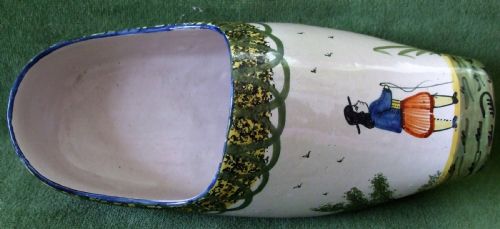
- A traditional wooden shoe form translated here into ceramic decorative objects. These whimsical pieces often feature hand-painted regional figures on the upper surface.
- Terracotta
- Unglazed or clear-glazed fired clay of a brownish-red colour, commonly utilised for sculptural roof tiles and architectural ornaments. Normandy workshops employed this robust material for animal figures.
French Folk Art Ceramics: Frequently Asked Questions
What are french folk art ceramics?
These pieces are traditional utilitarian and decorative items made in provincial French towns using local clays and tin glazes.
They include hand-painted plates, sculptural animal figures, and regional dishes reflecting village life.
How were french folk art ceramics used?
Many items served practical dining and domestic purposes in French country homes, from serving dishes to small pin trays.
Sculptural animal figures and decorated sabots were primarily decorative or architectural, often displayed on mantelpieces or roof ridges.
How do I date these ceramics?
Dating relies on identifying regional factory marks, stylistic evolution, and manufacturing techniques recorded in the piece details.
Most items seen here date from the nineteenth and early twentieth centuries, reflecting traditional regional production methods.
How should I live with them?
Integrate these colourful earthenwares into modern interiors by displaying them on walls, dressers, or open kitchen shelving.
Their rustic charm and hand-painted motifs add warmth and historical texture to both contemporary and traditional spaces.