



French Fire Fender
These French fire fender pieces protect the hearth with heavy brass, bronze, and steel designed to adjust around the hearth.
French Fire Fender
A french fire fender sits at the base of a fireplace to hold back embers and frame the hearth. When you search for a french fire fender, you find heavy metal guards originating from the nineteenth century.
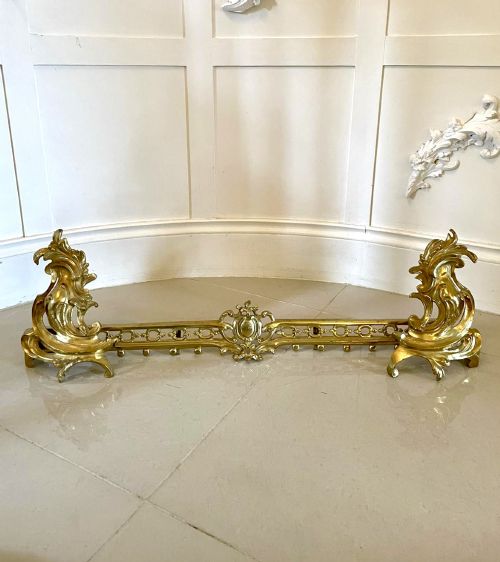
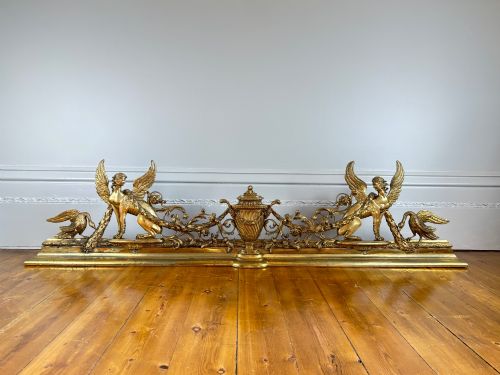
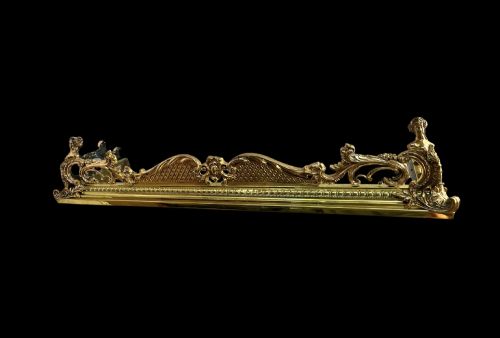
The most common versions on this page are extending and adjustable models made from gilded brass, ormolu, and cast iron. They often incorporate decorative end supports featuring putti, cherubs, or classical figures.
Many examples span the Victorian era up to nineteen twenty, reflecting distinct French design movements from Louis XV style to Neoclassical revival and Rococo.
How they were made
Maker workshops utilised cast brass and cast iron to form the main body of the fender, ensuring stability against hearth heat. Gilding, ormolu, and gilt bronze were applied to surface details to create a rich metallic sheen.
Extending mechanisms were engineered into the metal bars so the width could adjust to fit various fireplace openings. Decorative elements like chenets and figures were cast separately and mounted to the ends.
Listings feature nineteenth-century items spanning the Victorian era, utilising cast brass, ormolu, gilt bronze, and polished steel in various French revival styles.
What varies in quality
The weight of the metal and the crispness of the casting separate simpler brass rails from heavier bronze pieces. Fenders featuring finely chased ormolu details and sculptural bronze figures display superior workshop execution.
The precision of the sliding mechanism also marks the difference between standard production and higher grade items designed to extend smoothly without sagging.
E F Caldwell New York
The French Fire Fender Glossary
- Ormolu
- Gilt bronze decoration applied to metalwork. This technique uses a mercury and gold amalgam fired onto bronze to achieve a durable golden finish.
- Chenet
- An andiron placed at the hearth. These metal supports often match or accompany the fender design.
- Rococo Revival
- A nineteenth-century style reviving eighteenth-century asymmetry and scrollwork. It appears frequently in the cast ornamentation of these fenders.
- Neoclassical
- A style drawing on classical antiquity with symmetrical lines and motifs. It marks several pieces listed from the nineteenth century.
- Putti
- Depictions of chubby male infants often used as decorative end supports. They appear cast in bronze on several nineteenth-century pieces.
French Fire Fender: Frequently Asked Questions
What is a french fire fender?
A french fire fender is a decorative metal guard placed around the hearth to keep embers contained. These nineteenth-century pieces are typically made of brass, bronze, or steel.
Many examples feature adjustable frames and ornate end supports influenced by French design styles like Louis XV and Rococo.
How do adjustable fenders work?
Adjustable fenders feature sliding metal sections that expand or contract in width. This allows the guard to fit different fireplace hearth dimensions precisely.
The extending mechanism is usually concealed within the main horizontal bars of the fender.
What materials are common?
The listings show a heavy reliance on cast brass, gilded brass, ormolu, and cast iron. Bronze and polished steel also appear frequently across the nineteenth-century pieces.
Surface treatments include parcel gilt finishes and detailed bronze mountings.
How do I date a fender?
Dating relies on the stylistic markers of the metalwork, such as Louis XV scrollwork or Neoclassical symmetry. Materials like nineteenth-century ormolu and cast iron provide further chronological context.
Makers or specific period stamps, when present, also help identify the era.
Where do chenets fit in?
Chenets act as andirons that sit inside the fireplace or anchor the ends of the fender. They often share the stylistic metalwork of the fender itself.
Some pieces integrate bronze chenets directly into the fireside surround.