






French Farmhouse Bench
These french farmhouse bench examples bring working country history straight to a kitchen or dining space, shaped by generations of practical use.
French Farmhouse Bench
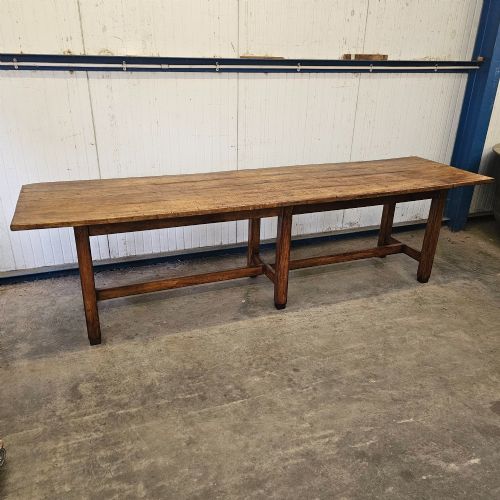
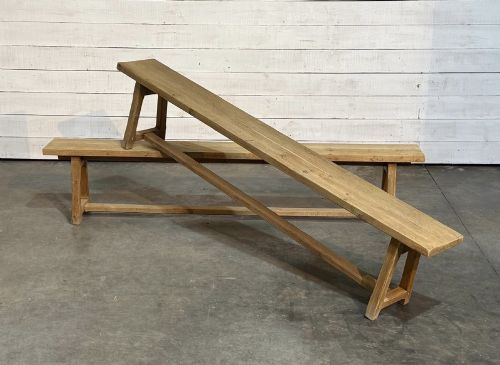
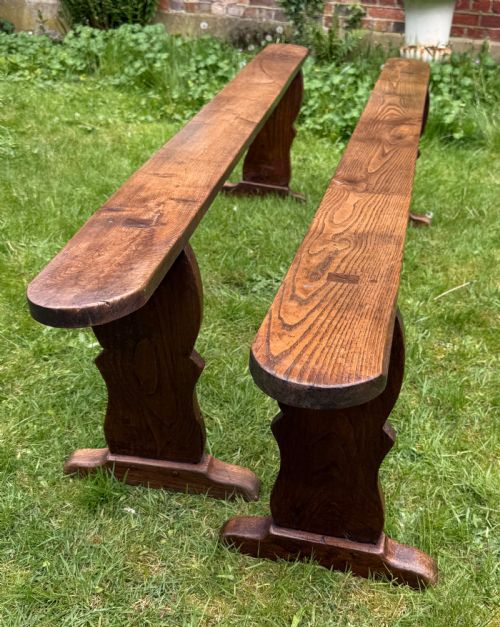
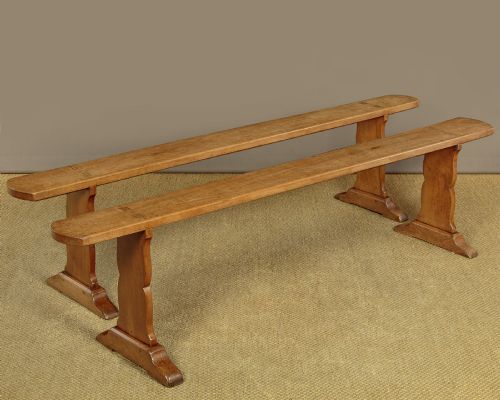
A french farmhouse bench provides long, linear seating derived from provincial kitchens, workshops and harvest floors. You will frequently encounter elm, oak and pine examples designed to tuck beneath trestle or refectory tables.
The forms span simple scratch-built pine boards to heavy cherrywood and chestnut pairs made for dining. Many surviving pieces show their origins in rural domestic life or agricultural preparation rooms.
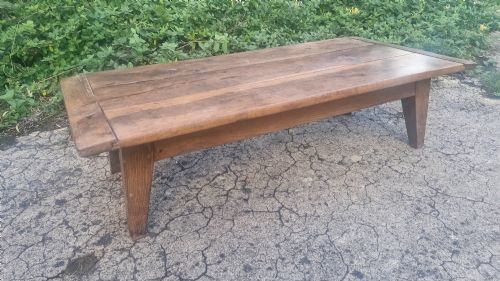
Shorter coffee table adaptations and long dining variants both appear across the inventory. The overarching style remains resolutely utilitarian, rooted in regional French provincial and rustic European traditions.
How they were made
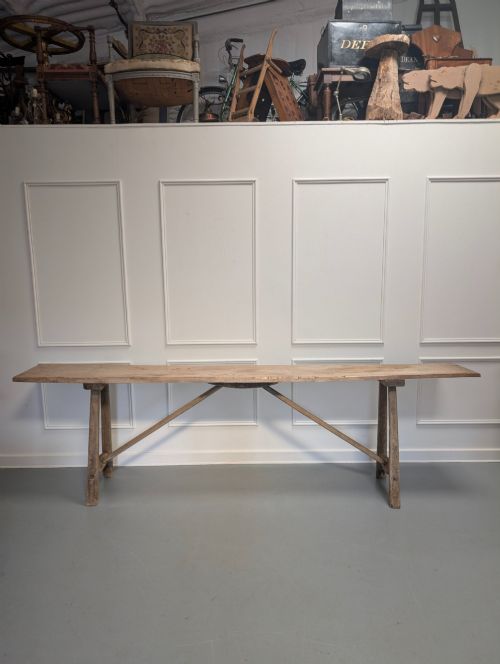
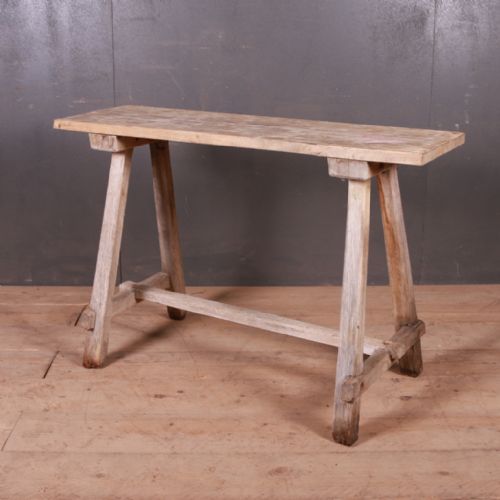
Carpenters built these items using solid regional timbers like sycamore, fruitwood and walnut, selecting durable woods that could withstand daily kitchen chores. Construction relied on straightforward joinery, pegging and sturdy trestle supports to bear heavy weight.
Surfaces often display the marks of scrubbed scrubbing or natural wear, while some examples retain traces of original paint or bleached finishes from decades of washing.
French Farmhouse Bench Retail Price Guide 2026
Typical asking prices for french farmhouse bench among the pieces listed under this phrase on Sellingantiques today, from the lower quarter to the upper quarter. They describe what is for sale here now, not the wider market.
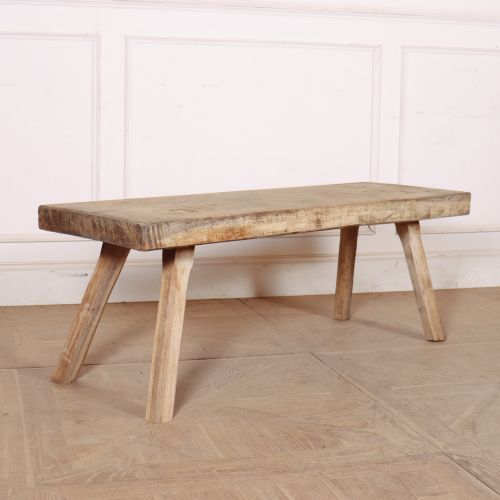
One past piece traded specifically under the delightful heading of a pig bench before finding a second life as a quirky coffee table.
What varies in quality
Quality rests in the integrity of the timber selection and the honesty of the construction rather than applied decoration. Pieces built with thick, two-board tops and well-matched timber pairs command attention for their visual balance.
The degree of honest surface patina distinguishes a superior survivor from a heavily altered object. Original scrubbed finishes and untouched structural joints preserve the authentic character that collectors seek.
The French Farmhouse Bench Glossary
- Scratch built
- Describes furniture constructed independently without mass production machinery, often utilising locally sourced timber and basic hand tools.
- Trestle support
- A structural framework where a horizontal beam is supported by two vertical legs or frames, commonly found beneath long benches and tables.
- Scrubbed finish
- A timber surface repeatedly washed and scoured with water and brush over decades, resulting in a pale, clean grain texture.
- Refectory
- A long dining format originally designed for communal halls, requiring extended seating such as matching pairs of benches.
French Farmhouse Bench: Frequently Asked Questions
How do I style a long bench?
Pair these benches with a matching wooden dining table or position them along a hallway wall for practical everyday seating.
Their linear profile also suits placement beneath windows or at the foot of a large bed.
Were these benches used outdoors?
Most surviving examples originated inside working farmhouse kitchens, dairies and harvest prep rooms rather than gardens.
Their sturdy timber construction meant they endured heavy daily domestic tasks and food preparation.
How do I identify a 19th-century piece?
Look for traditional joinery methods, hand-planed board surfaces and the characteristic warmth of aged fruitwood, elm or pine.
Wear patterns around the edges and footrests usually indicate extensive generational use in French provincial homes.
Can I use a bench as a coffee table?
Shorter variants and lower-slung primitive forms adapt easily to serving as low coffee tables in contemporary living rooms.
Their narrow proportions make them practical for tighter spaces while retaining historical character.