



French Equestrian Bronzes
French equestrian bronzes capture the muscular power and spirited movement of horses through enduring metalwork that brings nineteenth-century animalier artistry straight into the room.
French Equestrian Bronzes
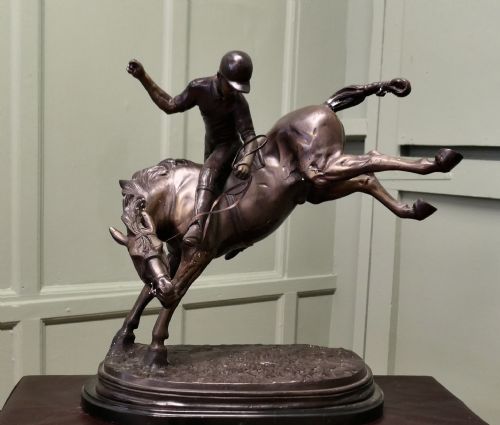
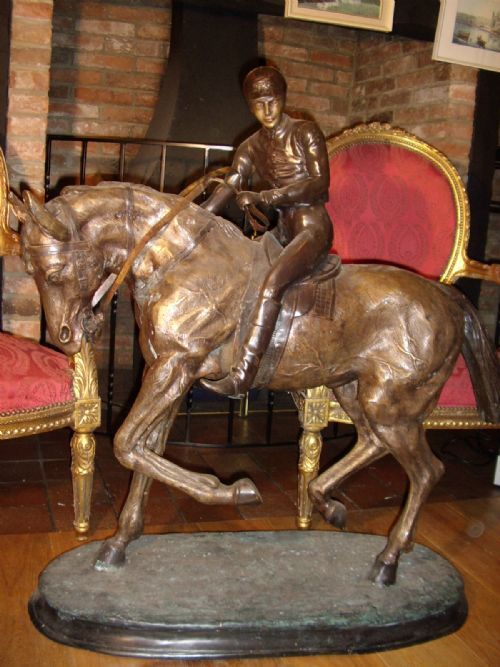
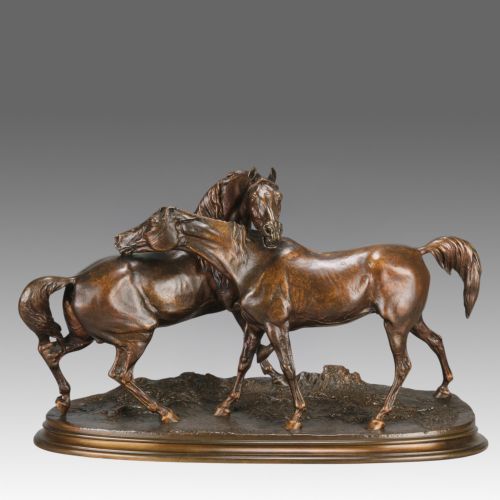
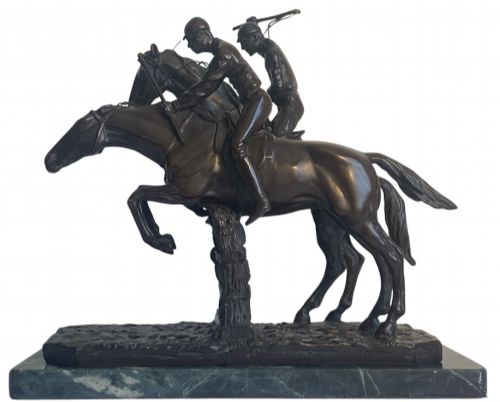
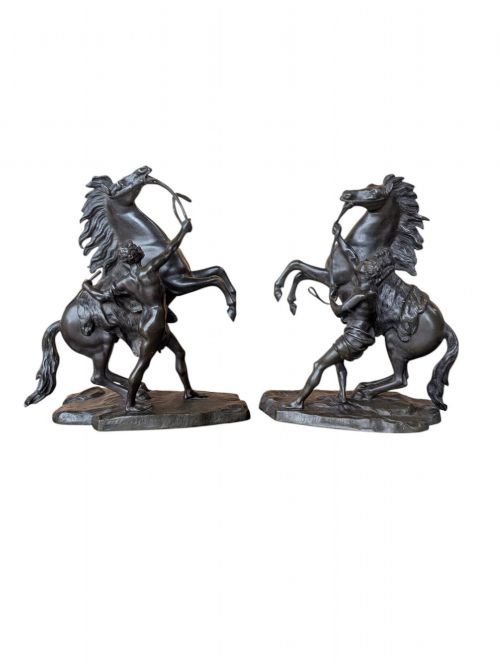
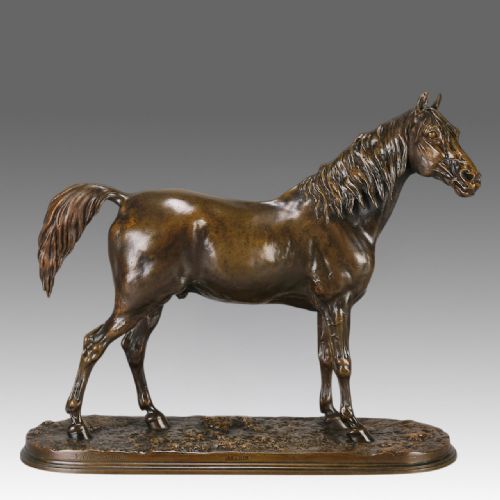
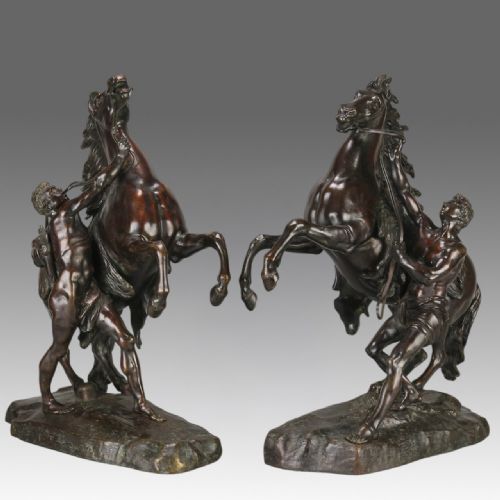
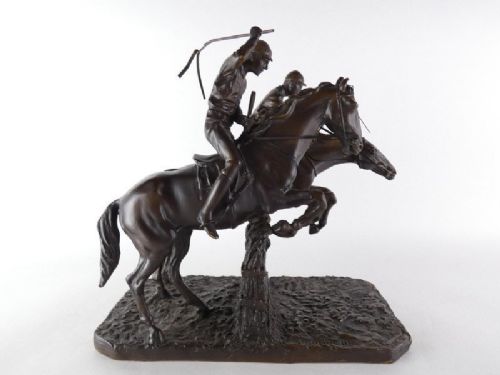
When you search for french equestrian bronzes, you encounter sculptures, mantel clocks, and decorative garnitures that focus on horses, riders, and historical figures in motion. The pieces range from naturalistic animal studies to classical subjects like Napoleon crossing the alps and the iconic Marly horses.
You are most likely to meet nineteenth-century interpretations on this page, spanning the Victorian era through the 1850s, 1870s, and 1880s. These works frequently combine cast metal with heavy stone supports to anchor the dynamic energy of a rearing stallion or racing jockey.
Materials and casting methods
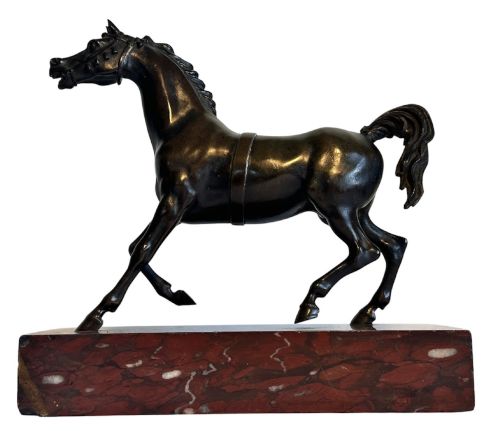
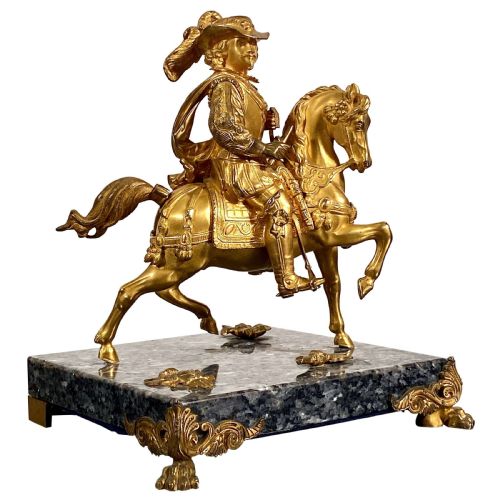
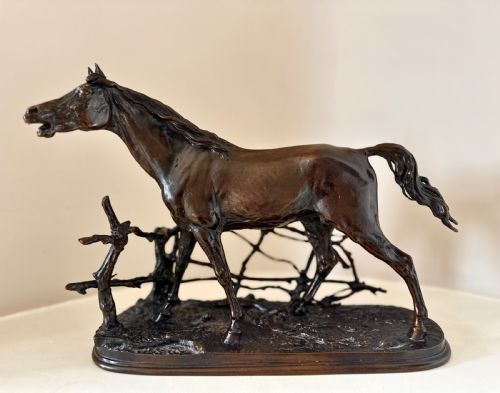
Foundries utilised cast bronze, patinated bronze, and gilt bronze, often mounting the heavy metal figures onto Sienna marble or standard marble bases. Artisans applied chemical patinas to produce dark, rich surface tones that emphasised the musculature and textures of the animals.
Select pieces incorporate ormolu, silver plating, and enamel details to highlight specific decorative elements on horse harnesses, military uniforms, and clock dials. Stonework bases provide the necessary counterweight to balance figures depicted mid-leap or rearing on hind legs.
Materials range from solid patinated bronze and Sienna marble to gilt ormolu, silver plating, and painted metal highlights.
Distinguishing quality in metal sculptures
Quality rests in the crispness of the chase work, where skilled hands refined the raw metal casting by hand to define sinews, mannes, and harness straps. Superior examples maintain sharp anatomical details and clean lines without obscuring the original surface texture beneath heavy patination.
The integration between the metal figure and its marble base indicates the level of care taken during assembly. Better pieces feature secure, tight joinery and substantial stone bases selected for colour harmony and structural stability rather than as mere supports.
Pierre Jules Mene·Isidore Jules Bonheur·Charles Crozatier·Alfred Dubucand·Pierre Lenordez·Paul Joseph Gayrard·Xavier Raphanel
The French Equestrian Bronzes Glossary
- Animalier
- A nineteenth-century artistic movement dedicated to the realistic portrayal of animals. Sculptors in this tradition studied live specimens closely to capture authentic movement.
- Patinated bronze
- Bronze that has been treated with chemical solutions to produce a specific surface colour. This process protects the metal while enhancing visual depth.
- Ormolu
- Gilding technique using finely ground gold mercury bronze applied to base metals. It provides a bright, durable golden finish on clock mounts and decorative fittings.
- Clock garniture
- A set comprising a central mantel clock matched with decorative side pieces such as urns or vases. These matched groups dominated nineteenth-century mantelpieces.
- Marly horses
- Iconic monumental sculptures depicting rearing horses restrained by grooms. The subject originated from classical Greek designs and inspired numerous nineteenth-century bronze casts.
French Equestrian Bronzes: Frequently Asked Questions
What is an animalier bronze?
An animalier bronze is a nineteenth-century sculpture focused specifically on portraying animals with anatomical accuracy and naturalistic movement.
These works concentrate heavily on horses, hounds, and wild beasts captured in action, reflecting the period's fascination with zoological study and equestrian sport.
How do I identify a Marly horse?
Marly horses depict rearing, muscular horses struggling against handlers who attempt to restrain them by the bridle.
This specific composition derives from famous public sculptures and appears frequently in nineteenth-century mantel pieces and cabinet bronzes.
Where should I place a bronze clock?
A bronze clock sits securely on a mantelpiece, sideboard, or sturdy console table capable of supporting substantial marble and metal weight.
Position the piece away from direct sunlight and damp environments to preserve the integrity of both the patinated metal and the stone base.
How do I clean patinated bronze?
Clean patinated bronze simply by dusting the surface gently with a soft, dry cloth to remove accumulated particles.
Avoid using water, chemical cleaners, or abrasive polishes, as these treatments strip away the applied chemical patinas and historical surface finishes.
What subjects besides horses appear?
Subjects include historical commanders on horseback, jockeys, huntsmen, and exotic figures with camels or donkeys.
These narrative scenes draw from military history, orientalist travels, and contemporary sporting events of the nineteenth century.