




Antique Marly Horses
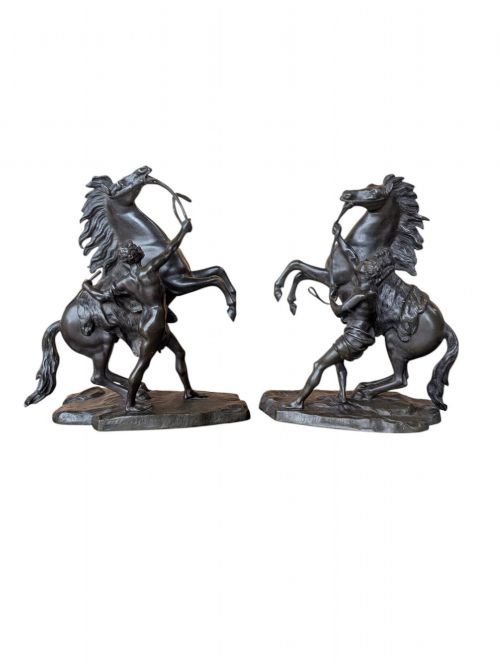
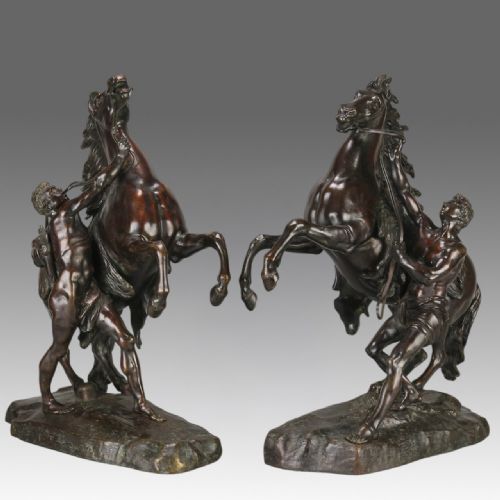
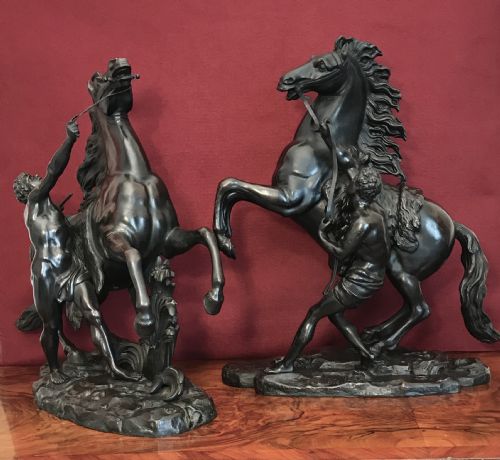
These antique marly horses are dramatic French sculptural groups that bring monumental Neoclassical equestrian energy to a mantelpiece or desk.
Antique Marly Horses
When you search for antique marly horses, you are looking at sculptures and figurines depicting rearing horses held by attendants, modelled after the famous monumental works created for Louis XV by Guillaume Coustou. These pieces take the form of individual statues or matched pairs, capturing the straining muscles and dynamic tension of the original French Neoclassical designs. On this page, you are most likely to meet Victorian interpretations in metal or porcelain rather than the original marble.
The material record spans the late nineteenth century, predominantly featuring the Victorian era alongside pieces dated around eighteen eighty and nineteen twenty. The forms include French nineteenth century styles and Art Deco interpretations, alongside Grand Tour souvenirs designed for travellers. The primary subjects remain equestrian figures and equine statues after Coustou, produced as both single figures and pairs.
How they were made
The makers of these antique marly horses relied on metal casting techniques to achieve the intricate musculature and harness details visible in the evidence. Bronze, patinated bronze, and bronzed metal predominate, alongside spelter and brass for alternative metallic finishes. Casts often received a dark or nuanced patina to accentuate the dramatic contours of the horse and the straining groom.
Ceramic versions utilise porcelain with applied glaze finishes, representing the translation of monumental stone sculpture into domestic ornamental figures. Signatures and foundry stamps occasionally appear on the metal bases, linking specific examples to named nineteenth century sculptors.
Even the grooms look perpetually surprised by how strong their horses are.
What varies in quality
The presence of a known signature, such as Coustou or Charles Crozatier, distinguishes masterworks from anonymous commercial foundry output. Pairs that survive intact with balanced patination demonstrate greater integrity than mismatched or later assembled groups.
Charles Crozatier·Royal Dux
The Antique Marly Horses Glossary
- Marly Horses
- Monumental marble sculptures commissioned for the watering place at the Château de Marly, depicting restrained horses and their grooms. Subsequent bronzes and figures reduce these grand monuments for interior display.
- Patina
- The surface sheen or coloration developed on metal over time or applied chemically by the foundry. A good patinated bronze finish enhances the texture of the casting.
- Grand Tour
- A nineteenth century travel tradition where wealthy collectors acquired smaller bronze sculptures and souvenirs across Europe. These pieces often served as portable representations of major classical works.
- Spelter
- A zinc alloy commonly utilised as a cheaper alternative to bronze for nineteenth century figures. It takes a bronzed metal finish well but feels lighter and more brittle than true bronze.
Antique Marly Horses: Frequently Asked Questions
What are antique marly horses?
These pieces are sculptural representations of rearing horses and their attendants, modelled on the famous French public monuments by Coustou. They capture dramatic equine energy in mediums suitable for interior display.
Most examples found on this page date from the Victorian period, utilising bronze, patinated metal, or porcelain to replicate the grandeur of French Neoclassical art.
Were they made as pairs?
Many examples were produced as matched pairs to flank a fireplace, sideboard, or architectural opening. The original Marly monuments were designed as a symmetrical pair.
You will encounter both single figures and complete pairs across bronze, brass, and porcelain formats in the current selection.
How do I identify bronze from spelter?
Bronze pieces feel heavy and cold to the touch, often displaying a rich patinated surface that ages gracefully. Spelter is a lighter zinc alloy that tends to feel more brittle.
Examining the underside or areas of wear can reveal the underlying metal colour beneath the surface finish.
Who was Coustou?
Guillaume Coustou was the French sculptor who created the original marble marly horses for Louis XV in the eighteenth century. His dynamic designs inspired numerous nineteenth century bronzes.
Sculptors and foundries frequently reproduced his compositions as reduced-scale Grand Tour souvenirs and Victorian mantel ornaments.