



French Enamelled Crystal
French enamelled crystal combines clear glass and fused vitreous decoration, offering a decorative elegance that collectors prize for interiors.
French Enamelled Crystal
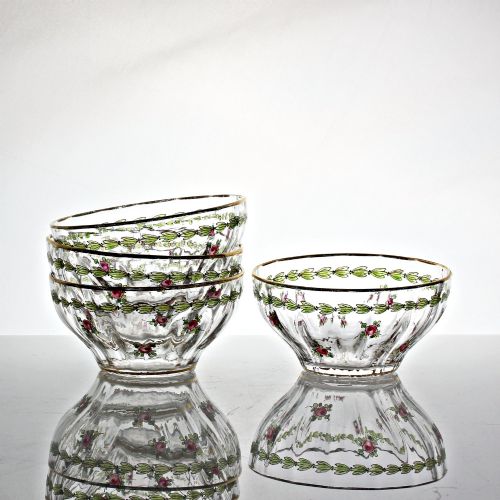
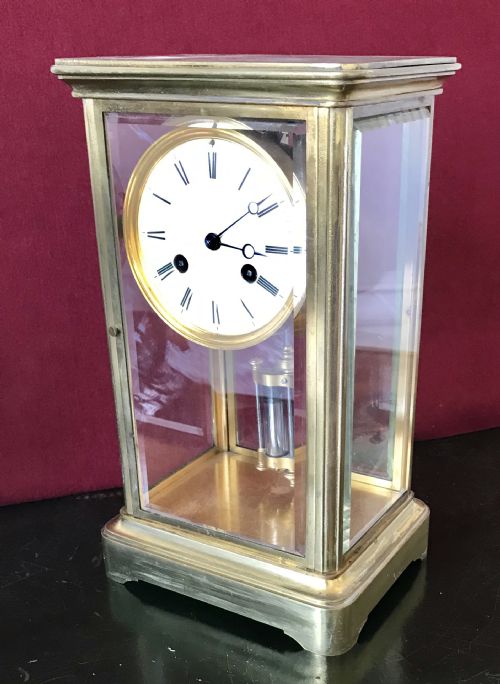
When you search for french enamelled crystal, you encounter a selection spanning the late nineteenth and early twentieth centuries, including the Belle Epoque and Art Deco periods. These items range from decorative bowls and finger bowls to scent bottles and elaborate mantel clocks with glass panels.
The most common pieces on this page are crystal regulator clocks and glass bowls adorned with painted or guilloche enamel details. These objects reflect the decorative tastes of French chateaux and urban salons from 1870 to 1930.
Makers and glassworks such as Baccart, St Louis, and Samuel Marti et Cie dominate the forms, bringing together precision timekeeping and delicate glasswork. The fusion of metal mounts, such as gilt brass and sterling silver, with enamelled glass defines the category.
Materials and Manufacture
Craftsmen shaped crystal and glass through blowing and cutting, creating heavy vessels and clock panels with clear refractive properties. Gold leaf and coloured enamel were then applied to the glass surface and fired to bond the vitreous pigments permanently.
Mounts and frames utilised gilt brass, brass, and sterling silver, often cast and chased to support delicate glass components. Guilloche enamel involved mechanical engraving beneath translucent enamel layers, producing intricate geometric patterns on metal surfaces.
French Enamelled Crystal Retail Price Guide 2026
Typical asking prices for french enamelled crystal among the pieces listed under this phrase on Sellingantiques today, from the lower quarter to the upper quarter. They describe what is for sale here now, not the wider market.
Listings feature crystal, glass, and enamel alongside gilt brass, brass, and sterling silver across periods from the 1870s to the 1930s.
Assessing Quality and Execution
The sophistication of the enamel work and the clarity of the underlying crystal separate standard production from finer items. Hand-painted floral motifs or precise guilloche patterns demonstrate superior artisan skill compared to simpler printed decorations.
The integration of the movement in regulator clocks and the weight of the crystal body indicate the standard of manufacture. Maker attribution to notable workshops or designers also elevates the distinction of individual pieces.
Louis-Antoine Damon·St Louis glassworks·Samuel Marti et Cie·René Lalique·François-Eugène Rousseau·Baccarat
The French Enamelled Crystal Glossary
- Guilloche enamel
- Enamel applied over a metal surface that has been machine-engraved with a repetitive geometric pattern. This technique creates a shimmering, translucent effect beneath the coloured glass layer.
- Crystal regulator clock
- A mantel clock housed in a glass-panelled case that allows visibility of the mechanical movement from multiple angles. These timepieces typically feature enamelled dials and decorative bezels.
- Belle Epoque
- A period of French history lasting from roughly the late 1870s to the First World War, characterised by optimism, peace, and ornate decorative arts. Objects from this era often incorporate floral Art Nouveau influences.
- Japonism
- The influence of Japanese art on Western aesthetics, prominent in the late nineteenth century. In glass and ceramics, this style manifests through asymmetrical compositions and naturalistic motifs like poppy flowers.
French Enamelled Crystal: Frequently Asked Questions
What is a crystal regulator clock?
A crystal regulator clock is a mantel timepiece featuring heavy glass panels on all sides, mounted in a brass or gilt frame. This design lets light pass through the clock and showcases the mechanical movement.
Such clocks were popular in France from the mid-nineteenth century onwards, often incorporating enamelled dials or painted porcelain panels that complement the transparent housing.
How do I care for enamelled glass?
Enamelled glass requires gentle handling to protect the fused vitreous decoration from scratching or chemical degradation. Dusting with a soft, dry cloth is usually sufficient for regular maintenance.
Avoid immersing pieces in water, particularly those with gilt brass mounts, sterling silver, or delicate gold leaf details, as moisture can damage the adhesives and metal components.
How do I date these pieces?
Dating relies on stylistic markers such as Belle Epoque floral designs, Art Deco geometric forms, or Japonism motifs, alongside maker signatures and movement stamps. Comparing the type of enamel work also helps narrow the era.
Clocks often bear maker marks on the movement backplates, while glass bowls and scent bottles may feature etched signatures or factory ciphers on the base.
Were scent bottles used daily?
Scent bottles served as functional dressing table accessories for holding perfumes during the late nineteenth and early twentieth centuries. Wealthy owners filled them with personal fragrances for daily toilet use.
Many examples feature sterling silver or guilloche enamel caps, combining practical sealing mechanisms with decorative refinement suitable for display on a vanity.