




French Empire Table Centrepiece
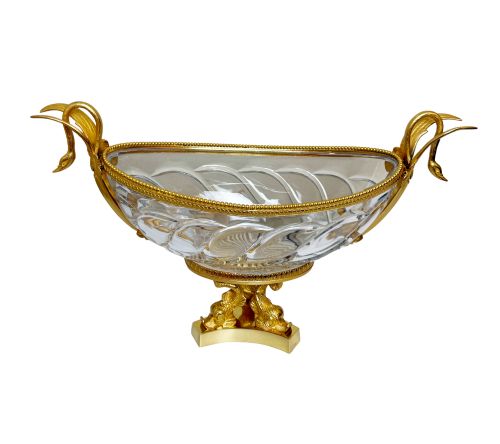
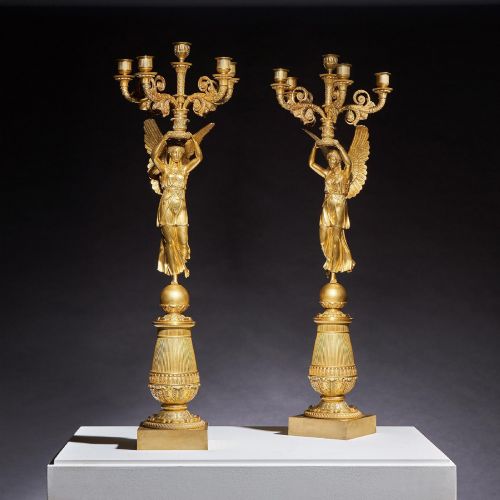
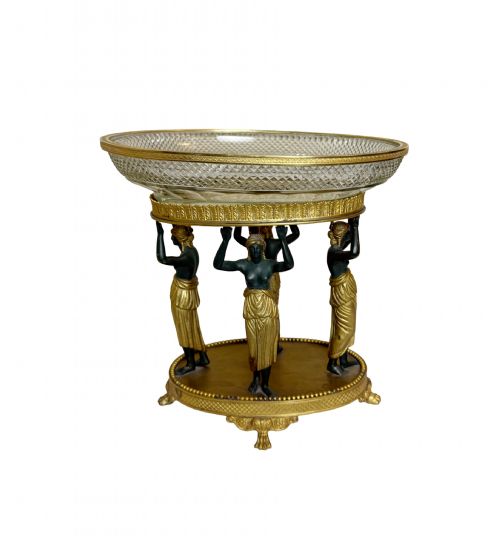
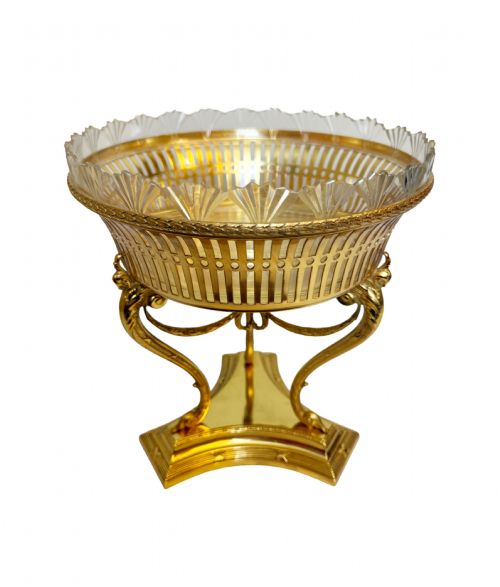
These french empire table centrepiece examples combine bronze, ormolu, and crystal to anchor a formal dining surface.
French Empire Table Centrepiece
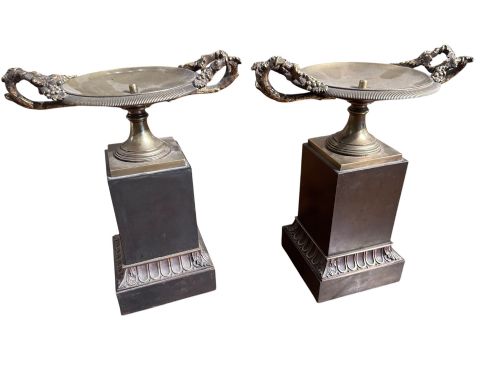
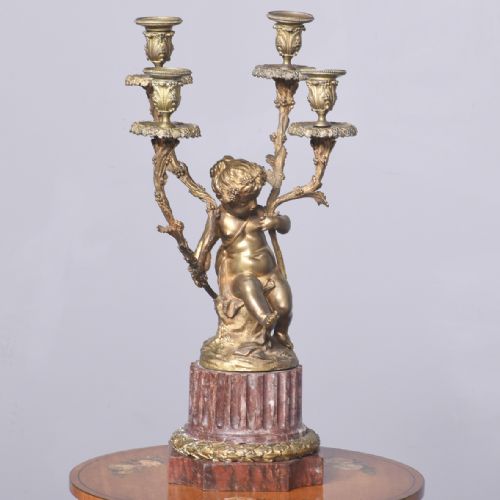
A french empire table centrepiece serves as a decorative focal point for a formal table, taking the form of tazzas, jardinieres, bowls, and matched pairs of candelabra. The selection spans the nineteenth century, including specific years like 1870, 1880, 1890, and 1900, alongside Regency and Victorian periods.
Most pieces on this page draw upon French Empire, Napoleon III, Neoclassical, and Rococo Revival styles. You will regularly encounter architectural marble bases supporting gilt bronze, patinated bronze, and silvered bronze mounts.
Vessels often incorporate cut glass and crystal inserts, whilst lighting elements range from single-stem candlesticks to multi-light adjustable arm candelabra and cherub-decorated designs.
Materials and construction methods
Metalwork relies on bronze, brass, and copper alloys finished with fire gilding to create ormolu, alongside patinated and silvered surfaces. Foundry work often pairs bright gold-toned ormolu with dark patinated bronze to create high-contrast neoclassical motifs.
Mineral elements combine white marble and coloured stone bases with hand-blown and heavy-cut glass or crystal inserts. These components are secured using threaded central pins and hidden bronze nuts rather than modern adhesives.
Enamel plaques, such as Limoges work, are integrated into metal mounts to add coloured pictorial detail to tazzas and decorative vessels.
Materials documented across the pieces include ormolu, cut glass, crystal, white marble, brass, and patinated bronze.
Assessing quality in metalwork and glass
The integration of materials reveals the maker's hand, particularly in how precisely cut crystal bowls fit their bronze galleries or how flatly marble bases sit upon their bronze feet. High-grade items employ heavier gauge brass and bronze, avoiding thin stampings in favor of substantial cast components.
Pierre Philippe Thomire·Lerolle Fres·Christofle Paris
The French Empire Table Centrepiece Glossary
- Ormolu
- Gilt bronze created by applying a mercury and gold amalgam to a bronze base and heating it to drive off the mercury. This technique produces a durable, rich golden surface characteristic of nineteenth-century French metalwork.
- Tazza
- A shallow ornamental bowl or cup mounted on a stem and foot. They are used for display on dining tables and sideboards.
- Jardiniere
- An ornamental stand or container designed to hold potted plants or floral arrangements. In nineteenth-century dining settings, these often featured glass liners.
- Patinated bronze
- Bronze that has been chemically treated to darken its surface tone, creating a contrast against bright ormolu mounts. This finish highlights sculptural details on figures and foliage.
- Comport
- A raised dish or bowl placed in the centre of a table for fruit or sweetmeats. They share similar forms with tazzas.
French Empire Table Centrepiece: Frequently Asked Questions
How were centrepieces used on historical tables?
These pieces sat at the middle of a dining table to anchor the visual arrangement during formal meals. They held fruit, flowers, or sweetmeats, or provided illumination through attached candle arms.
Larger items were often paired with matching candelabra to create a uniform display across the entire length of the dining room furniture.
Can I use these candelabra for daily lighting?
Yes, many of these candelabra accept standard taper candles and remain fully functional for modern use. The sturdy bronze and marble bases provide adequate stability for burning candles.
Take care to protect surrounding surfaces from melting wax by using drip protectors or keeping flames away from drafts.
What is the difference between Empire and Napoleon III styles?
Empire style draws directly from ancient Roman and Greek motifs, featuring military trophies, strict symmetry, and classical figures. It prioritizes austere geometric lines combined with rich ormolu.
Napoleon III style revives earlier aesthetics like Rococo and Renaissance designs, offering greater ornamentation, curved surfaces, and eclectic surface treatments.