




French Empire Style Mirror
These pieces of french empire style mirror bring classical proportion and polished timber to a room, offering the architectural weight collectors seek.
French Empire Style Mirror
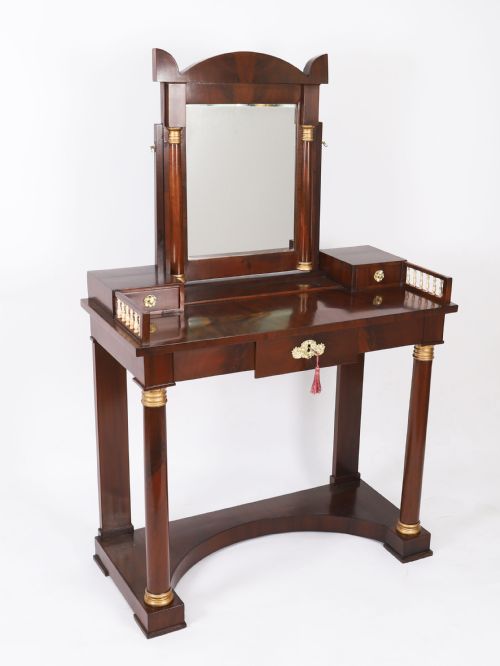
A french empire style mirror combines classical lines with substantial timber frames, serving as both a functional glass and an architectural focus in a room. The items found here span wall-hung designs, large overmantle pieces, pier mirrors, and cheval glasses alongside dressing table models. Most examples on this page date from the nineteenth century or follow later revival periods.
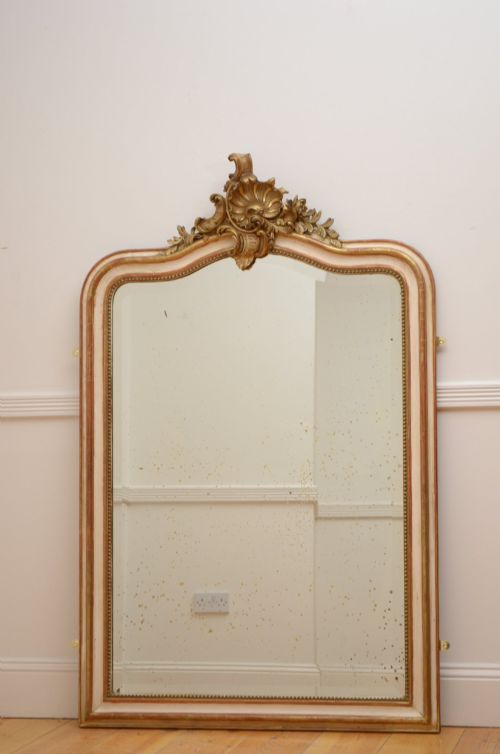
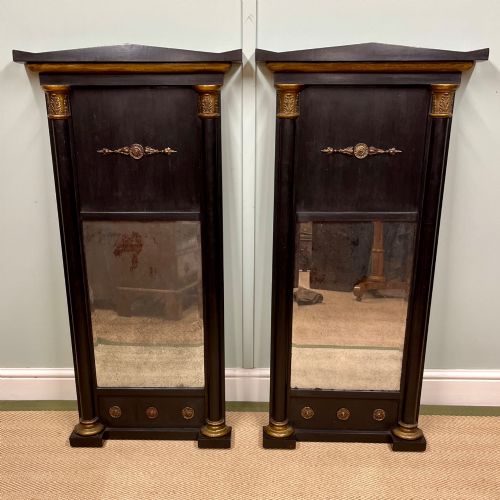
Makers drew on neoclassical vocabulary, incorporating architectural motifs such as pilasters, pediments, and decorative relief panels alongside rectilinear or cushion-moulded frames. Buyers encounter both mahogany timber frames and brightly gilded surfaces designed to reflect light and anchor a formal interior scheme. The selection encompasses distinct forms intended for mantelpieces, dressing rooms, and principal reception spaces.
How they were made
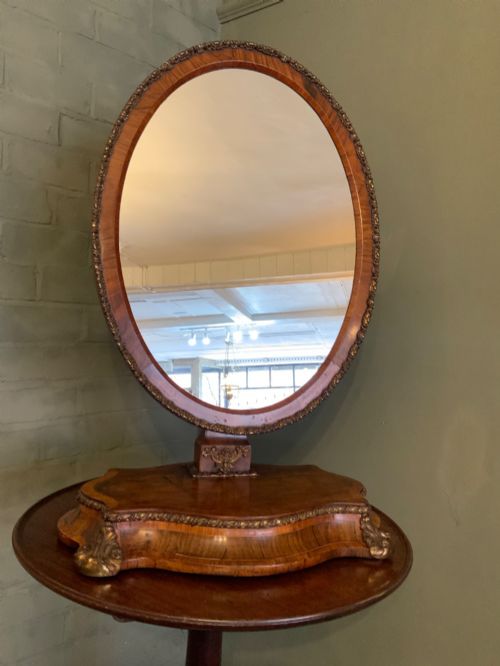
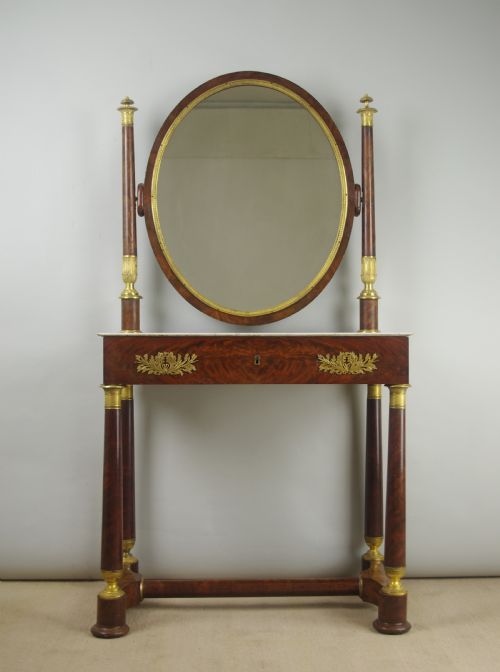
Craftsmen built the structural carcases using solid timbers such as mahogany, applying figured veneer selections to large flat surfaces for visual depth. Frames often incorporate applied metal ornamentation or carved relief work finished in gold leaf, gesso, or ormolu mounts.
Glazing involved silvered mirror plates set securely into rebated wooden frames, sometimes accompanied by painted decorative panels set above the glass in trumeau configurations.
Relief panels on these pieces occasionally feature classical figures like Bacchus and cherubs watching over your daily routine.
What varies in quality
The standard of a french empire style mirror depends largely on the crispness of its mounts and the selection of its timber veneers. Finer examples display cleanly cast ormolu and meticulous hand-carving that retain sharp relief, whereas simpler versions rely on plain moulded frames.
The integrity of the original glass plate and the proportion of the architectural mouldings also distinguish higher grades from standard production pieces.
The French Empire Style Mirror Glossary
- Ormolu
- Gilded bronze mounts applied to furniture and mirror frames. This technique provides metallic contrast against dark mahogany surfaces.
- Trumeau
- An architectural mirror featuring a painted or carved panel positioned above the glass. These panels frequently depict classical scenes or motifs.
- Pier Mirror
- A tall glass designed specifically to hang on the wall space between windows. They often match the proportions of console tables placed beneath them.
- Cheval Mirror
- A freestanding full-length dressing glass mounted on a pivoting frame with four supporting legs. This form allows the user to tilt the glass angle.
- Gesso
- A plaster-based material applied to wooden frames as a smooth base for gilding. It enables intricate relief ornament to be moulded before applying gold leaf.
French Empire Style Mirror: Frequently Asked Questions
Where should I hang a french empire style mirror?
These pieces suit principal reception rooms, hallways, and bedrooms where their architectural presence can anchor the surrounding furniture. Overmantle versions fit naturally above a fireplace, while pier mirrors work best between tall windows.
Positioning the glass opposite a light source helps maximise the reflection and brightens the interior space effectively.
How do I identify a nineteenth-century piece?
Examine the construction methods behind the frame, including the timber preparation, backboards, and the composition of the mirror plate itself. Nineteenth-century examples frequently show hand-cut joinery and traditional patination on the mahogany or gilt surfaces.
Revival pieces from later decades often replicate these classical forms but utilise twentieth-century assembly techniques or different backing materials.
What is the difference between a trumeau and a standard wall mirror?
A trumeau incorporates a decorative painted or carved panel integrated directly into the upper section of the frame above the glass. Standard wall mirrors focus entirely on the reflective plate and the surrounding architectural moulding.
Both styles draw on classical vocabulary, but the trumeau functions more as a combined panel and glass unit.
How do I care for the gilded frame?
Dust the gilded and gesso surfaces gently with a soft, dry brush to prevent accumulation without disturbing the delicate leaf. Avoid using liquid cleaners or chemical polishes on the gilt work.
Keep the piece away from direct sunlight and excessive moisture to protect the timber carcase and the mirror backing.