


French Empire Pendulum Clock
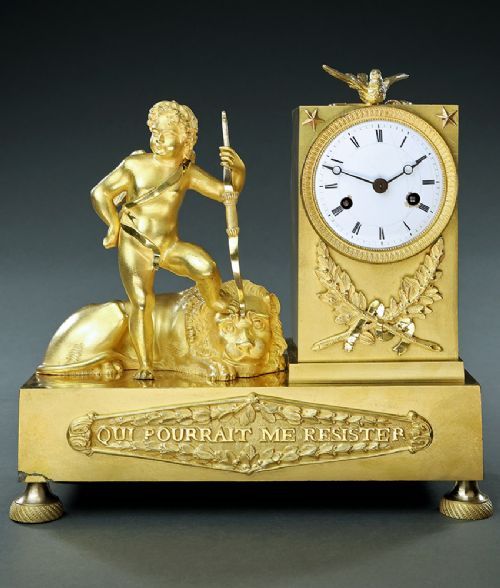
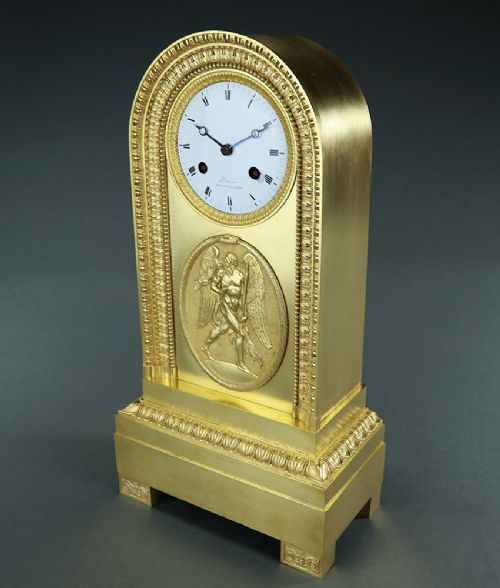
A french empire pendulum clock brings monumental presence to a room through heavy gilt bronze, classical allegories and visible swinging pendulums.
French Empire Pendulum Clock
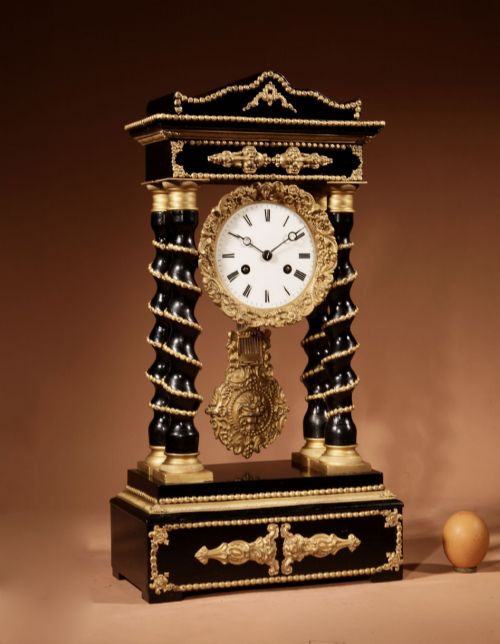
A french empire pendulum clock sits among mantel clocks, portico clocks and clock garnitures originating from nineteenth century France.
The material record spans the 18th century, 19th century, Victorian era, and specific decades such as 1850, 1860, 1870, and 1880, alongside styles like Charles X, Napoleon III, and French Neoclassical.
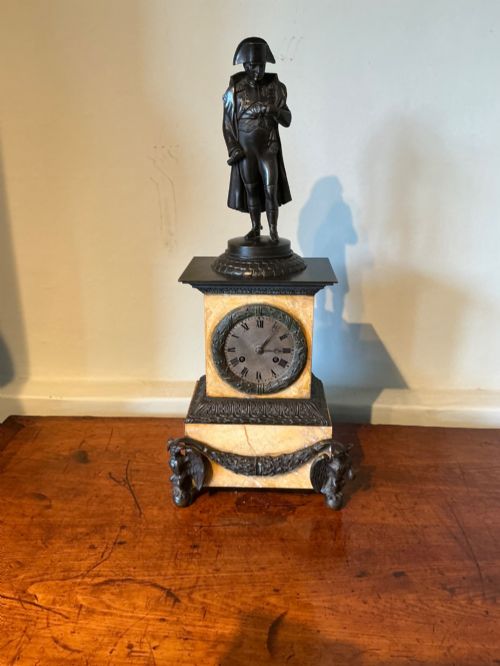
Pieces frequently incorporate figurative themes including Napoleon, Diana the hunter, Urania, Cronos, and allegories of love and fidelity.
Materials and Construction
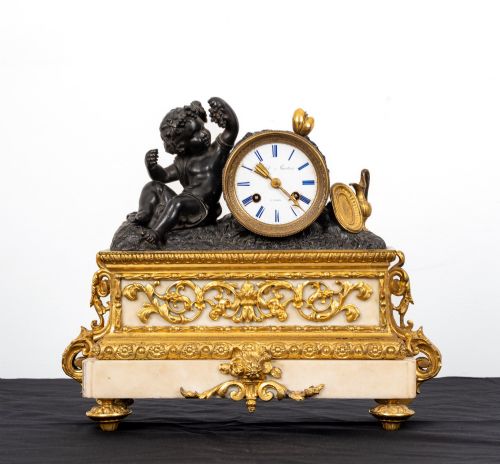
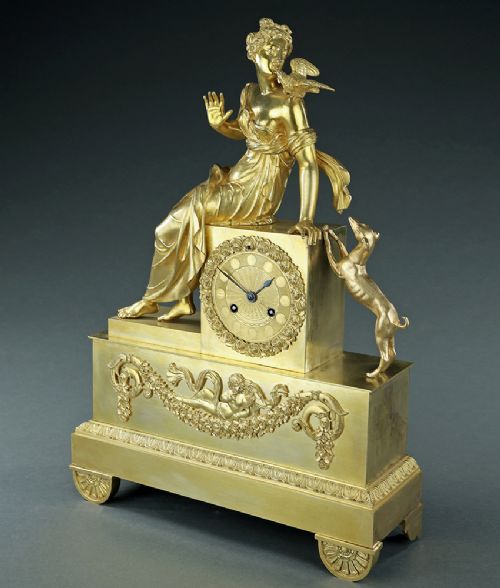
Cases combine cast ormolu, gilt bronze and patinated bronze, frequently paired with white marble, ebonised wood, mahogany, rosewood and cut crystal.
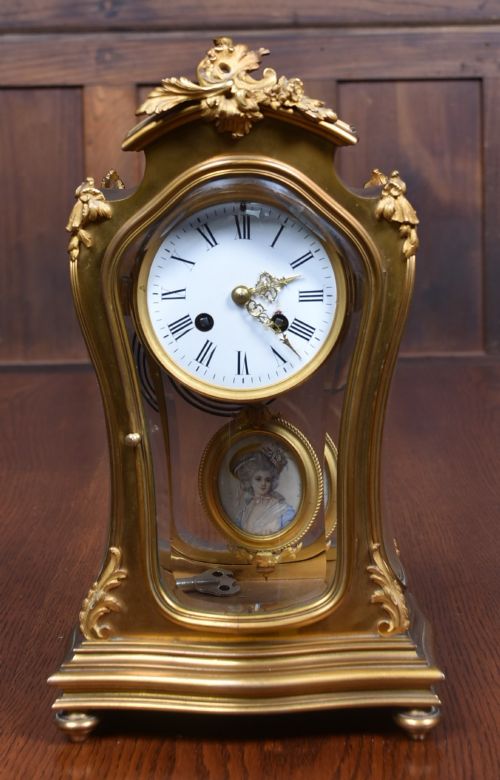
Dial faces utilise enamel and porcelain, occasionally complemented by hand-painted miniatures, silvered dials, and inlaid marquetry or satinwood details.
Movements rely on traditional mechanisms, with surviving examples maintaining silk suspension systems and eight-day striking capabilities.
Several models feature celestial figures and mythological hunters keeping watch over the hours.
Distinctions in Quality
Quality rests upon the crispness of the bronze chasing and the depth of the fire-gilding, where sharp cast details separate superior work from softer castings.
The integration of materials dictates distinction, visible in the alignment of cut crystal pillars, the selection of unblemished marble, and the precision of marquetry inlay.
Signed movements by known horologists or makers add documentary weight to the clock, linking the physical housing directly to master workshops.
Siffel and Cartier·Japy Freres·Breguet·Deniere et Fils·Deniere and Cailleaux·Pons de Paul·Ravrio
The French Empire Pendulum Clock Glossary
- Ormolu
- Gilded bronze produced through a mercury amalgamation process that leaves a durable, rich golden surface. This technique creates the bright metallic finish seen on classical mounts.
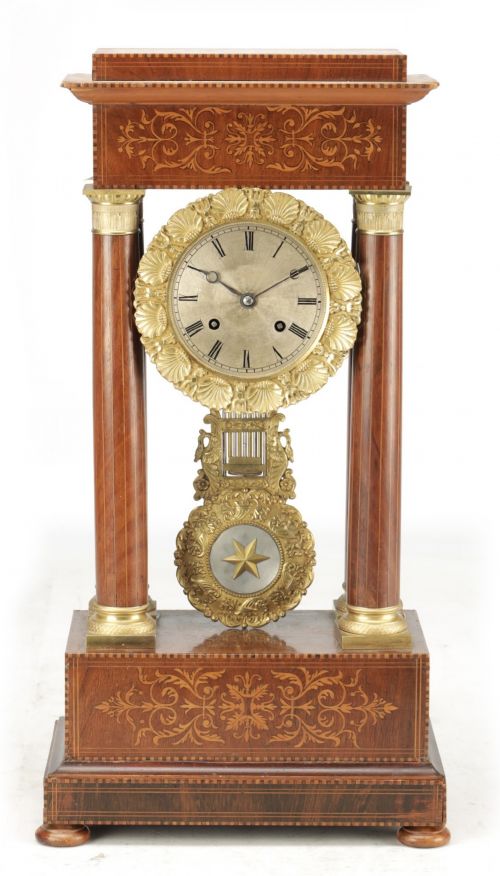
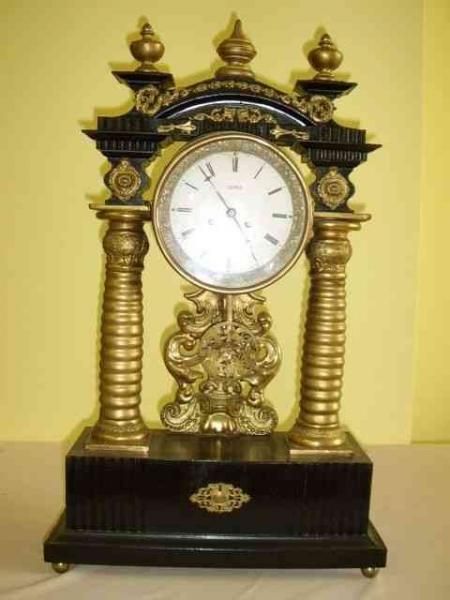
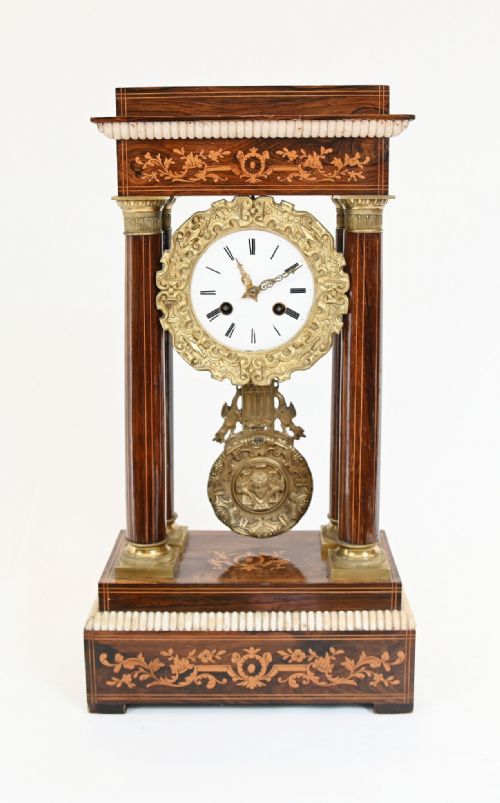
- Portico clock
- A tall, architectural mantel clock featuring twin vertical pillars supporting an upper entablature that houses the dial. The pendulum typically swings visibly within the open central space.
- Silk suspension
- A method of hanging the pendulum from a fine woven silk thread inside the movement. It allows for delicate regulation of the beat.
- Clock garniture
- A set comprising a central clock flanked by matching decorative objects such as candelabra or vases. These suites were designed to create a symmetrical display on a mantelpiece.
French Empire Pendulum Clock: Frequently Asked Questions
How do portico clocks differ from standard mantel clocks?
Portico clocks utilise an architectural frame with vertical side columns and a distinct lintel housing the movement. This open structure places the swinging pendulum on display between the pillars.
Standard mantel clocks rely on a solid, enclosed case made of bronze, marble or wood. The movement and pendulum remain hidden behind a rear door or solid bezel.
What materials make up an empire clock case?
Cases typically employ cast bronze finished with mercury gilding to create bright ormolu surfaces. Contrasting patinated bronze often highlights figurative elements and mythological figures.
Secondary materials include white marble bases, cut crystal columns, and rich cabinet timbers such as mahogany, rosewood and ebonised wood.
How do I wind an antique french clock?
Winding requires a matching key inserted into the winding holes on the enamel dial face. Turning the key gently until resistance is felt tensions the mainspring.
Care must be taken not to overwind the movement, as antique springs can snap. Striking trains and time trains are generally wound separately.
Are these clocks suitable for daily timekeeping?
Many nineteenth-century movements remain capable of keeping accurate time when properly serviced and levelled on a stable surface. Regular maintenance by a horologist ensures the longevity of the gears and escapement.
Due to their age, occasional adjustments to the pendulum length may be necessary to compensate for temperature changes and wear.