
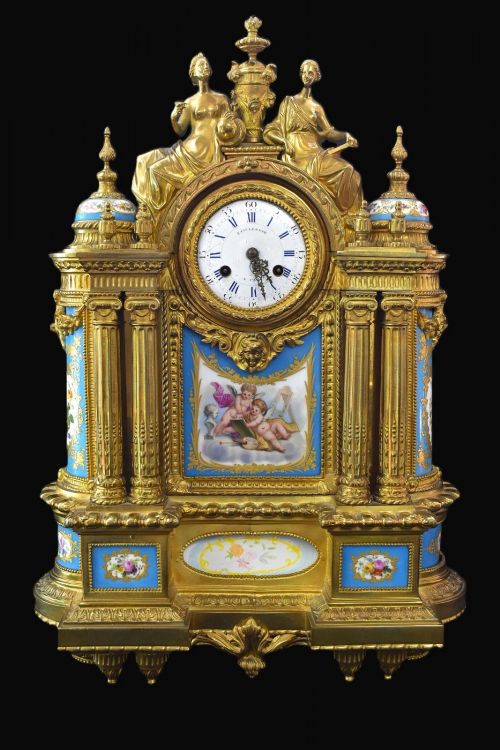


Bronze Napoleon Clock
These pieces unite the heavy gravity of cast bronze with the elaborate metalwork of the nineteenth century, offering a striking centrepiece for any traditional mantel.
Bronze Napoleon Clock
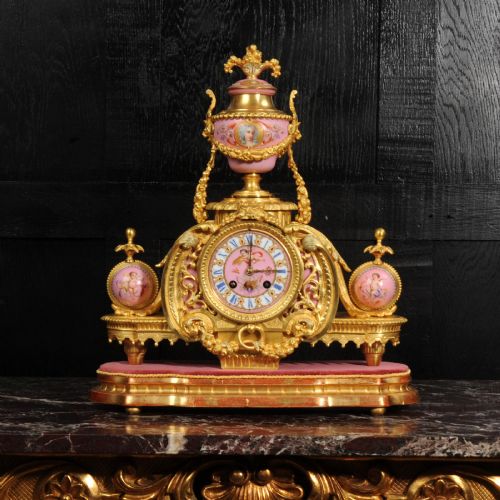
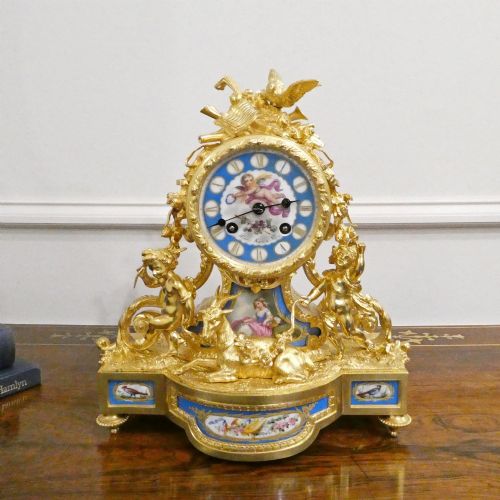
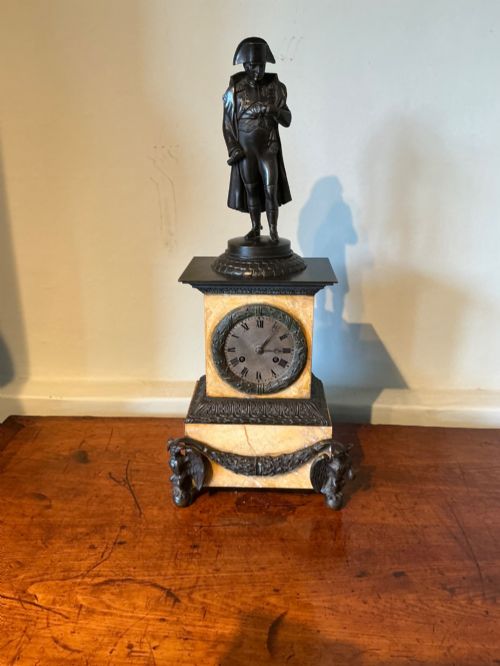
A bronze napoleon clock typically presents as a substantial nineteenth-century mantel clock, often cast in gilt bronze or ormolu and frequently associated with the Napoleon III period and French Empire styles.
Buyers encounter architectural portico designs, elaborate garniture sets complete with side vases or candelabra, and figural models depicting historical subjects like Napoleon himself.
The materials span cast bronze, patinated bronze, and ormolu combined with porcelain panels, marble bases, and tortoiseshell inlay.
Most examples originate from French workshops of the eighteen-fifties through to the eighteen-eighties, often housed beneath original glass domes.
Materials and construction
Foundries cast bronze elements using traditional lost-wax or sand-casting methods before applying mercurial gilding or chemical patination to achieve deep, lustrous surfaces.
Clockmakers fitted eight-day striking movements, sometimes paired with delicate enamel dials and painted Sèvres-style porcelain plaques depicting pastoral scenes or royal portraits.
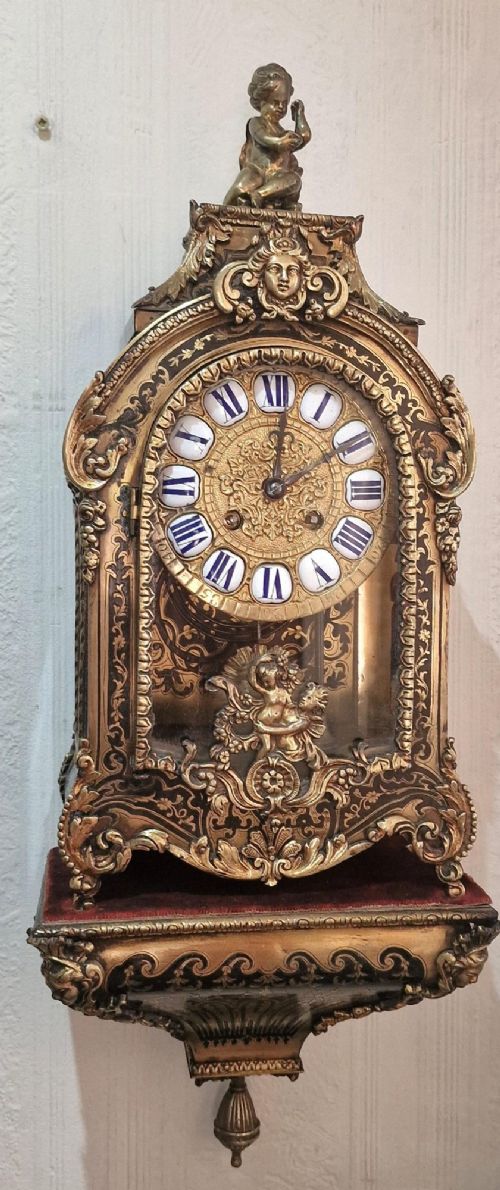
Boulle pieces employ tortoiseshell and brass marquetry inlaid into wooden carcases, framed by cast ormolu mounts and supported on matching wall brackets.
Some mantel clocks arrived equipped with specialised escapements, including a chaff-cutter mechanism designed to keep time with agricultural precision.
Evaluating craftsmanship and condition
The crispness of the bronze chasing dictates the visual success of the piece, separating sharply defined acanthus leaves and figural drapery from soft, worn castings.
The integration of the movement matters greatly, with signed clockmaker plates and fully restored internal mechanisms commanding stronger interest than adapted or unserviceable movements.
Original matching elements, such as glass domes, wall brackets, and complete garniture sets, elevate a clock above standard isolated mantelpieces.
Achille Brocot·Henry Marc·Etienne Lenoir·PH Mourey·Japy Freres·Delettrez·Leroy & Fils·Miroy Freres·Raingo Freres·Vincenti
The Bronze Napoleon Clock Glossary
- Ormolu
- A gilded bronze technique utilising finely ground gold amalgam fired onto a cast bronze base. This finish produces a rich, golden lustre characteristic of luxury French horology.
- Garniture
- A matched set comprising a central clock flanked by two decorative ornaments such as vases, urns, or candelabra. These sets were designed to sit harmoniously together on a mantelpiece.
- Portico clock
- An architectural clock style featuring two supporting columns beneath a prominent pediment, often enclosing a suspended pendulum swinging freely within the central void.
- Champlevé
- An enamelling technique where troughs are dug into a metal surface, filled with coloured glass paste, and fired. The resulting vibrant patterns frame the clock dials and mounts.
- Boulle
- A decorative marquetry method using tortoiseshell and brass inlay named after the famous French cabinetmaker. It creates a rich, shimmering tortoiseshell and gold surface pattern.
Bronze Napoleon Clock: Frequently Asked Questions
How do I wind an antique french clock?
Most pieces utilise an eight-day mechanical movement wound via a dedicated key inserted into specific winding holes on the enamel dial.
Care must be taken not to overwind the mainspring, and adjustments to the pendulum should be made gently to regulate the timekeeping accurately.
What is a clock garniture set?
A clock garniture set consists of a central mantel clock accompanied by matching side ornaments, typically a pair of urns, vases, or candelabra designed in the same material and style.
These coordinated sets were placed symmetrically across mantelpieces or console tables in nineteenth-century interiors to create a unified decorative scheme.
How do I identify the period of these clocks?
Dating relies on stylistic clues such as the heavy ornamentation of Napoleon III pieces, the architectural symmetry of Louis XVI revival designs, and signatures stamped on the internal brass clock movements.
Makers frequently inscribed their foundry marks directly onto the back plates, providing clear indicators of production dates during the nineteenth century.