





French Empire Figural Timepiece
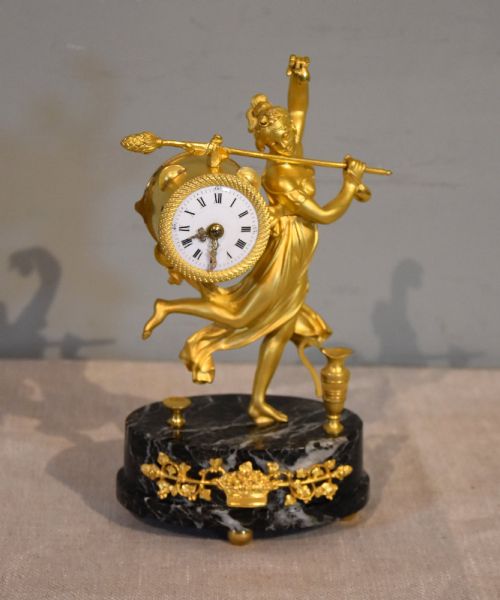
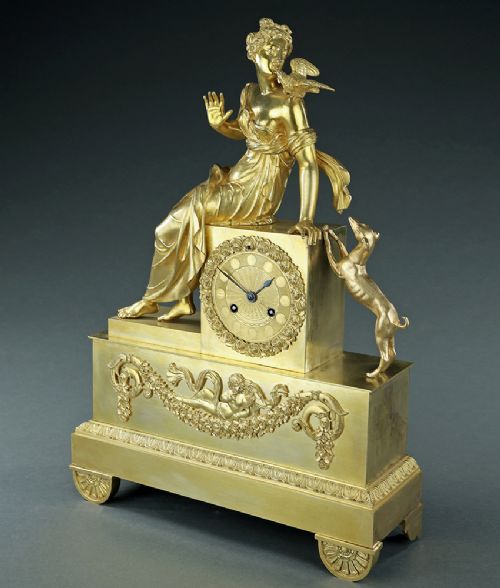
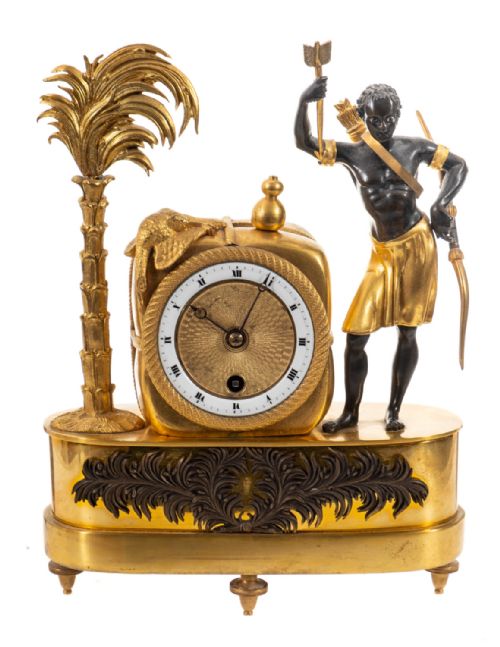
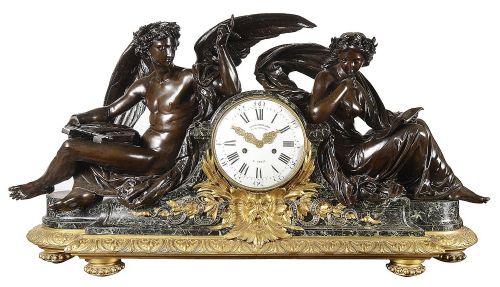
These French empire figural timepiece examples bring sculptural bronze and gleaming ormolu into your interior, combining classical design with mechanical precision.
French Empire Figural Timepiece
The aesthetic draws heavily on neoclassical and French Empire idioms, with specific iterations stretching into Regency, Restauration, and Second Empire tastes. These horological objects serve equally as decorative centrepieces and functional instruments, often incorporating white enamel dials and delicate movement suspensions.
Most pieces seen here reflect continental French origins, though occasional English retail connections appear in the records. Forms vary from architectural marble bases surmounted by patinated figures to intricate allegorical scenes depicting love, fidelity, or geographical exploration.
What Varies in Quality
Signed works from notable Parisian foundries or recorded makers carry a different level of horological and sculptural ambition compared to unsigned domestic pieces from the late nineteenth century.
French Empire Figural Timepiece Retail Price Guide 2026
Typical asking prices for french empire figural timepiece among the pieces listed under this phrase on Sellingantiques today, from the lower quarter to the upper quarter. They describe what is for sale here now, not the wider market.
Goats and palm trees occasionally share watch duty with cherubs and explorers.
Deniere Et Fils·Victor Paillard
The French Empire Figural Timepiece Glossary
- Ormolu
- Gilded bronze produced by applying a mercury and gold amalgam to a bronze casting and heating it to vaporise the mercury. This historical technique yields a distinctive warm lustre.
- Patinated bronze
- Bronze treated with chemical solutions to darken the surface to a deep brown or black tone. It provides a visual contrast against bright ormolu mountings.
- Silk suspension
- A method of hanging the pendulum from a fine ribbon of woven silk behind the dial. It is characteristic of earlier nineteenth-century French clockmaking.
- Fusee
- A conical pulley used in spring-driven clocks to equalise the torque of the mainspring as it unwinds. It ensures more consistent timekeeping throughout the power reserve.
- Enamel dial
- A metal dial face coated with powdered glass fused at high temperatures, carrying painted numerals. It provides a durable and smooth surface for the chapter ring.
French Empire Figural Timepiece: Frequently Asked Questions
How do I wind the clock?
Most mechanical timepieces require a key inserted into winding holes on the dial to tension the springs.
Care must be taken not to overwind the movement to protect the internal gear train.
Where should I place the timepiece?
These heavy metal and marble objects suit stable surfaces such as mantelpieces, sideboards, or console tables.
They require a level position to ensure the pendulum swings evenly and the clock keeps accurate time.
How do I identify the period?
Stylistic cues such as patination, figural costume, and dial construction help narrow down the date of production.
Earlier nineteenth-century examples often feature fire-gilding and silk suspensions, while later pieces may use different metal alloys and mechanical escapements.
What is a figural timepiece?
A figural timepiece incorporates human, animal, or allegorical bronze sculptures as the primary visual housing for the clock movement.
These subjects often reference classical mythology, exotic exploration, or romantic ideals of the era.