

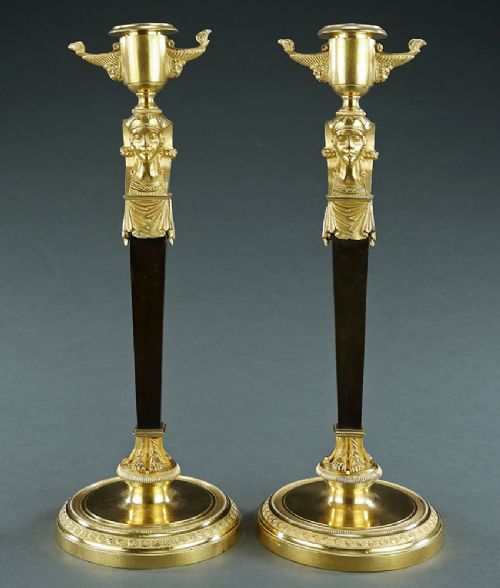


French Empire Candelabrum
A french empire candelabrum brings grand architectural symmetry and classical discipline to a room through heavy gilt metal and dark cast figures.
French Empire Candelabrum
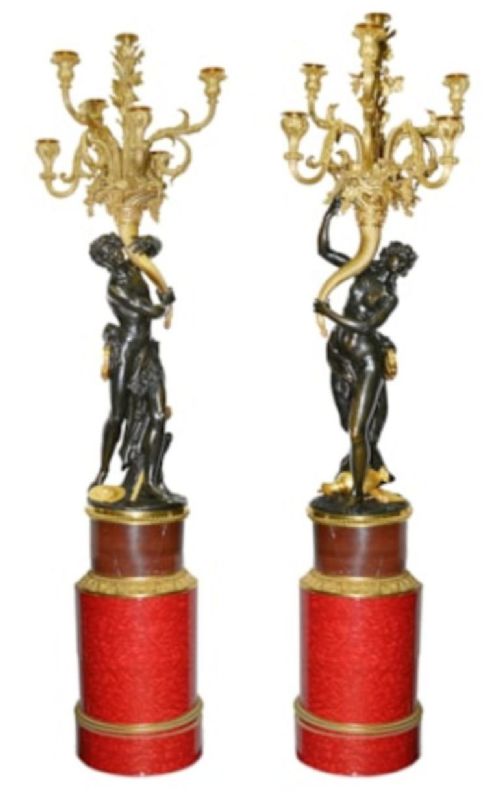
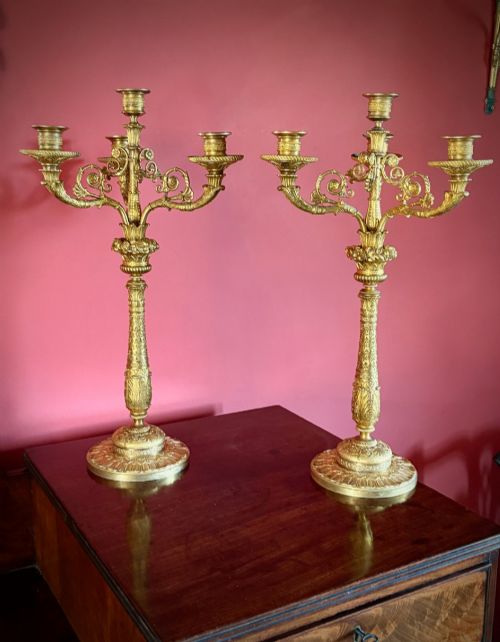
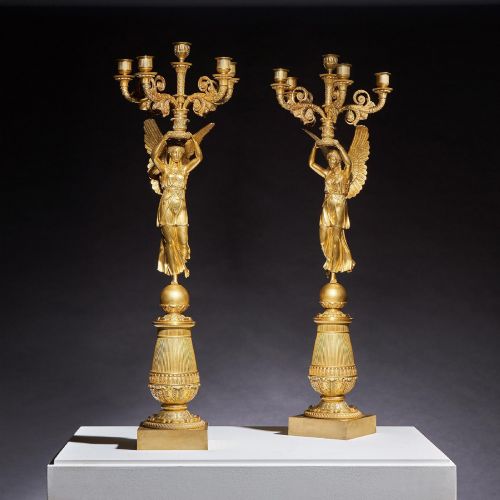
A french empire candelabrum is a monumental lighting piece designed during the nineteenth century, drawing heavily on classical antiquity, military motifs and mythological subjects. These works take the form of heavy metal branches supported by classical figures, fluted columns or plinths.
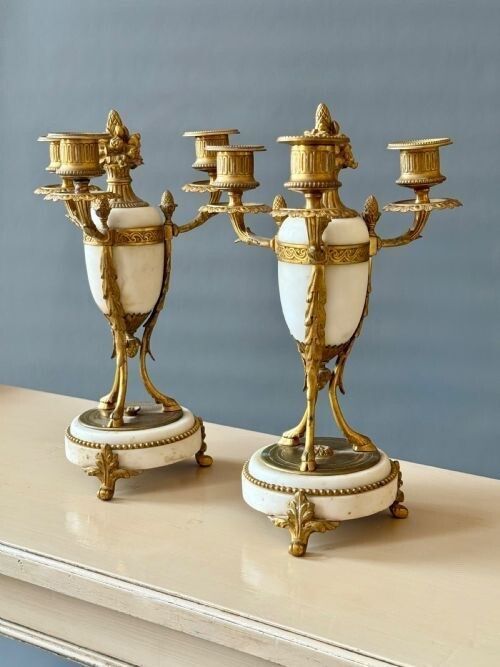
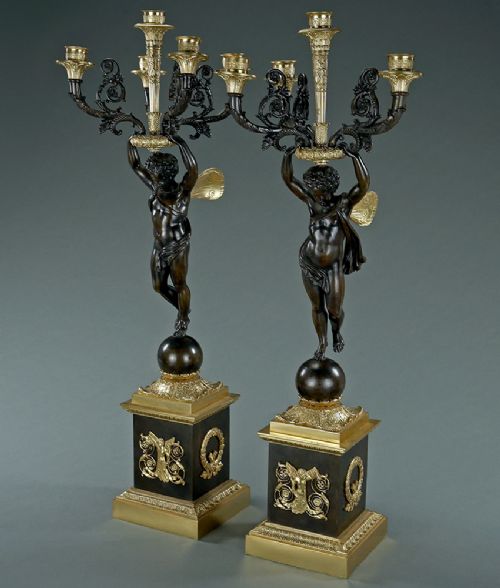
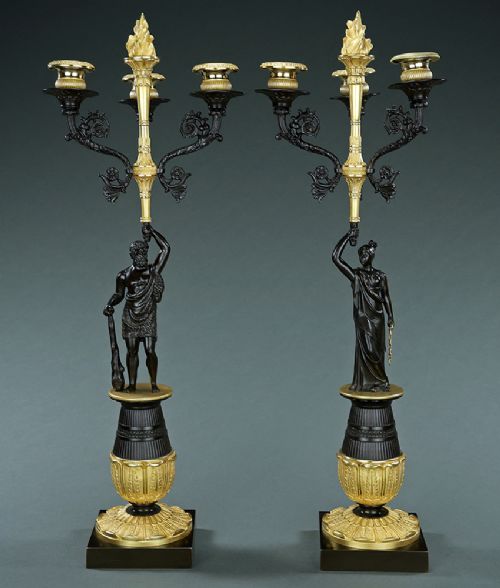
The versions most commonly met on this page are matched pairs from the nineteenth century, rendered in contrasting patinated and gilded metals, often standing upon square marble or slate bases. Makers combined functional branch arms with sculptural figures such as Hercules, putti or winged victories.
How they were made
Foundries manufactured these works by combining cast bronze elements with mercury gilding, known as ormolu, which created a durable golden surface alongside dark patinated bronze details. Artisans chased the cooled metal surfaces by hand with chisels and matting tools to sharpen the definition of hair, drapery and leaf ornament.
Bases incorporated quarried white, green or black marble and slate, turned on lathes and drilled to receive the heavy metal mounts. Individual candle nozzles and drip pans screwed together securely to support multiple branch configurations.
Some nineteenth-century makers hid candle sockets inside the arms of bronze mythological figures who held the light aloft.
What varies in quality
The distinction between ordinary production and masterwork execution lies in the crispness of the hand-chasing across the cast bronze elements and the depth of the mercury gilding. Superior examples retain sharp facial expressions and deeply undercut foliage, whereas lesser pieces display softened cast textures and uniform shiny yellow plating.
Integration of materials also separates grades of work, with finer examples utilising dense genuine marble fitted flush to heavy bronze mounts without gaps. The weight of the casting and the structural rigidity of the multi-branch arms indicate the skill of the original foundry.
Pierre Philippe Thomire·Rabiat·Auguste Cain
The French Empire Candelabrum Glossary
- Ormolu
- A technique of applying finely ground high-carat gold amalgamated with mercury to a bronze base, fired to drive off the mercury and leave a rich golden coating.
- Patinated bronze
- Bronze treated with chemical solutions to produce a controlled dark brown or green surface finish that contrasts against bright gilded elements.
- Garniture
- A set of matching decorative objects, typically a mantel clock flanked by a pair of candelabra or vases designed to display together on a fireplace mantel.
- Retour d'Egypte
- A decorative style inspired by Napoleon's Egyptian campaign, featuring pharaonic heads, sphinxes and lotus motifs integrated into classical furniture and metalwork.
- Candelabrum
- A branched candlestick designed to hold multiple candles simultaneously, differing from a single-stem candlestick by having arms radiating from a central shaft.
French Empire Candelabrum: Frequently Asked Questions
What is a french empire candelabrum?
A french empire candelabrum is a heavy nineteenth-century metal lighting fixture featuring classical figures, architectural columns, and multiple candle arms.
These pieces draw on ancient Roman and Greek design principles, utilising the contrast between dark patinated bronze and bright ormolu.
How were these candelabra used originally?
They stood upon dining tables, sideboards and mantelpieces to provide ambient illumination during evening hours in grand nineteenth-century interiors.
Matched pairs often formed part of a clock garniture set, sitting alongside a central mantel clock to balance the decoration of a room.
How do I clean marble bases?
Clean marble bases gently using a soft cloth dampened with warm water and a mild, neutral soap, avoiding harsh chemical cleaners.
Dry the stone immediately afterwards to prevent moisture penetration into the natural fissures of the marble.
How can I tell the period?
Dating relies on examining the casting methods, the crispness of the hand-chasing, and the specific material combinations such as slate and ormolu.
Nineteenth-century examples often bear foundry signatures or show the distinct heavy construction methods characteristic of the period.