


French Empire Bronze Candlesticks
These french empire bronze candlesticks combine dark cast metal with brilliant mercury-gilt mounts to illuminate interiors with classical grandeur.
French Empire Bronze Candlesticks
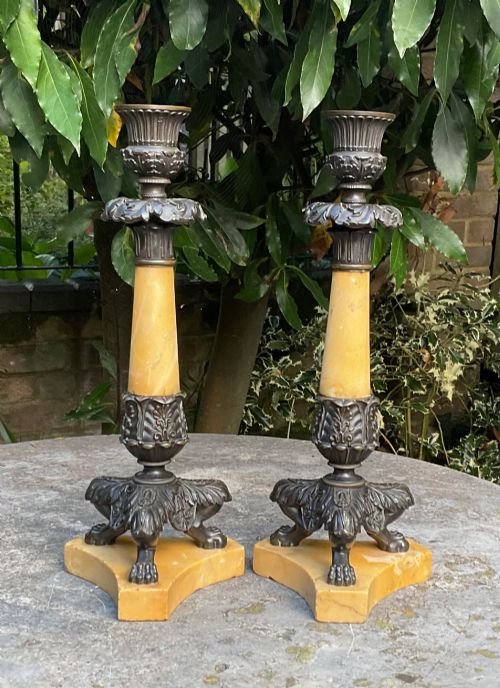
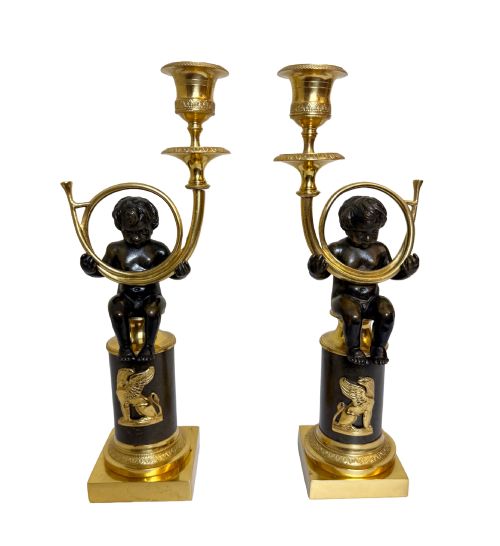
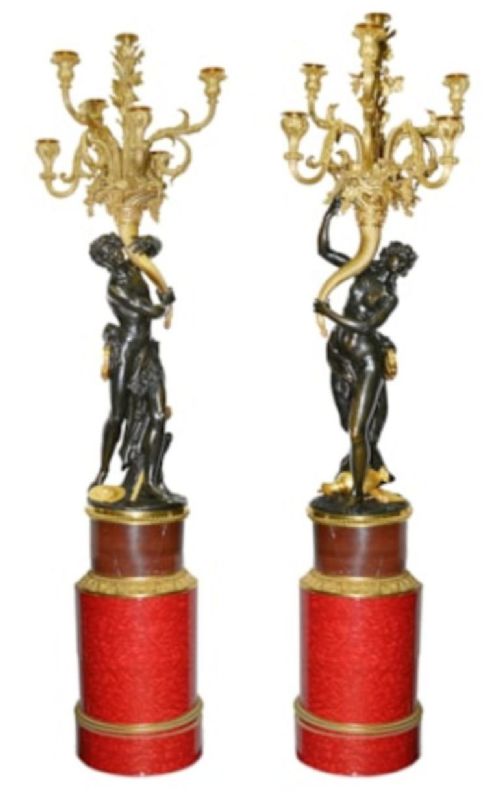
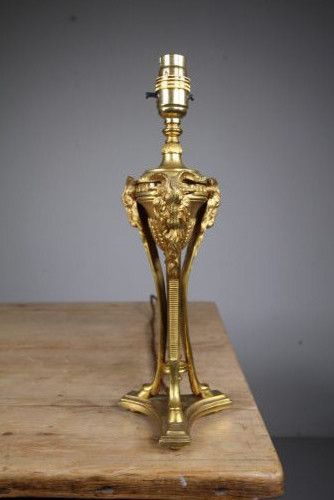
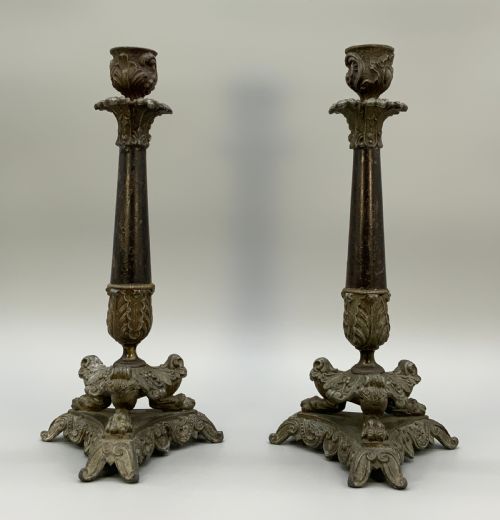
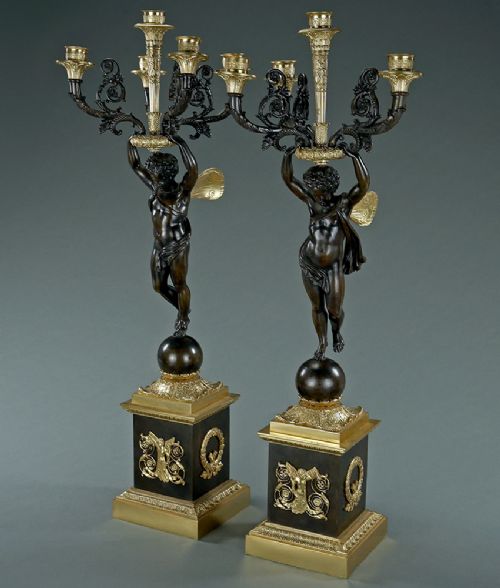
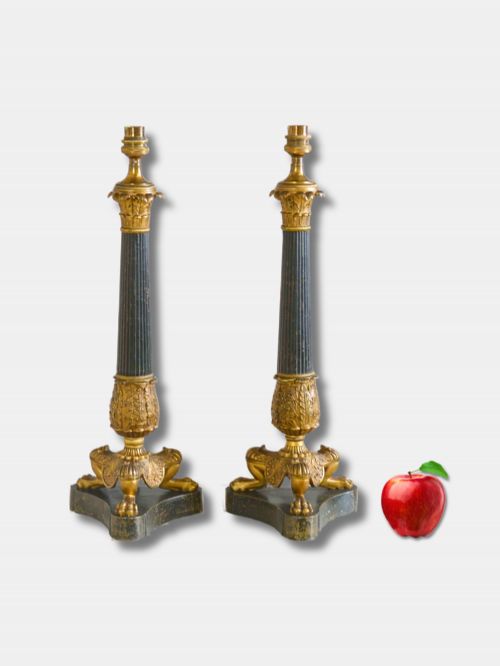
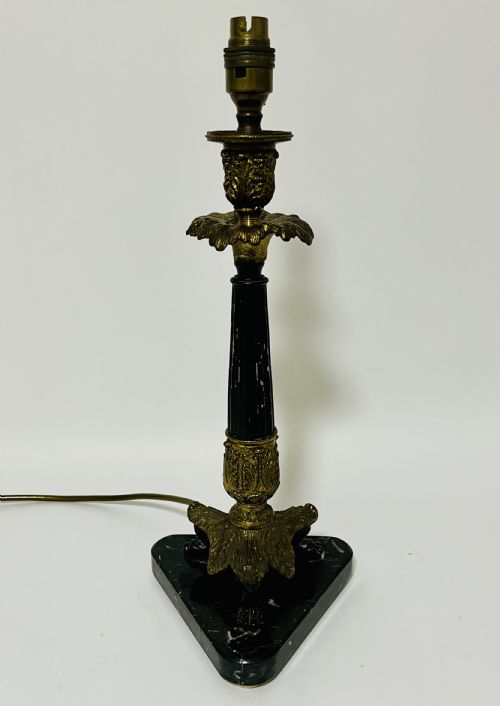
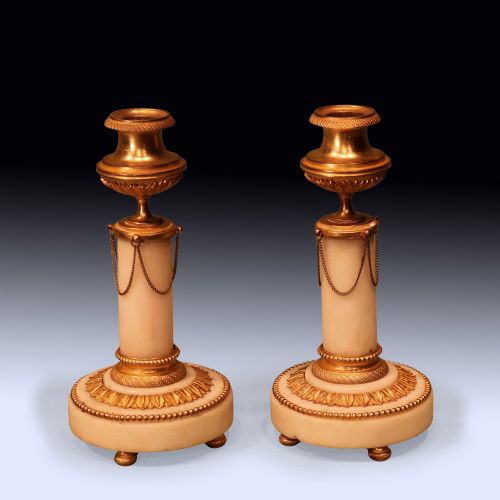
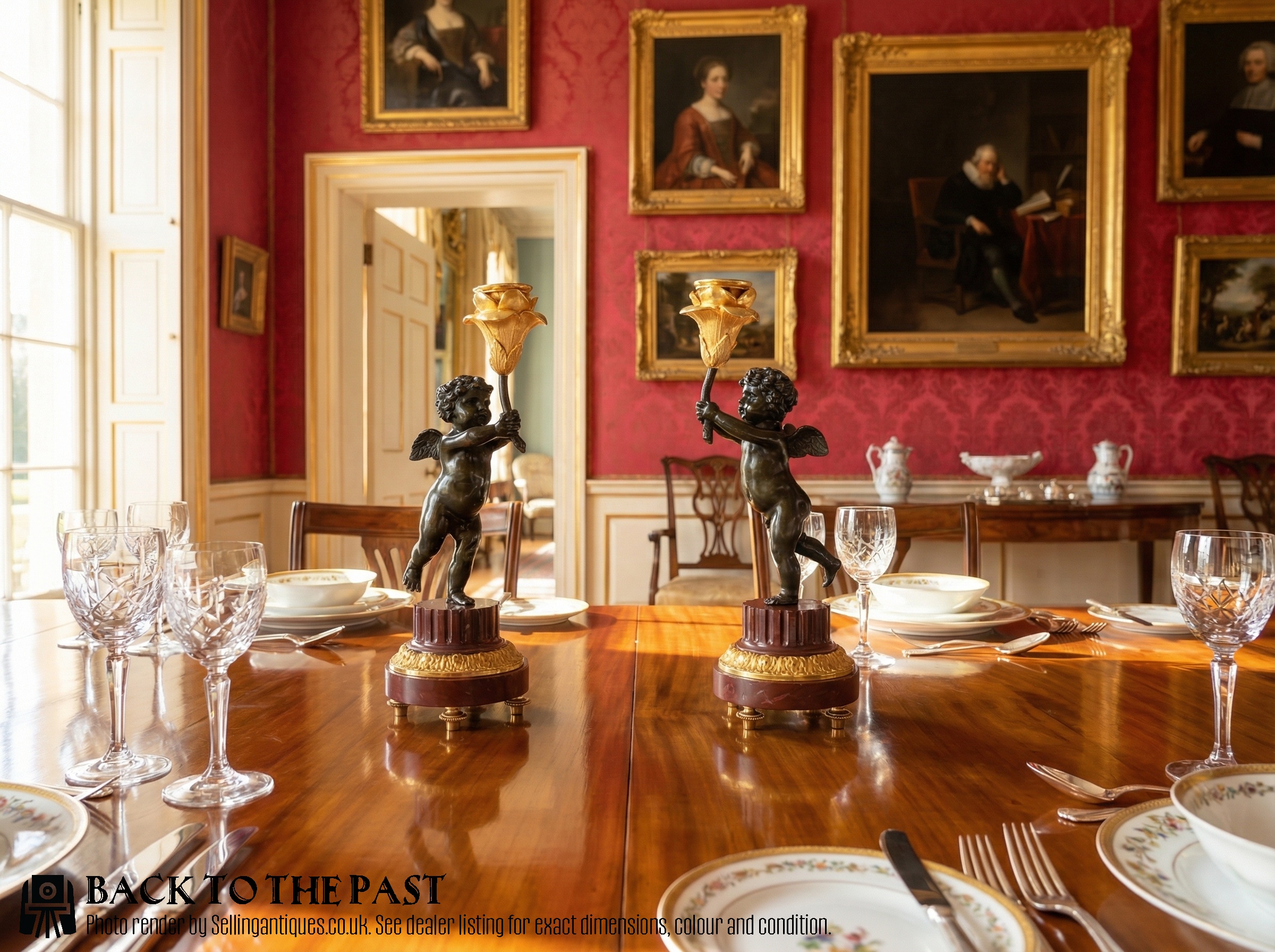
French empire bronze candlesticks encompass heavy table lighting and garnitures produced during the early nineteenth century and subsequent revival periods. Buyers encounter matched pairs resting on marble plinths, incorporating classical figures, cherubs, and animal paw feet.
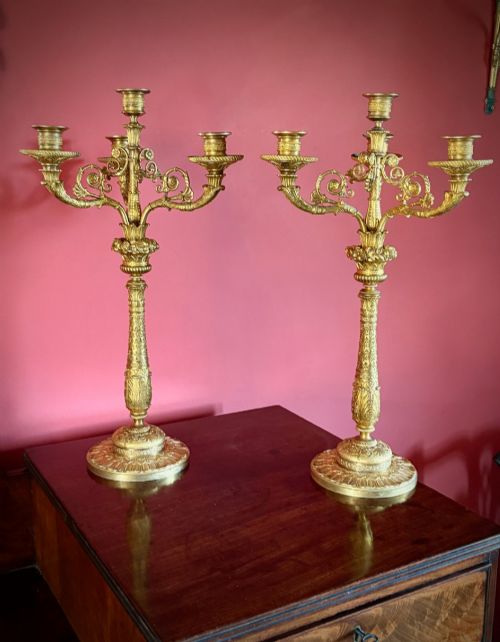
The selection ranges from simple single-socket desk pieces to multi-branch candelabra wired for modern table lamps. Most examples date from the nineteenth century, uniting French design vocabularies with Regency and Neoclassical British tastes.
How they were made
Foundry workers cast components in bronze and brass using sand or lost-wax methods, achieving sharp relief on figures and acanthus foliage. Surface decoration combined dark chemical patina with fire-gilded ormolu, applying gold amalgam to bronze before heating it in a kiln.
Plinths and bases frequently integrate white, sienna, or black marble alongside slate. Component parts were then turned on lathes, chased by hand with chisels and matting tools, and mechanically pinned together.
French Empire Bronze Candlesticks Retail Price Guide 2026
Typical asking prices for french empire bronze candlesticks among the pieces listed under this phrase on Sellingantiques today, from the lower quarter to the upper quarter. They describe what is for sale here now, not the wider market.
What varies in quality
Structural integrity relies on heavy gauge bronze rather than light cast metal, alongside the weight and quality of the underlying marble plinths. Original matching components and minimal distortion to sockets indicate higher workshop standards.
Jean-Démosthène Dugourc·Galle
The French Empire Bronze Candlesticks Glossary
- Ormolu
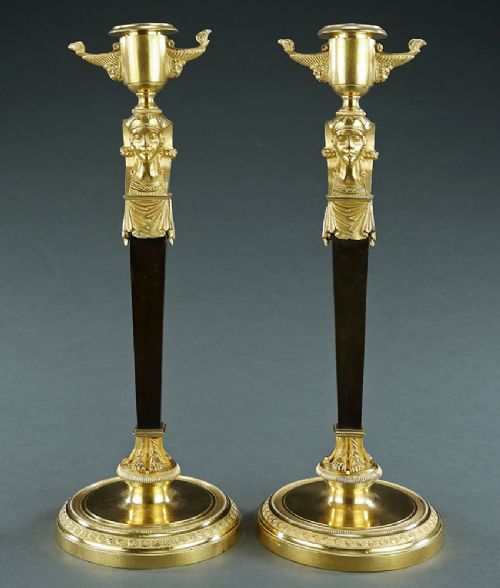
- Gilded bronze produced by applying a mixture of gold and mercury to a bronze base and heating it until the mercury vaporised. This historic technique creates a rich, matte golden surface.
- Patinated bronze
- Bronze that has been treated with chemical solutions to darken the surface to a deep brown or black tone. It provides contrast against bright gilt ormolu mounts.
- Candelabra
- A branched candlestick holding multiple candles on separate arms. These often feature removable central finials or convert into table lamps.
- Garniture
- A set of ornamental objects designed to be displayed together on a mantelpiece or sideboard. Pairs of candlesticks frequently form the matching outer components of these sets.
- Caryatid
- A sculpted female figure serving as an architectural support or pillar. On candlesticks, they frequently form the central vertical shaft.
French Empire Bronze Candlesticks: Frequently Asked Questions
Were these candlesticks converted to lamps?
Many period pieces underwent conversion to electricity during the twentieth century to serve as table lamps. Wiring often runs through the central shaft or alongside existing construction without altering the primary bronze structure.
Buyers find both unconverted candle holders and lamp adaptations across current listings. Specialist lighting technicians can often reverse conversions if original candle use is preferred.
What is the difference between Empire and Regency styles?
French Empire design emerged under Napoleon, drawing heavily on Roman, Greek, and Egyptian motifs such as sphinxes, lions' paws, and military trophies. Regency style developed concurrently in Britain, sharing classical roots but incorporating distinct local cabinet-making traditions.
Both aesthetics utilise patinated bronze paired with bright ormolu mounts. Pieces from these overlapping eras frequently share column forms, figural shafts, and marble plinths.
How do I identify a nineteenth-century reproduction?
Nineteenth-century revival pieces, including Louis XVI style and later copies, often display sharper mechanical casting methods and different assembly screws. Examining the base, threading, and wear patterns helps differentiate original Napoleonic era production from later Victorian or Edwardian interpretations.
Weight, bronze density, and the composition of the marble plinth also offer clues to the exact manufacturing period. Unmarked foundry pieces rely on stylistic consistency and material ageing for dating.