


Bronze and Ormolu Candleholders
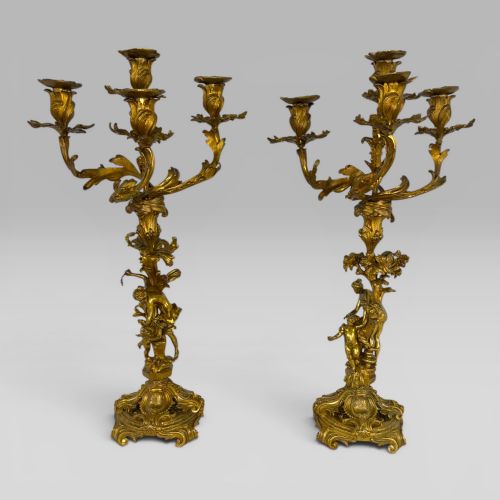
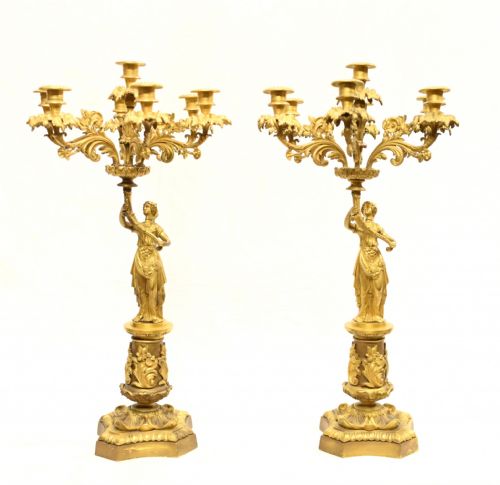
Bronze and ormolu candleholders combine deep-toned cast metal with brilliant mercury-gilt highlights to illuminate interiors with classical elegance.
Bronze and Ormolu Candleholders
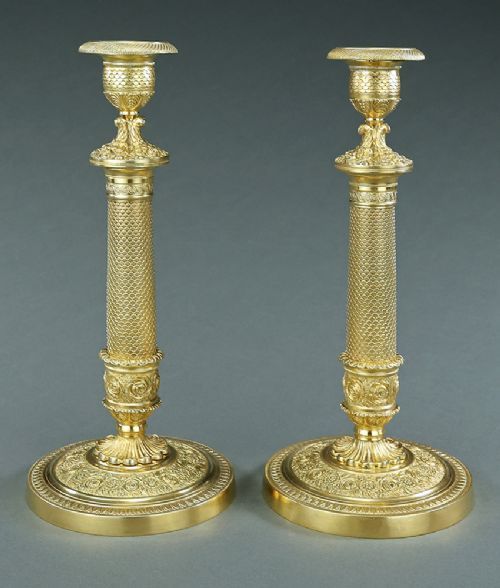
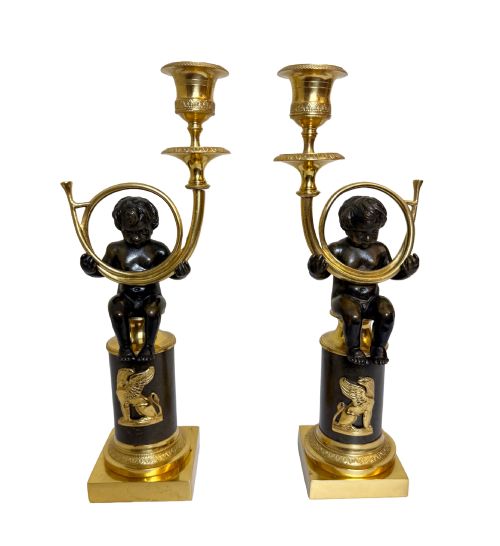
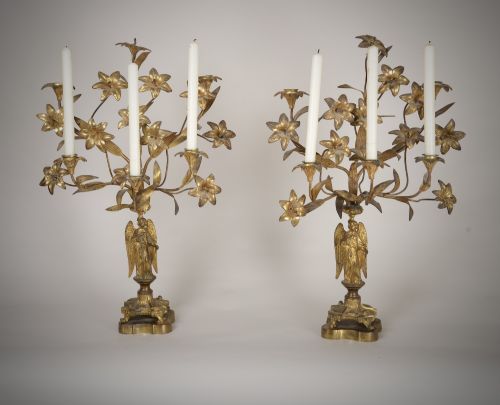
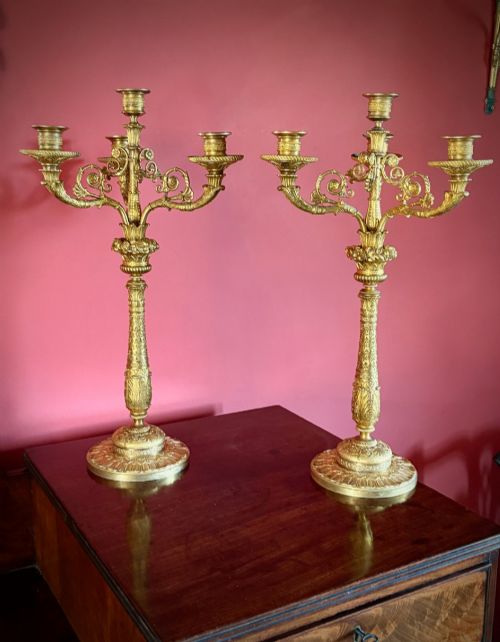
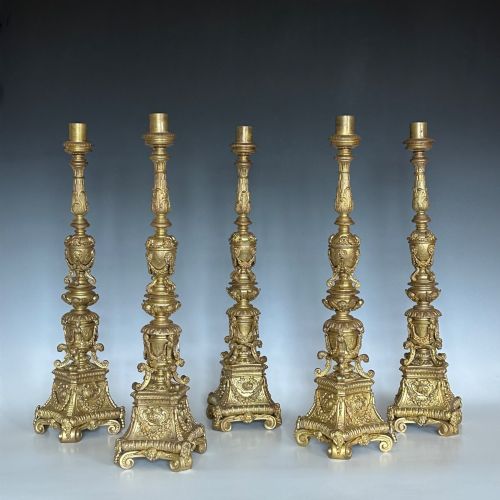
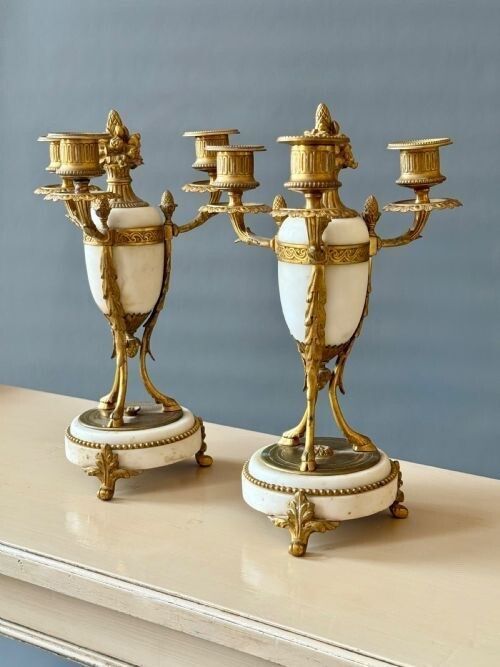
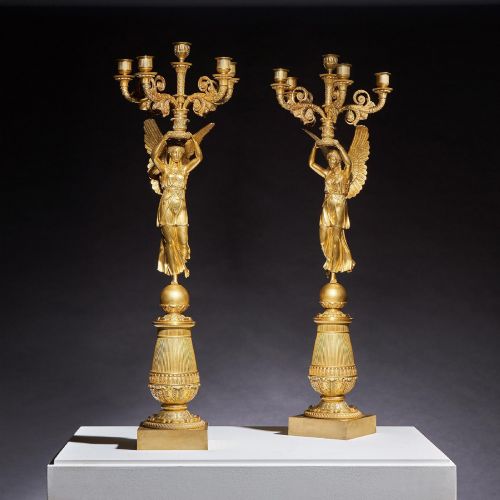
Bronze and ormolu candleholders encompass multi-branched candelabra, wall sconces, and single candlesticks designed for domestic illumination. Buyers find that pairs dominate the selection, often featuring classical figures, cherubs, or animal motifs mounted on stone bases.
The objects span the eighteenth through the late nineteenth centuries, drawing heavily upon French aesthetic movements such as the Empire, Louis XVI, and Rococo Revival styles. Pieces frequently incorporate contrasting materials like white marble, porphyry, porcelain, and cloisonné alongside the central metalwork.
Originating largely from French workshops, these items also appear in English Regency and Italian Grand Tour variants. The forms range from simple columnar sticks to elaborate figural compositions supporting up to five candle nozzles.
How they were made
The manufacturing process begins with the lost-wax or sand-casting of bronze, which provides a sturdy structural core and allows for intricate figural detailing. Artisans then refine the surfaces through extensive chasing and engraving using fine metalworking tools.
Gilding is achieved by applying an amalgam of gold and mercury to designated areas before heating the metal to vaporise the mercury, leaving a permanent gold layer known as ormolu. Secondary areas are often treated with a dark chemical patina to create a sharp visual contrast against the brilliant gilt highlights.
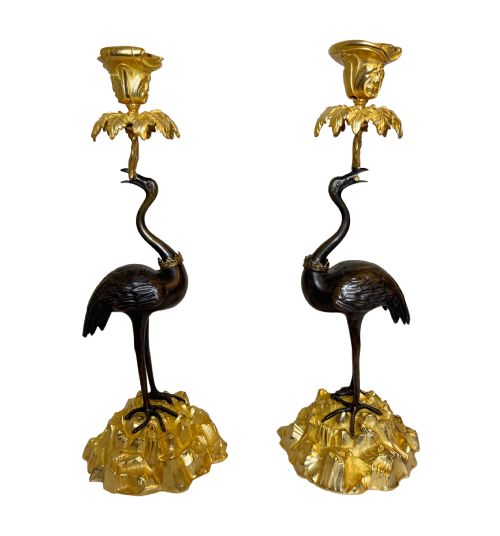
Storks and flamingos occasionally hold candle sockets in their beaks, bringing avian grace to nineteenth-century mantelpieces.
What varies in quality
The depth and durability of the ormolu finish dictate value, with genuine mercury gilding offering a deep, warm lustre that outshines later electroplated coatings. Furthermore, the selection and turning of supporting materials such as white marble or porphyry demonstrate the overall ambition of the piece.
Pierre Philippe Thomire·Claude Clodion·Rabiat·Galle
The Bronze and Ormolu Candleholders Glossary
- Ormolu
- A golden surface finish created by applying a mercury and gold amalgam to bronze and firing it in a kiln. This historical technique produces a distinctively rich, matte-gold appearance that resists tarnishing over centuries.
- Patinated bronze
- Bronze that has been chemically treated to darken its natural metallic surface, yielding shades from rich brown to near black. This dark ground highlights the brightness of adjacent ormolu mounts.
- Candelabra
- A branched lighting fixture designed to hold multiple candles simultaneously on separate arms. They often feature a central removable light fitting or decorative finial.
- Chasing
- The manual refinement of a cast metal surface using small hammers and steel punches to sharpen details and textures. Master chasers brought depth and expression to figures and acanthus leaves.
- Grand Tour
- A cultural journey undertaken by nineteenth-century Europeans who collected local bronzes and antiquities as souvenirs. These pieces often emulate classical Roman or Italian architectural and sculptural motifs.
Bronze and Ormolu Candleholders: Frequently Asked Questions
How do I clean ormolu?
Dust these pieces gently with a soft, dry brush to prevent the accumulation of dirt within intricate crevices. Avoid chemical dips and metal polishes, as abrasive compounds strip away the thin historic gold layer.
If necessary, wipe surfaces lightly with a cloth dampened in distilled water, drying them immediately. Protecting the metal from moisture preserves the underlying bronze and mercury gilding.
Were these electrified later?
Many nineteenth-century examples underwent conversion for electrical wiring during the twentieth century to accommodate modern lighting needs. Some wiring threads discreetly through central nozzles, while older conversions may show alterations to the base.
Buyers should examine the underside and candle cups to determine if original components remain intact. Restoring a converted piece back to hold wax candles is often straightforward.
How do I spot a reproduction?
Authentic nineteenth-century pieces display heavy, solid bronze casting with hand-chased surface details that show slight individual variations. Modern reproductions frequently utilise lighter zinc alloys and uniform machine-cast components that lack depth.
Examine the joins and fixings, as older items use threaded pins and square nuts rather than modern screws. The quality of the gilding also offers a reliable indicator of period manufacture.
Why are some arms removable?
Multi-branched candelabra often feature socket joints that allow the upper branch assembly to lift away from the central shaft. This modular construction facilitated easier cleaning and packing during the nineteenth century.
Such engineering also permitted owners to transform a multi-light candelabrum into a simple single candlestick. Checking these joints reveals traditional peg-and-socket manufacturing methods.