
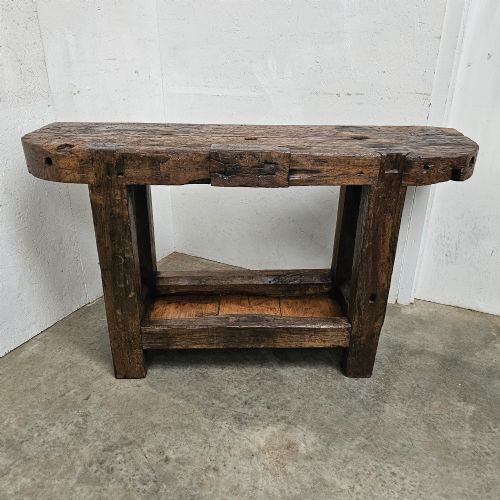


French Elm Table
These pieces of French elm table bring honest utility and characterful timber into modern rooms.
French Elm Table
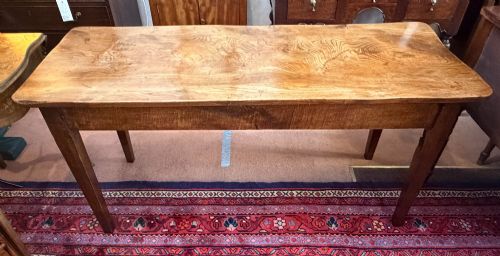
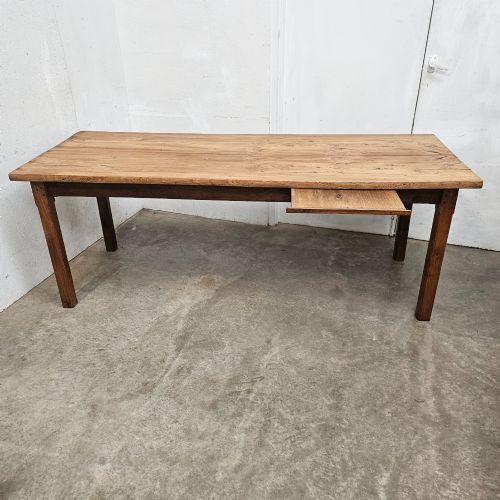
When you search for a French elm table, you encounter substantial dining surfaces and working boards shaped by rural traditions. The examples appearing here range from expansive 18th century farmhouse dining boards to narrow bistro formats and low coffee tables. Many embody vernacular rural styles, French provincial aesthetics, and primitive utility.
The domestic forms include long harvest tables, trestle constructions paired with sycamore, and circular guéridon centre pieces. You also find specialised working pieces such as kitchen chopping blocks, workbenches, and dough bins repurposed for domestic living. These surfaces carry the marks of practical daily labour from the 18th, 19th, and early 20th centuries.
How they were made
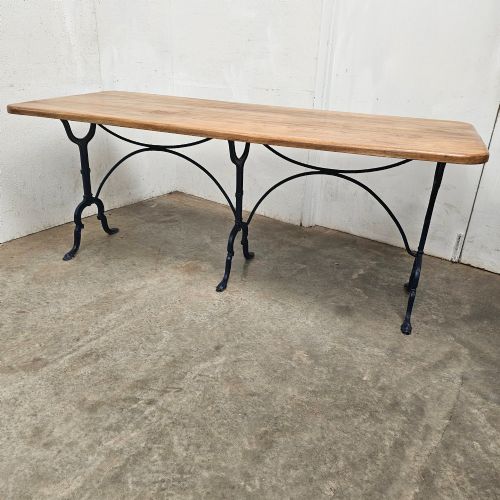
Makers constructed these pieces from solid timber, predominantly utilising durable elm boards joined for top surfaces, frequently supported by oak, sycamore, or iron elements. Joinery methods relied on sturdy pegs, trestle bracing, and hand-planed boards that yielded two-board or multi-board configurations. Burr elm sections provided figured grains for circular centre tables and lamp tables.
Supplemental materials included brass hardware, iron hasps, and occasionally marble inserts for kitchen work surfaces. Carpenters shaped these tables using hand tools, resulting in gnarled legs, scrubbed finishes, and natural variations across the wood.
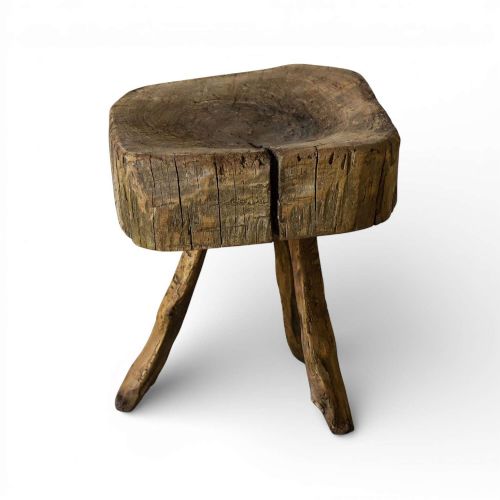
One listed 19th century chopping block stands proudly on delightfully gnarled legs that recall its origins in a French country kitchen.
What varies in quality
The caliber of a piece rests in the integrity of its timber selection and the honesty of its construction. Tables featuring well-figured burr elm or thick, single-region fruitwood and elm combinations command attention through their substantial presence. Scrubbed surfaces that retain authentic patination without excessive modern intervention represent superior preservation.
Structural honesty dictates the hierarchy of these items. Pieces retaining original gnarled legs, unaltered trestle bases, and authentic iron brackets sit above heavily restored examples. The distinction lies between untouched rural utility and overly smoothed modern reproductions.
The French Elm Table Glossary
- Guéridon
- A small French round table, typically supported by a central pillar or pedestal. These often feature decorative burr elm veneers.
- Trestle table
- A table consisting of two or more supports connected by a longitudinal beam holding a broad board top. This form appears frequently in scrubbed sycamore and elm combinations.
- Burr elm
- A woody outgrowth on an elm tree producing intricate, swirled grain patterns. Cabinet makers prized this timber for decorative table tops.
- Dough bin
- A deep wooden box with a lid, historically used for kneading bread, now encountered as a standalone antique furniture form. They are constructed from solid elm planks.
- Vernacular rural
- A design style shaped by local builders using regional materials for everyday functional utility rather than grand academic fashion.
French Elm Table: Frequently Asked Questions
How do I clean a scrubbed elm top?
Maintain scrubbed surfaces by brushing away dust and wiping gently with a damp cloth.
Avoid harsh chemical cleaners that strip the natural dry finish of the old timber.
Are these tables suitable for daily dining?
These pieces were built for heavy domestic work and easily accommodate everyday meals.
Use protective mats to guard historic wood surfaces from hot dishes and moisture rings.
How can I tell an 18th century table from a later one?
Examine the underside of the boards and the peg joinery for signs of hand-cut construction and deep historical wear.
Earlier examples generally display wider single boards and more pronounced timber movement over centuries.
What is the difference between a harvest table and a refectory table?
Harvest tables generally offered long, narrow proportions designed for seasonal farm laborers during large meals.
Refectory formats originated in monastic settings, typically utilising heavier underframing and structural stretchers.