
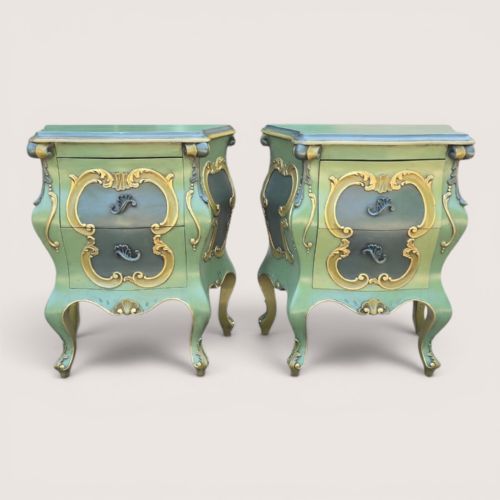
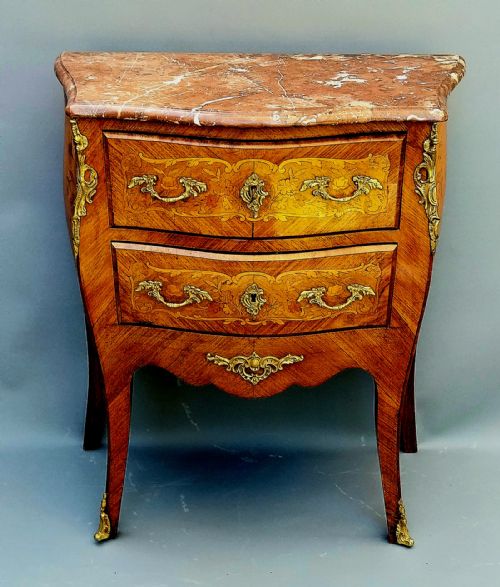


French Curved Chest Drawers
These French curved chest drawers bring sweeping serpentine lines and marble tops into a room, offering practical storage with distinct continental character.
French Curved Chest Drawers
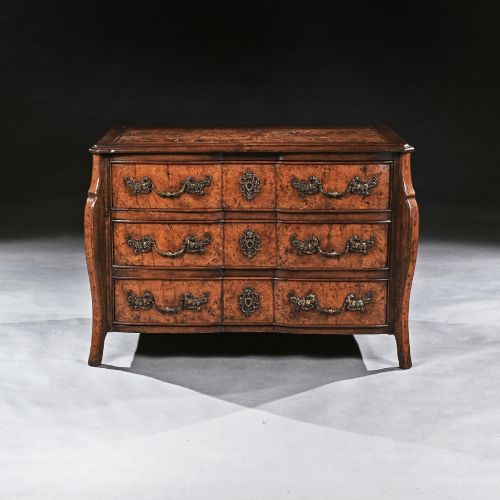
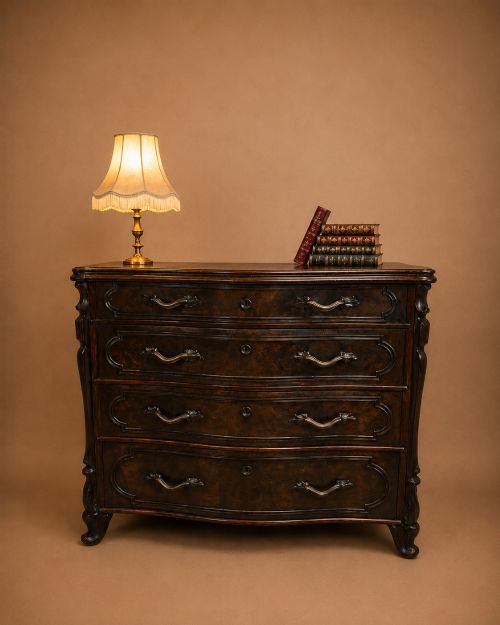
When you search for french curved chest drawers, you are looking at commodes and bedside chests built with swelling bombé profiles, serpentine fronts, and bow fronts. These pieces originate predominantly from the eighteenth and nineteenth centuries, alongside revival pieces from later decades.
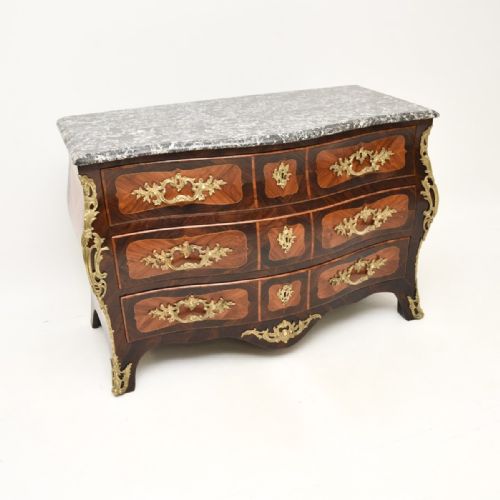
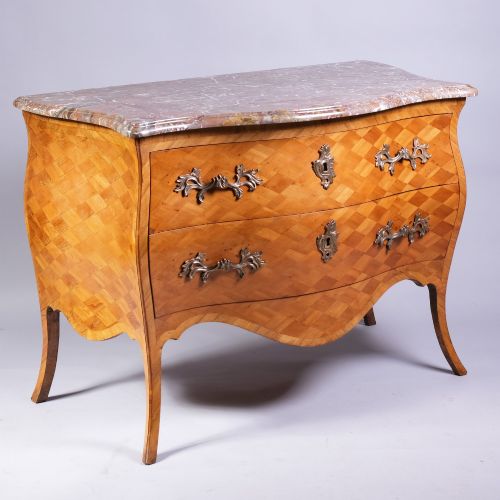
The most common form encountered on this page is the marble-topped commode, often styled after the Louis XV period with characteristic curved lines. Alongside full-sized chests, smaller bedside cabinets and side cabinets appear in walnut, mahogany, and painted wood.
Makers and provinces varied the silhouette, from grand eighteenth-century kingwood examples to provincial painted pieces and later nineteenth-century revival interpretations. The overarching feature remains the deliberate sweep of the wood forming the curved drawer fronts.
Materials and construction
Cabinet makers utilised choice hardwoods such as walnut, mahogany, fruitwood, plum, and kingwood, frequently laid as intricate marquetry or inlaid patterns across the curved carcasses. These timbers provided the flexible structure needed to shape the swelling bombé and serpentine forms.
Sleek slabs of marble fitted neatly to the top surface, complemented by cast brass and ormolu mounts framing the corners, handles, and apron scrolls. Painted wood finishes also appear, particularly on provincial pieces from the eighteenth century.
Some eighteenth-century commodes feature curves so pronounced they require custom-bent marble tops to match the swelling wood.
Distinguishing quality
Quality rests upon the fluency of the curve and the precision with which the timber veneer or marquetry follows the swelling contours of the frame. Finer commodes display seamless transitions across the bombé shape, where the grain of the walnut or kingwood is handled with deliberate symmetry.
The integration of heavy marble tops and the crispness of the cast ormolu mounts further separate standard pieces from exceptional examples. Cabinet work that maintains structural integrity while supporting curved drawer fronts demonstrates the highest level of joinery skill.
Jacques Bircklé
The French Curved Chest Drawers Glossary
- Bombe
- A swelling, convex curved front and sides reminiscent of a bulging profile. This shape requires advanced woodworking skill to construct from straight timbers.
- Commode
- The traditional French term for a chest of drawers, typically low and squat with multiple drawer tiers. In this context, it forms the primary category of curved storage furniture.
- Ormolu
- Gilt-bronze mounts applied to furniture for decorative effect. These metallic accents highlight the corners and handles of finer pieces.
- Marquetry
- Decorative patterns formed by fitting together small pieces of wood veneer of various colours and grains. It adorns the curved drawer fronts of many better examples.
- Serpentine
- A line or front edge that curves inward centrally and outward at the ends, creating an undulating wave shape.
French Curved Chest Drawers: Frequently Asked Questions
What is a commode?
A commode is the French term for a chest of drawers, generally built low to the ground with wide proportions. These pieces combine decorative presence with functional storage for the bedchamber or salon.
In the context of French furniture, commodes frequently feature marble tops and curved drawer fronts that distinguish them from standard English chests.
How do I identify a Louis XV piece?
Louis XV furniture is defined by asymmetrical curves, naturalistic floral motifs, and a complete absence of straight structural lines. The legs often sweep outward in a cabriole shape.
Later nineteenth-century revival pieces often adopted these exact characteristics, so construction details help determine the true age.
Are marble tops original?
Many French commodes were specifically designed to carry thick slab marble tops, which provided a durable and cool surface. These stone tops are generally heavy and cut to follow the exact serpentine or bombé contour of the wood below.
Checking the fit against the wooden frame helps confirm whether the marble rests as intended by the cabinet maker.
How should I care for inlaid wood?
Inlaid surfaces and marquetry require stable indoor humidity to prevent the fine wood veneers from lifting or splitting over time. Gentle dusting with a dry cloth keeps the polished finish secure.
Avoid placing these chests in direct sunlight or near heat sources, as extreme temperature shifts affect older cabinet timbers.