
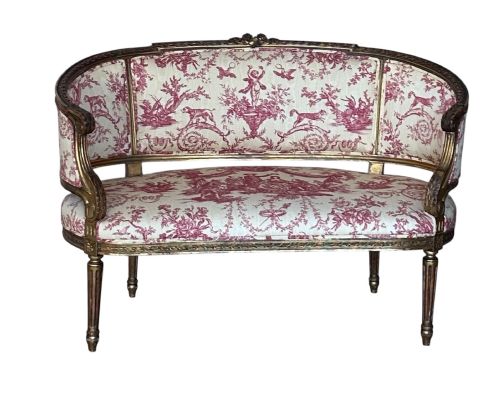
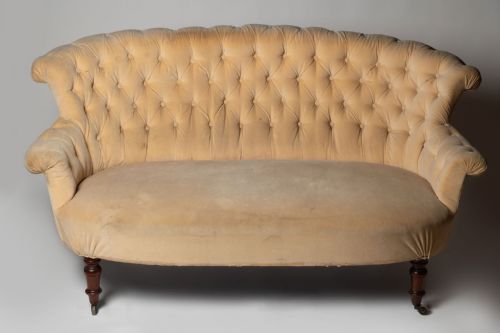


French Country Loveseat
These French country loveseat examples bring relaxed seating and carved wooden frames into a room, offering compact elegance for traditional interiors.
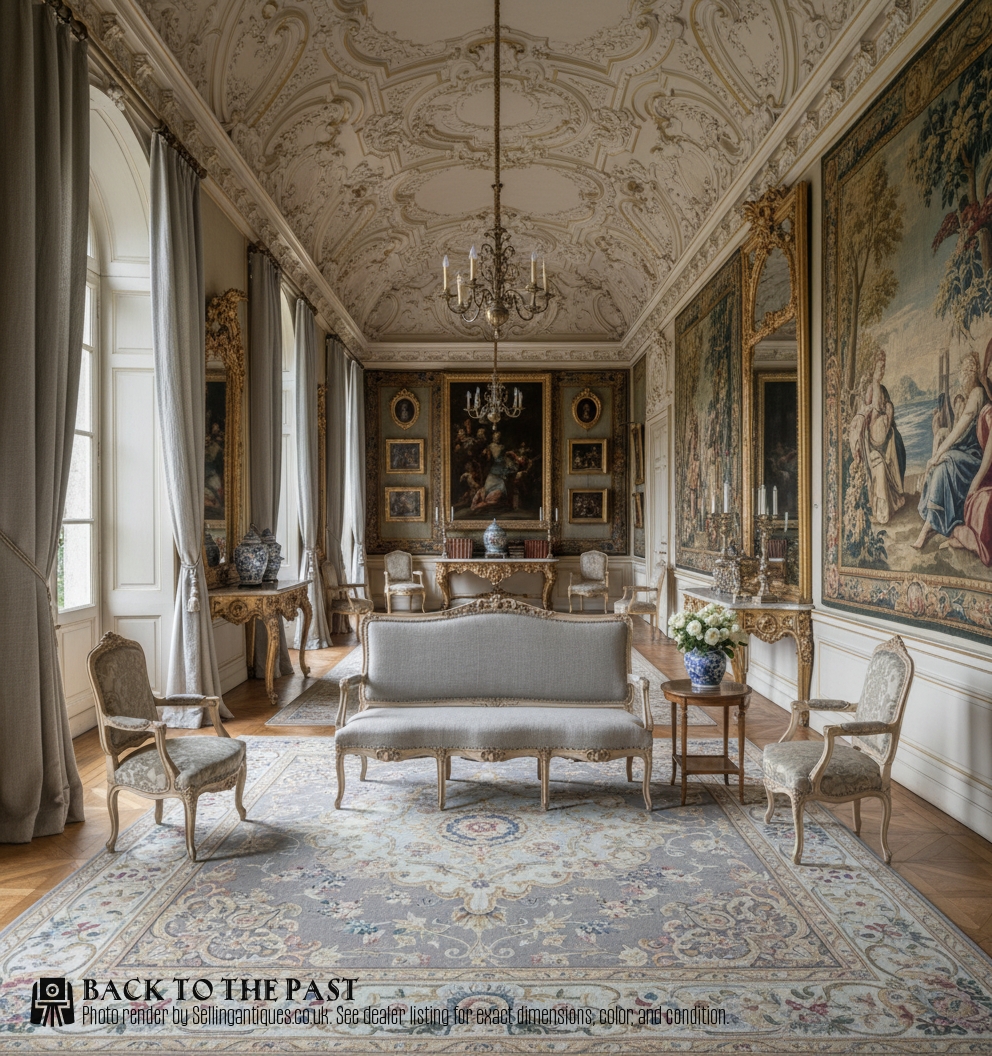
French Country Loveseat
A french country loveseat encompasses compact two-seater settees and canapés originating from continental workshops during the nineteenth and early twentieth centuries. Pieces range from nineteenth-century giltwood frames to lighter painted wood versions dated around 1900.
Most examples on this page take the form of settee, sofa or canapé, designed with modest proportions suitable for smaller spaces. Styles lean heavily towards Louis XV and Louis XVI revivals, alongside French provincial and Directoire designs.
Makers and artisans of the period utilised traditional seating forms like the bergere settee and triple-back settee. Buyers will find frames intended for reupholstery alongside polished walnut and fruitwood structures retaining their original cane panels.
Materials and construction
Frames rely predominantly on native timbers such as walnut, fruitwood and general wood, shaped with carved details typical of French provincial furniture. Artisans also utilised giltwood and brass accents on more formal nineteenth-century pieces.
Many settees incorporate cane work into the backrests and sides, providing a lighter aesthetic than fully upholstered alternatives. Other pieces utilise painted wood surfaces or exposed fabric upholstery over traditional stuffing.
Current listings span from the mid-nineteenth century through the 1930s, featuring walnut, fruitwood, giltwood and cane.
Evaluating the craftsmanship
Quality rests in the crispness of the hand-carved woodwork along the crest rails and cabriole legs, where deeper relief work distinguishes finer commissions from simpler provincial output. The structural integrity of the timber frame determines durability, particularly at the joints.
The condition and execution of woven cane panels significantly affect overall merit, as intact period cane requires specialist skill to replace. Furthermore, original surface treatments like period paint or gilding hold greater appeal than later, heavier interventions.
The French Country Loveseat Glossary
- Canapé
- A traditional French term for a long upholstered settee or sofa. These seating pieces typically feature exposed wooden frames and accommodate multiple sitters.
- Bergere
- An enclosed upholstered armchair or settee with upholstered sides. The design became popular in France during the eighteenth century and inspired later revival pieces.
- Louis XV Style
- A decorative style characterised by asymmetrical curves, scrollwork and floral motifs. This aesthetic heavily influences nineteenth-century French seating.
- Giltwood
- Timber coated with a thin layer of gold leaf or gesso. It appears frequently on formal nineteenth-century French salon seating.
French Country Loveseat: Frequently Asked Questions
How do I use a loveseat in a small room?
These compact two-seater settees fit comfortably into tight alcoves or bedrooms where standard three-seater sofas overwhelm the floor plan. Their open cane backs also maintain visual space in modest interiors.
Position a French settee opposite a fireplace or beneath a window to create an intimate seating area without blocking natural light.
Can I reupholster an antique settee?
Many historical frames arrive ready for new fabric or require re-webbing to restore proper seating support. Traditional upholstery methods use horsehair and springs, which benefit from professional restoration.
Choosing textiles that complement the regional French aesthetic helps preserve the character of the carved wooden frame.
What is the difference between a sofa and a canapé?
While both terms describe seating for multiple people, canapé specifically denotes a French settee with an exposed wooden frame. These pieces often display detailed carving along the top rail.
Sofas in this category may encompass fully upholstered frames or simpler nineteenth-century vernacular forms.
How do I care for antique cane panels?
Natural cane requires gentle dusting with a soft brush and occasional light moisture to prevent the material from becoming brittle. Avoid placing these pieces directly against heat sources.
If a cane panel sags, a light dampening of the underside can sometimes encourage the fibres to tighten as they dry.