


French Country Credenza
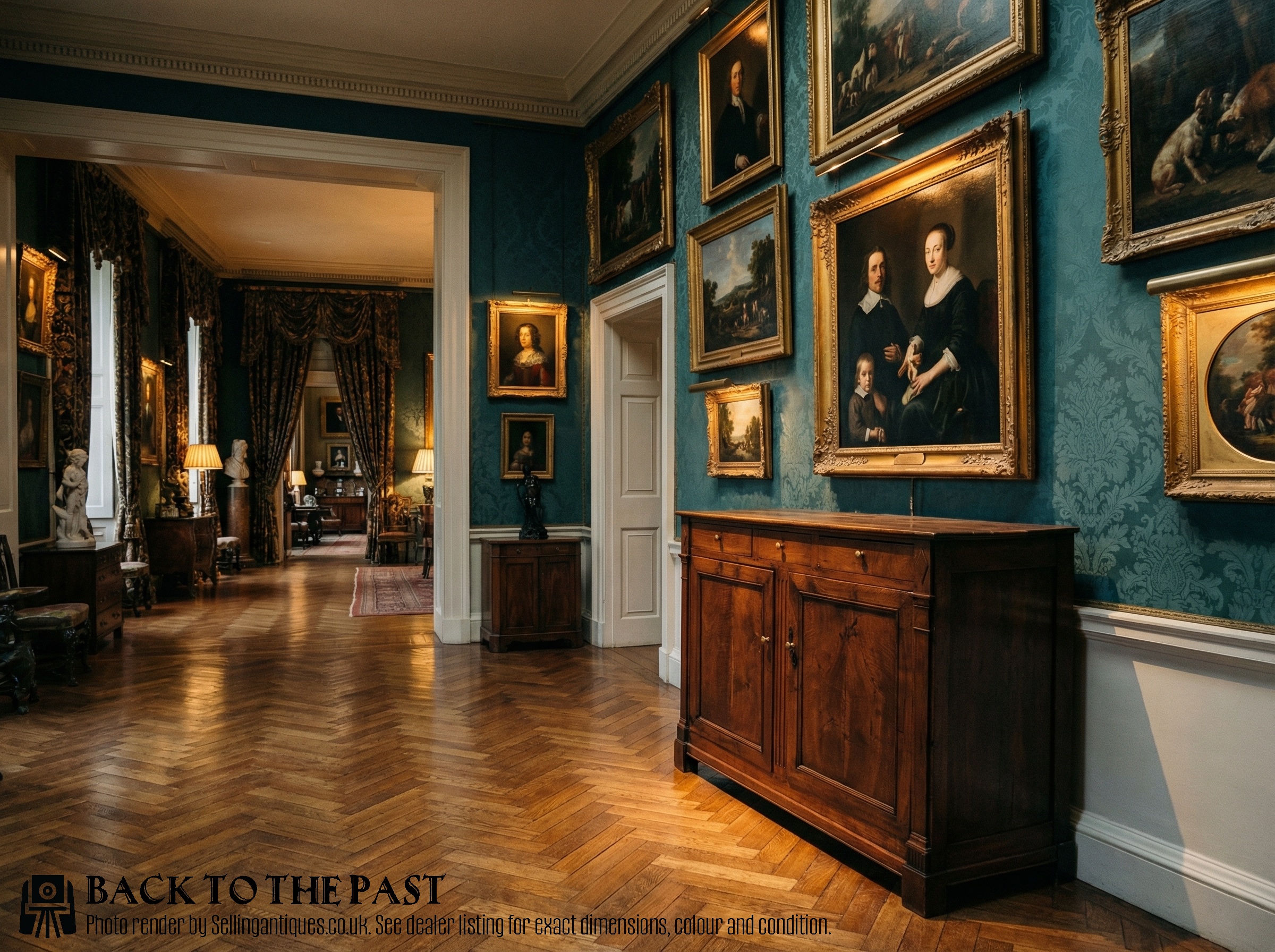
These French country credenza examples bring practical storage and provincial character to a room, offering sturdy wooden frames and classic regional proportions.
What They Are
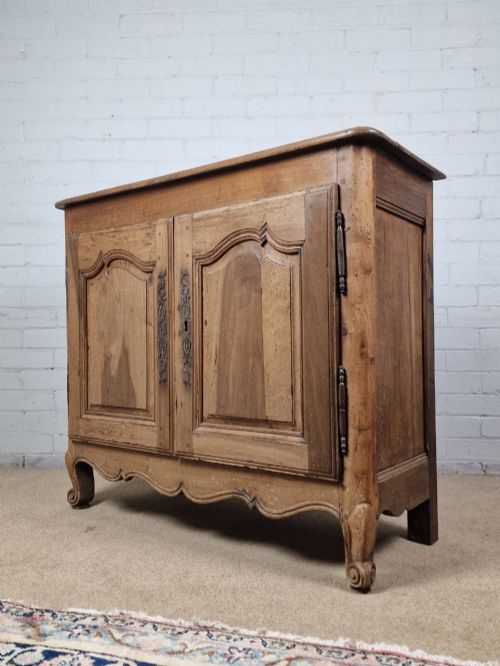
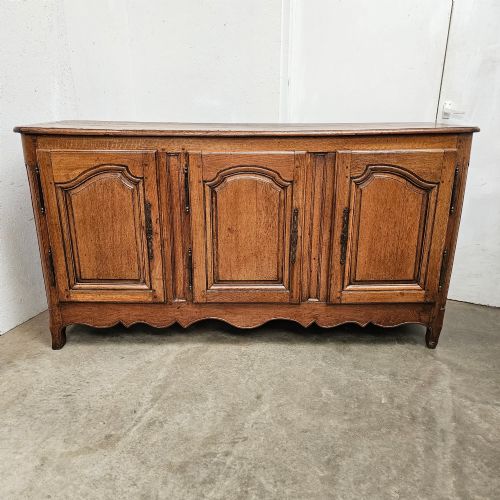
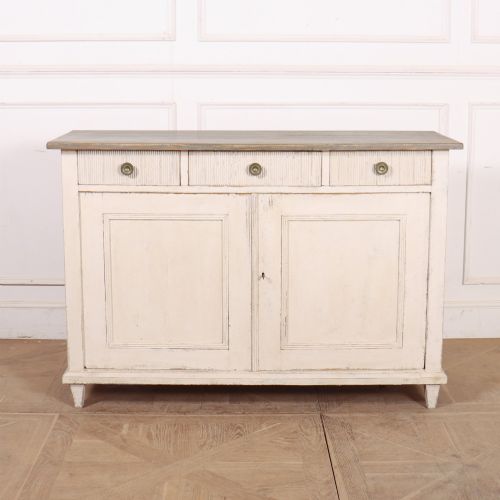
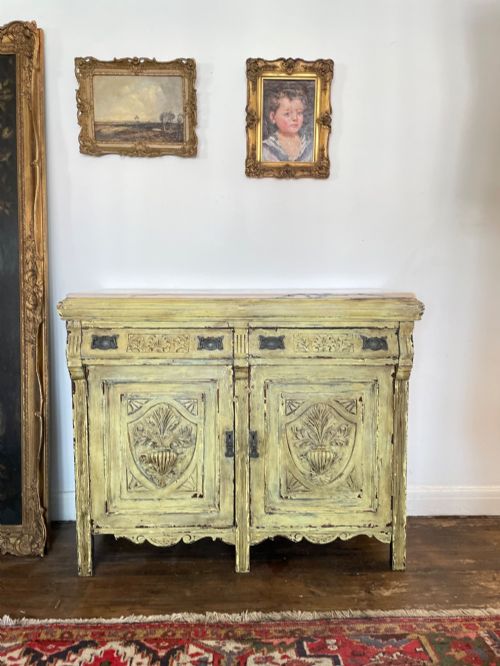
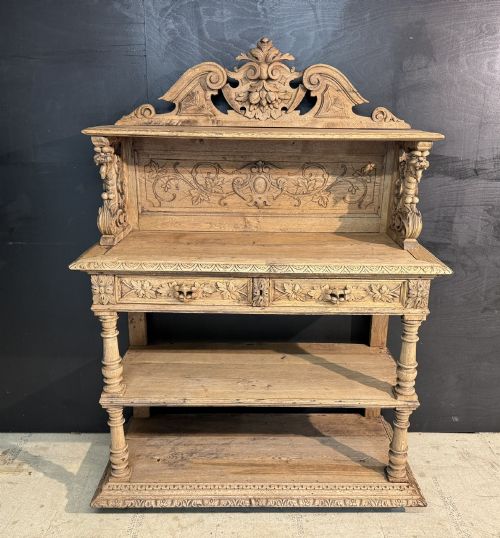
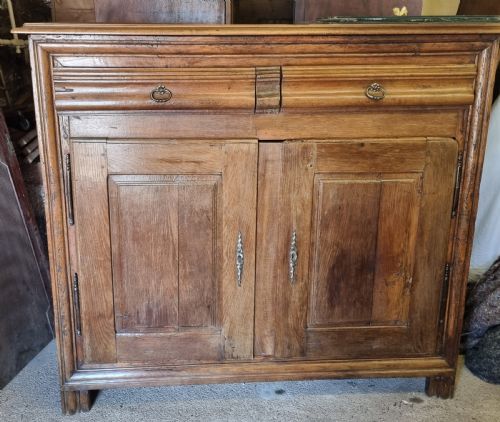
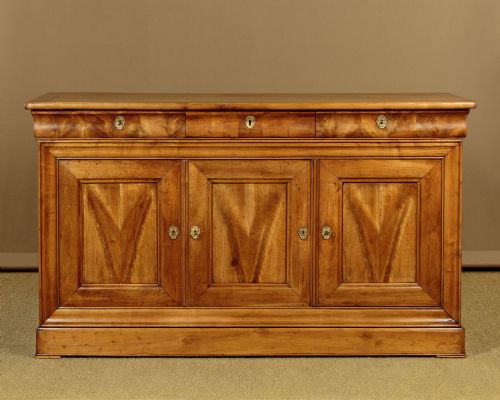
A French country credenza typically appears in forms such as enfilades, sideboards, and buffets across periods spanning the eighteenth century to 1930. These substantial storage items arrive in provincial styles including French Provincial, Louis Philippe, and Directoire.
The pieces listed on this page showcase traditional regional furniture formats designed for domestic utility. They range from early nineteenth-century three-door oak enfilades to later marble-topped variants in mahogany and cherrywood.
How They Were Made
Cabinet makers utilised a variety of solid hardwoods, employing oak, mahogany, walnut, cherrywood, chestnut, and occasionally carved chestnut combined with oak. These timbers provided the structural integrity required for heavy provincial sideboards.
Construction incorporated functional metal elements such as brass fixtures and wrought iron details, alongside fitted marble tops. Surface work ranges from plain polished timber to detailed traditional carving.
Retail Price Guide 2026
Typical UK retail prices for french country credenza, calculated from the Sellingantiques database of over a million retail prices indexed since 2003. This retail price guide relies exclusively on Sellingantiques data; no external sources or auction records are used, so the figures do not describe the wider market.
Chestnut wood sneaks into eighteenth-century pieces, proving that trees had opinions on French interior design too.
What Varies in Quality
Quality rests in the selection of primary timbers and the integration of secondary materials like fitted marble tops and brass hardware. Heavier carving and the selection of denser woods like mahogany or walnut distinguish finer examples from simpler provincial utilitarian pieces.
The refinement of the period style, from Louis Philippe curves to Directoire lines, determines the visual sophistication of the piece. Construction joinery and the preservation of original timber surfaces further separate standard regional items from superior specimens.
The French Country Credenza Glossary
- Enfilade
- A long sideboard or buffet featuring three or more doors in a linear arrangement. This form is common in traditional French dining spaces.
- Directoire
- A transitional furniture style bridging Louis XVI and Empire, characterised by restrained neoclassical lines. It appears on tall cherrywood buffet forms.
- Louis Philippe
- A mid-nineteenth-century French style noted for understated curves, minimal ornamentation, and practical elegance. It frequently pairs with mahogany and marble.
- Provincial
- Denoting items made in the regions outside Paris, reflecting local tastes and available timbers like chestnut and oak. These pieces prioritise robust daily utility.
Frequently Asked Questions
What is an enfilade?
An enfilade is a long sideboard featuring a linear sequence of doors across the front. It serves as a primary storage unit in traditional French interiors.
These pieces provide extensive surface space and deep internal capacity. They originated to hold dining linen and tableware.
How do I identify Louis Philippe style?
Louis Philippe furniture is defined by clean, restrained lines with minimal carving and gentle curves. It focuses on the natural grain of woods like mahogany.
This style often incorporates contrasting marble tops. It represents a more modest domestic aesthetic than earlier royal courts.
What woods were used?
Provincial cabinet makers utilised local timbers including oak, cherrywood, chestnut, and walnut. More formal interpretations occasionally employed mahogany.
Hardwood selection depended on regional availability in France. Timber choices dictate the overall weight and grain pattern of each sideboard.
Are marble tops original?
Marble tops frequently appear on nineteenth and twentieth-century French sideboards. They offered a durable, heat-resistant surface for serving food.
These stone slabs sit directly onto the wooden carcass of the buffet. They vary in colour and veining according to the specific period.