




French Country Bedside Cabinet
A french country bedside cabinet brings rustic proportion and practical storage to a bedroom, combining sturdy regional timbers with refined continental detailing.
French Country Bedside Cabinet
A french country bedside cabinet is typically a compact cupboard, commode or small table designed to sit beside a bed. These pieces date across the nineteenth and twentieth centuries, spanning periods from the eighteen-eighties through to nineteen-fifty.
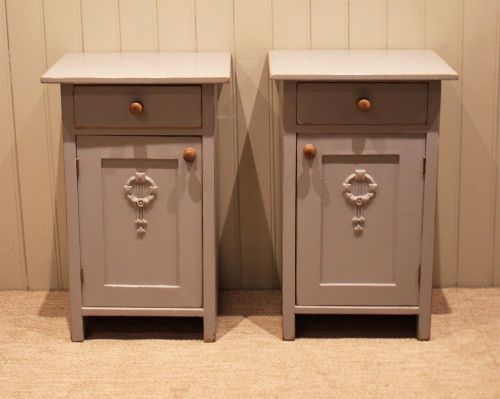
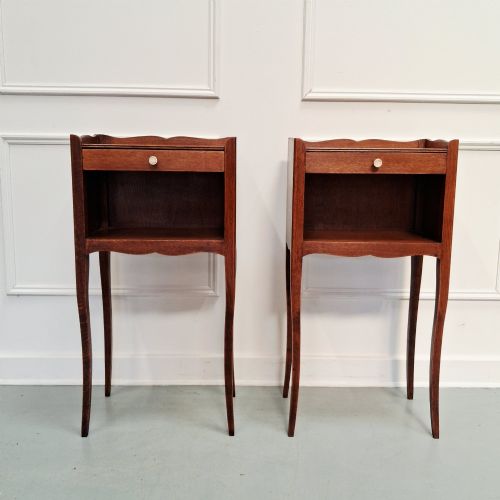
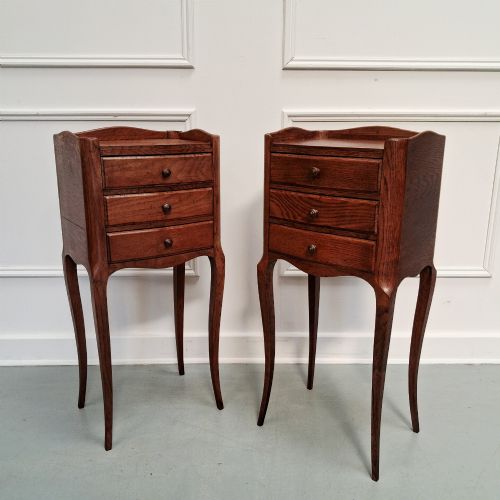
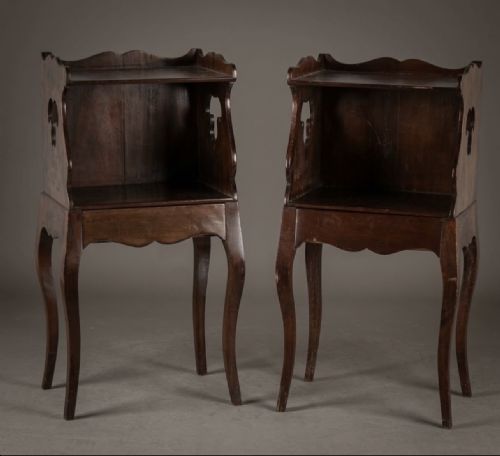
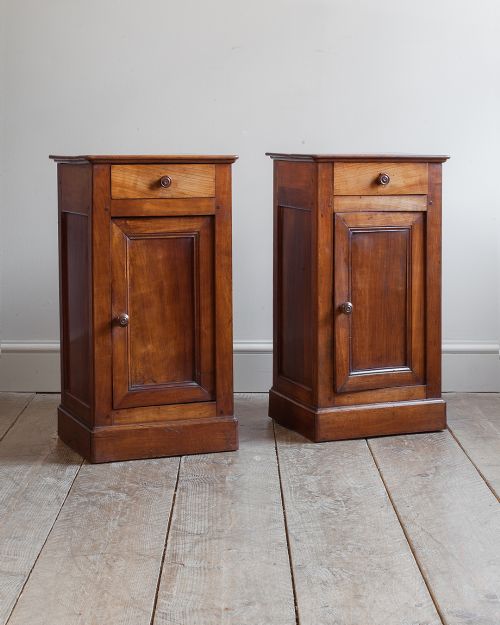
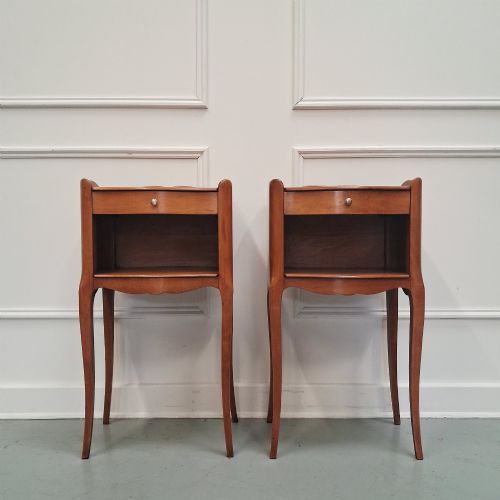
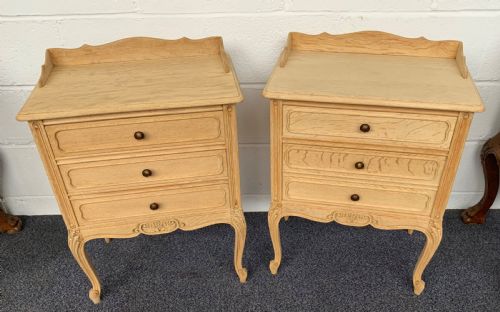
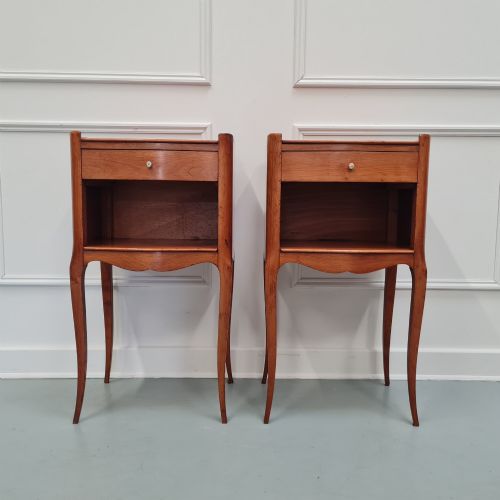
Buyers will encounter single examples as well as matched pairs finished in various regional styles. Common forms include single-door cupboards, open bedside tables and small drawer chests.
The aesthetic draws on provincial traditions, French provincial designs and Louis-inspired curves. Pieces reflect both utilitarian country workshops and more ornate chateau or Louis XV styles.
Materials and Construction
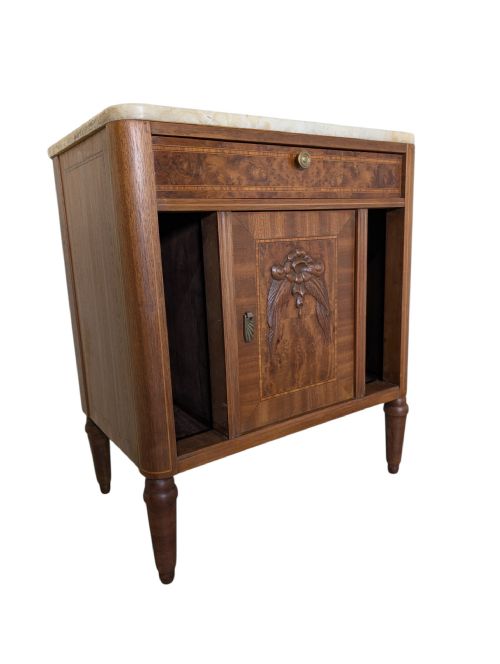
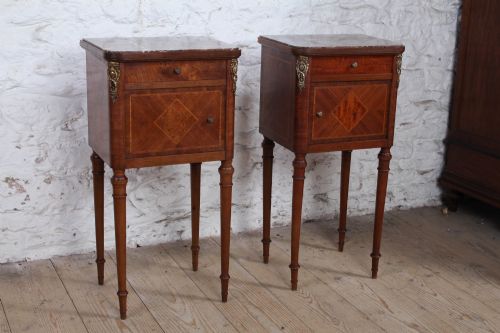
Carpenters utilised solid regional timbers including oak, walnut, cherrywood, fruitwood and mahogany. Many pieces incorporate decorative veneers such as burr elm, burr walnut and kingwood to add grain movement to the surface.
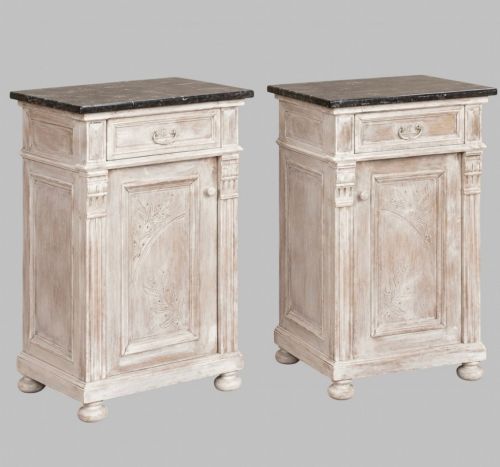
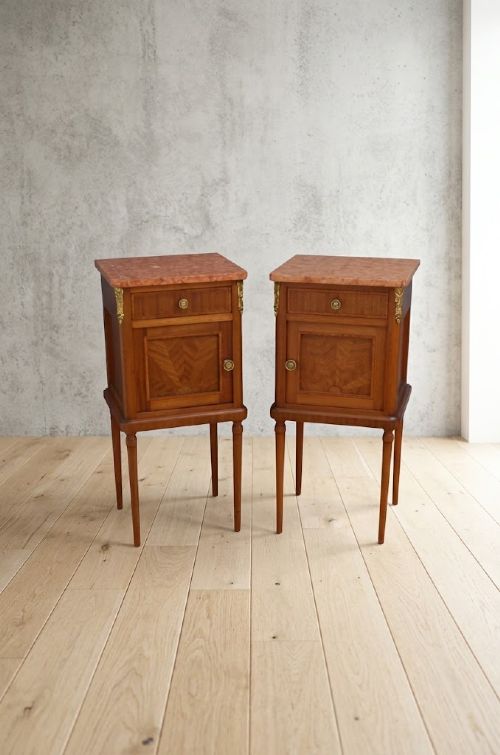
Marble tops in white and coloured varieties frequently cap the wooden carcase to provide a durable, wipe-clean surface. Brass handles, key escutcheons and mounts accent the timber structures.
Surface treatments vary from polished natural grain and bleached oak finishes to painted wood and intricate marquetry patterns. Certain variations include functional additions like candle shelves.
French Country Bedside Cabinet Retail Price Guide 2026
Typical asking prices for french country bedside cabinet among the pieces listed under this phrase on Sellingantiques today, from the lower quarter to the upper quarter. They describe what is for sale here now, not the wider market.
Listings span eight distinct decades from the eighteen-eighties to nineteen-fifty, alongside nineteenth-century pieces.
Quality and Craftsmanship
The distinction between standard provincial items and finer cabinet-making lies in the selection of timbers and the execution of details. Matched pairs with symmetrical grain patterns and original marble slabs sit at the upper end of the scale.
Hand-carved ornamentation, crisp marquetry inlays and robust internal joinery indicate superior workshop production. Simpler painted or plain oak pieces rely on honest proportions and sturdy construction rather than applied decoration.
Melissa White·Camille & Vence
The French Country Bedside Cabinet Glossary
- Commode
- A low chest of drawers or cabinet with doors. In a bedroom context, it serves as a larger bedside storage unit.
- Marquetry
- Decorative veneer work arranged in geometric or pictorial patterns. Craftsmen apply thin slices of contrasting wood onto the carcase surface.
- Bombe
- A swelling, outward-curved shape characteristic of eighteenth-century and revival case furniture. This profile requires skilled shaping of the timber.
- Escutcheon
- A protective plate surrounding a keyhole. These fittings are frequently cast in brass and styled to match the period of the cabinet.
- Pot cupboard
- A small bedside cabinet originally designed to house a chamber pot. They typically feature a single door enclosing a compact interior shelf.
French Country Bedside Cabinet: Frequently Asked Questions
How do I use a bedside cabinet?
These cabinets provide enclosed storage beside a bed for books, lamps and personal items. The surface accommodates a reading light while the cupboard or drawers keep clutter hidden.
Marble-topped versions offer extra resilience against spilled water or cosmetics. They function equally well as small side tables in a hallway or sitting room.
Are pairs difficult to find?
Matched pairs appear frequently among listings alongside single cabinets. Finding a true pair with identical grain and wear is more common in twentieth-century pieces.
Nineteenth-century examples occasionally comprise married pieces or slight variations. Checking dimensions and timber tones helps confirm the pairing.
What is the difference between oak and walnut?
Oak provides a pale, visible grain and heavy, rustic durability suited to provincial furniture. Walnut offers a richer brown tone with finer grain patterns favoured for decorative veneers.
Bleached oak finishes lighten the natural wood tone for a softer aesthetic. Walnut pieces often feature carved details or high-gloss polishing.
How do I date these cabinets?
Dating relies on stylistic clues, construction methods and timber types. Pieces from the nineteenth century often display hand-cut dovetails and deeper patination.
Twentieth-century reproductions and revival pieces from nineteen-twenty or nineteen-thirty frequently adopt earlier Louis styles. Hardware and hinge types also indicate the manufacturing era.