


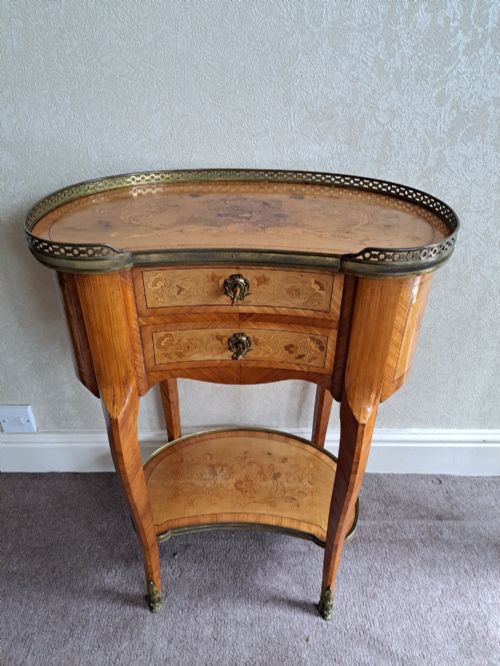


French Tier Side Cabinet
These french tier side cabinet examples combine practical surface space with elegant proportions, offering refined storage for any room.
French Tier Side Cabinet
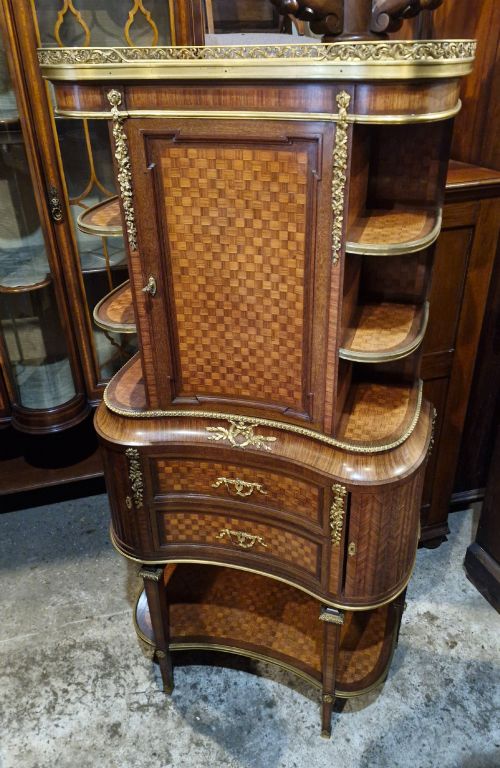
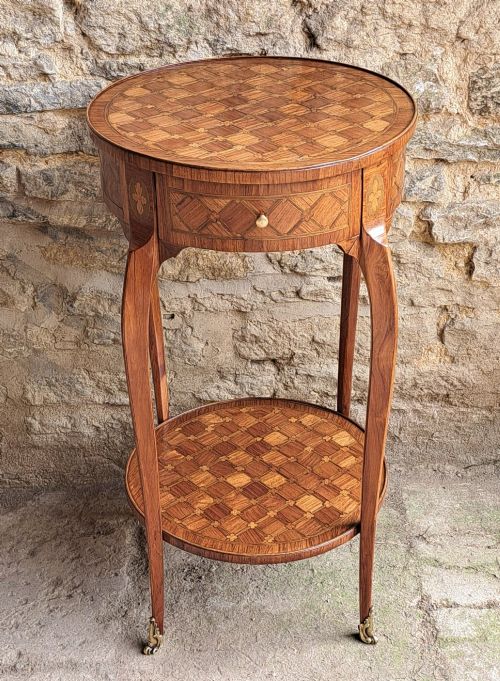
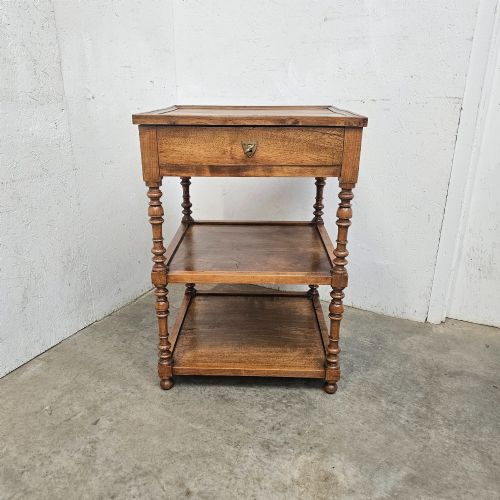
A french tier side cabinet brings together multiple levels of display surface and enclosed storage, drawing on design traditions from the nineteenth century onward. These pieces appear in forms ranging from tiered etageres and lamp tables to marquetry-inlaid cabinets with marble tops.
The selection here spans several distinct periods, notably the nineteenth century, nineteen-hundred, and nineteen-twenty, reflecting both French provincial making and classical revival tastes. Buyers frequently encounter variations in walnut, mahogany, and rosewood, often enhanced by marquetry and brass or ormolu mounts.
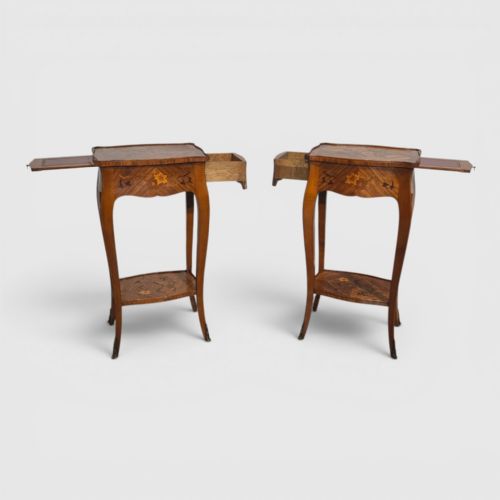
Makers drew upon diverse style influences, including Louis XV, Louis XVI, and Japonisme, creating versatile furniture suited for use as bedside tables, occasional pieces, or small writing desks. The emphasis rests firmly on compact utility paired with decorative woodwork.
Materials and construction methods
Cabinetmakers utilised dense hardwoods such as walnut, mahogany, kingwood, and rosewood, frequently applying fine veneers to create patterned marquetry surfaces. Fruitwood and satinwood also appear as secondary or decorative timbers, contributing to intricate geometric and floral designs.
Decorative hardware played a central role in construction, incorporating cast ormolu mounts and brass detailing to accentuate the lines of tables and cabinets. Many pieces feature fitted marble tops that provide a durable and cool surface above the timber frames.
French Tier Side Cabinet Retail Price Guide 2026
Typical asking prices for french tier side cabinet among the pieces listed under this phrase on Sellingantiques today, from the lower quarter to the upper quarter. They describe what is for sale here now, not the wider market.
Some nineteenth-century makers packed so many tiers onto a single small table that dusters required the agility of a mountain goat.
Assessing craftsmanship and finish
The standard of a piece depends heavily on the precision of the veneer work and the crispness of the marquetry inlay. Superior examples display seamless grain matching and tight joins across multiple tiers and corners.
Quality also reveals itself in the weight and detail of the metalwork, where finely chased ormolu or brass mounts demonstrate superior foundry work compared to simpler cast alternatives. The integrity of the underlying structure, whether walnut or mahogany, determines the longevity of the furniture.
Gabriel Viardot
The French Tier Side Cabinet Glossary
- Ormolu
- Gilded bronze mounts used decoratively on furniture. This technique adds metallic contrast to dark timber surfaces.
- Marquetry
- Inlaid wood veneers forming decorative patterns or pictorial scenes. Craftsmen cut contrasting timbers like satinwood and kingwood to create these intricate designs.
- Etagere
- A set of open shelves for displaying small objects. These tiered structures provide vertical storage without heavy bulk.
- Japonisme
- A nineteenth-century artistic style influenced by Japanese aesthetics. This taste introduced asymmetrical compositions and distinct decorative motifs to European furniture.
French Tier Side Cabinet: Frequently Asked Questions
What is a french tier side cabinet?
A french tier side cabinet is a multi-level piece of furniture designed for display and small-scale storage, typically featuring wood veneers and decorative mounts.
These items encompass various nineteenth-century forms, including etageres, lamp tables, and small cabinets with marble tops.
How were these cabinets used?
Original owners utilised these versatile pieces as bedside tables, occasional surfaces for lamps, or compact writing desks in receiving rooms.
The multiple tiers allowed for the orderly arrangement of books, writing implements, and decorative ornaments.
Which woods are most common?
Cabinetmakers relied heavily on walnut, mahogany, rosewood, and kingwood as primary timbers for these decorative tables and cabinets.
Satinwood and fruitwood frequently appeared alongside these dark woods to provide contrasting tones for marquetry patterns.
How do I identify the period?
Dating relies on examining construction techniques, timber choices, and stylistic references to periods such as Louis XVI or Victorian revivals.
Nineteenth-century pieces often display hand-cut veneers, cast ormolu mounts, and specific design traits characteristic of workshops from that era.