




French Cobalt Gilt Porcelain
French cobalt gilt porcelain brings together rich blue ceramic bodies and gleaming metallic mounts across nineteenth-century domestic ornaments, clocks and lamps.
French Cobalt Gilt Porcelain
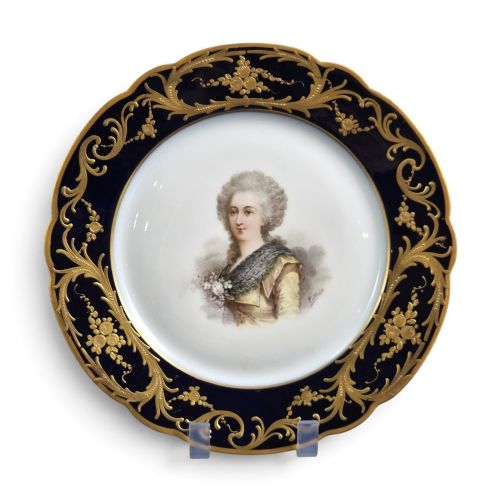
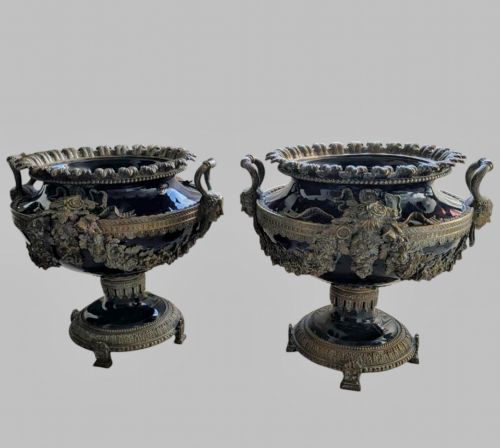
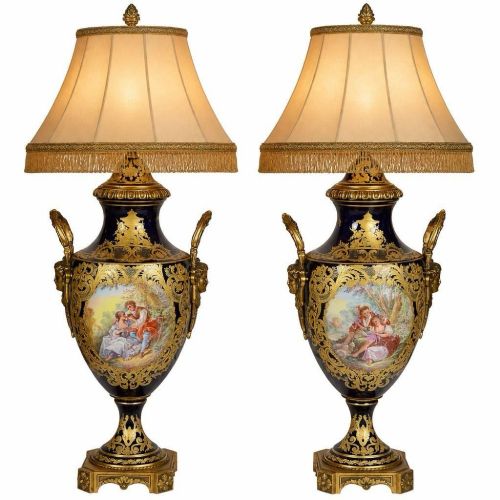
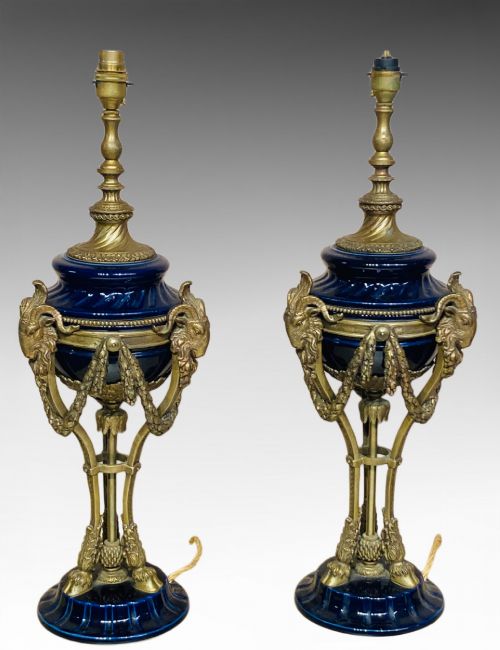
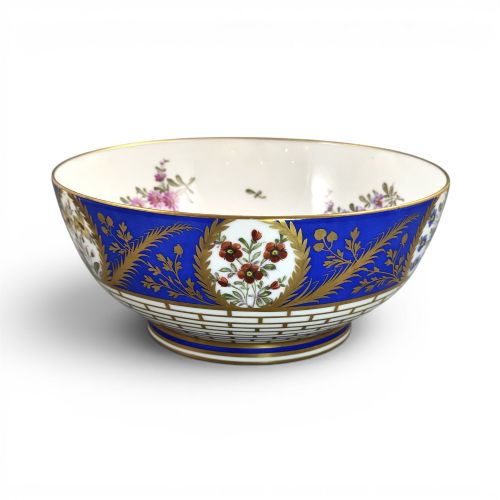
When you search for french cobalt gilt porcelain, you encounter a selection spanning nineteenth-century cabinet plates, lidded vases, table lamps and mantel clock garnitures. These items originate predominantly from French workshops working in the Sèvres style, alongside output attributed to Parisian makers such as Samson and the Darte Brothers.
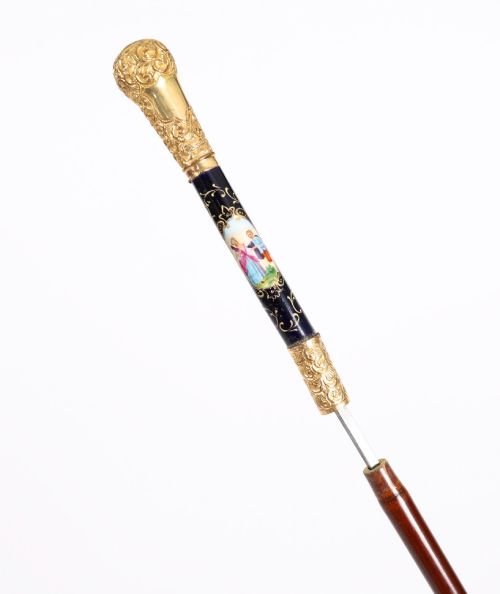
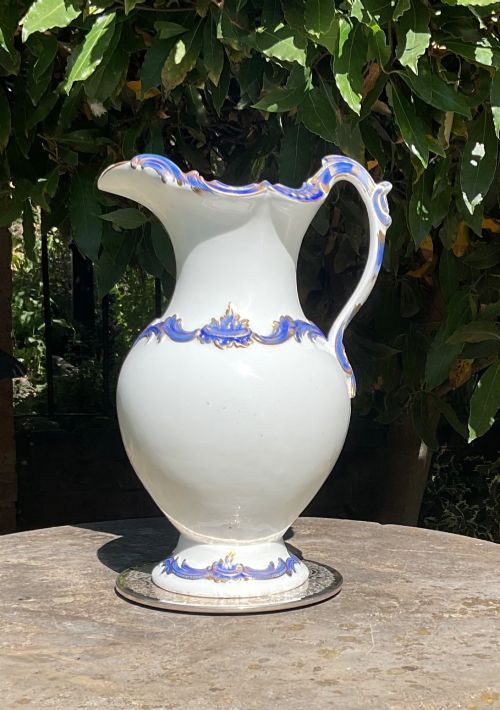
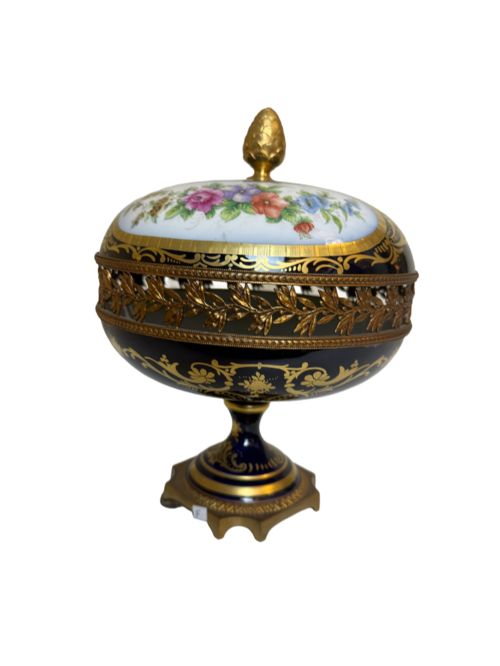
The objects take many functional and decorative shapes, including water jugs, jardinières, jewellery caskets, comports and walking sword sticks. Chronologically, the pieces reach from eighteenth-century pill trinket boxes through to productions of the late nineteenth and early twentieth centuries, reflecting enduring tastes for Louis XVI and Rococo Revival aesthetics.
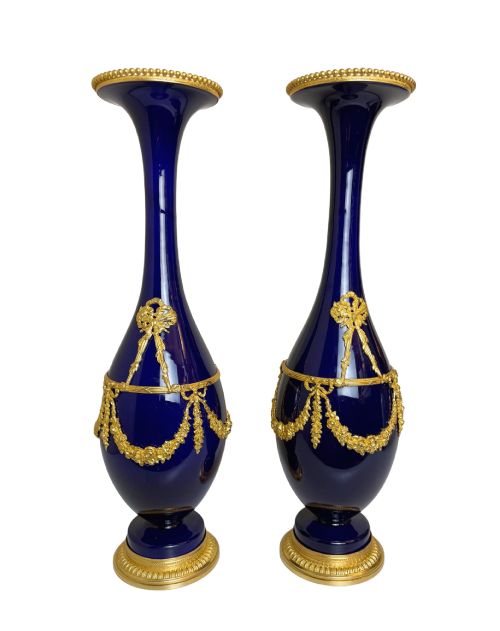
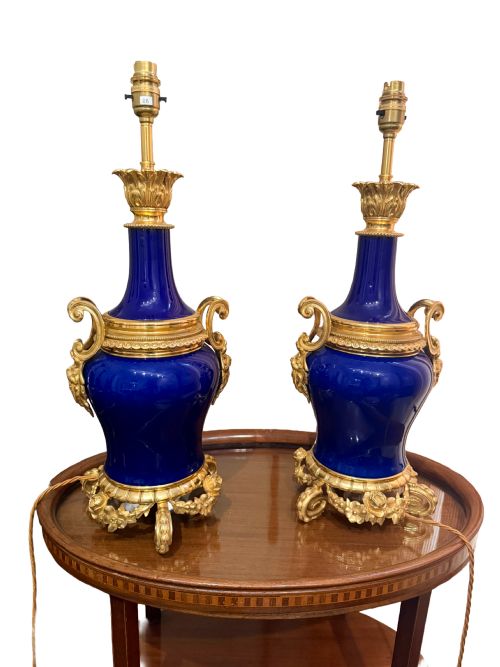
Vases and urns frequently appear in pairs or monumental sets, accompanied by gilded bronze, ormolu or brass trim. Portrait plates and pictorial dishes showcase hand-painted scenes, whilst structural pieces like lyre clocks combine blue ceramic bodies with elaborate metallic mounts.
Materials and Technique
The creation of these items relies upon cobalt blue ceramic glazes paired with applied metallic elements such as gilt bronze, ormolu, gold leaf and brass. Artisans decorated the porcelain surfaces with hand-painted details, enamel work and raised gold detailing, often incorporating fabric components on specific lamp designs.
Metal mounts were cast and gilded to frame the ceramic bodies, securing elements like handles, feet and bezels onto vases, clocks and boxes. This combination of fired clay and polished metal required distinct workshop specialisms in both ceramic glazing and bronze foundry work.
An eighteenth-century gold raised pill trinket box sits alongside a walking sword stick, proving that porcelain elegance took many unexpected forms.
Judging Quality
Quality rests upon the execution of the hand-painted decoration, the precision of the hand-raised gold detailing and the crispness of the cast ormolu or gilt bronze mounts. Pieces featuring finely rendered portraits, exotic birds or detailed historical scenes stand apart from simpler decorative applications.
The weight and integration of the metal mounts relative to the porcelain body also dictate standard, where heavier, more detailed bronze and ormolu framing denotes superior production. Furthermore, adherence to established stylistic idioms, such as Louis XVI Revival or Sèvres-style output, influences the refinement of the finished object.
Samson Paris·Darte Brothers·Pucher Deroche
The French Cobalt Gilt Porcelain Glossary
- Ormolu
- A technique of applying finely ground, high-carat gold to an object of bronze, commonly used for mounts on clocks and vases. It provides a rich, warm yellow lustre that complements deep blue porcelain.
- Bleu de Roi
- A rich cobalt blue ceramic glaze developed at the Sèvres porcelain manufactory. This intense hue forms the background colour for many decorative plates, urns and clock cases.
- Garniture
- A set of three or more matching decorative objects, typically comprising a central clock or vase flanked by two matching vases or candelabra. They were designed to sit upon a mantelpiece or sideboard.
- Comport
- A decorative dish or bowl raised on a stem and foot, utilised for serving fruit or displaying sweets. In these selections, they feature cobalt blue glaze and gilded details.
- Bisque
- Unglazed white porcelain that has been fired once, possessing a matte, marble-like texture. It appears on portrait busts within these listings.
French Cobalt Gilt Porcelain: Frequently Asked Questions
What periods do these pieces date from?
The selection spans primarily the nineteenth century, with specific examples originating in the eighteenth century and extending into the early twentieth century. Styles frequently draw upon earlier French royal aesthetics such as Louis XVI and Rococo Revival.
Dates are established through stylistic markers, factory traditions and manufacturing techniques recorded across the individual items.
How were these porcelain items used originally?
Many objects served functional roles in wealthy households, including lighting rooms via table lamps, housing time on mantelpieces through clock garnitures, or holding jewellery in lidded caskets. Plates and comports functioned as display items or serving vessels for formal dining.
Others were purely decorative, intended to showcase wealth and taste within domestic drawing rooms and salons.
How do I identify Sèvres-style pieces?
Sèvres-style items typically feature rich bleu de roi cobalt grounds, elaborate hand-painted pictorial panels, and extensive raised gold detailing. They are often mounted in finely cast ormolu and mimic the high-status output of the historic French royal factory.
Many pieces from this tradition were produced by other nineteenth-century Parisian makers adopting the iconic aesthetic.