


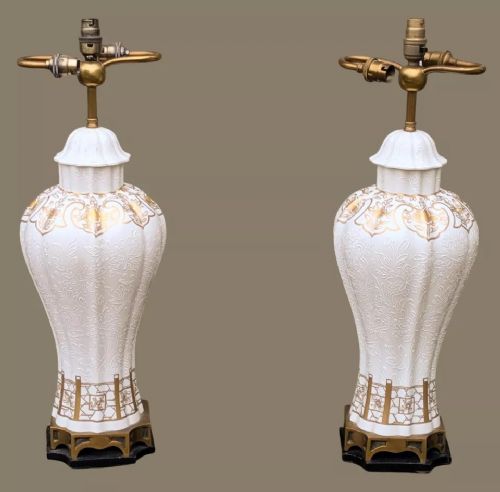


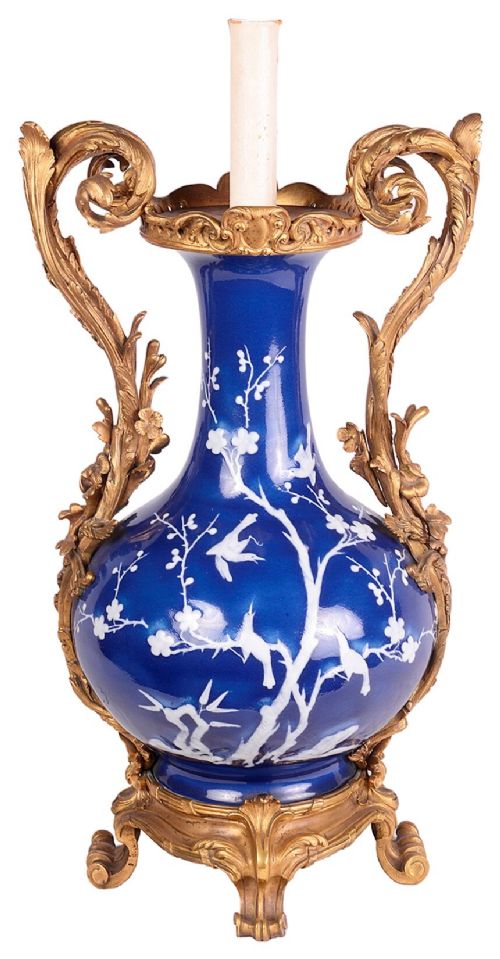
French Chinoiserie Lighting
French chinoiserie lighting brings together European metalwork and Asian ceramics to create decorative lamps that illuminate a room with rich character.
French Chinoiserie Lighting
When you search for french chinoiserie lighting, you encounter table lamps, candlesticks, and converted vases made in the French taste. The selection relies heavily on porcelain bodies paired with metal mounts.
Most examples date from the nineteenth century, including Victorian periods up to the nineteen-thirties. Forms range from Paris porcelain table lamps to cloisonne enamel vases mounted as lamps.
How they were made
Maker workshops utilised porcelain, brass, gilt bronze, and patinated white metal to construct these decorative objects. Vases and figures formed the primary bodies before electrical wiring was added.
Mounts in ormolu and gilt bronze secured the porcelain bases, while fabric shades completed the lighting fixtures. Toleware and cloisonne enamel also appeared within the construction of these pieces.
The listings show nineteenth-century dates stretching from eighteen-seventy to the nineteen-thirties, using porcelain, cloisonne enamel, and gilt bronze.
What varies in quality
The sophistication of the bronze casting and the precision of the gilt mounts set the finer examples apart from simpler pieces. Hand-painted porcelain details and crisp enamel work indicate higher standards of production.
Conversion work from earlier vases or candlesticks into lamps shows varying degrees of care in preserving the original ceramic body without damage.
The French Chinoiserie Lighting Glossary
- Ormolu
- Gilded bronze mounts applied to furniture, clocks, and porcelain bases. This technique added decorative sheen and structural framing.
- Cloisonne
- Enamel work created by soldering wires to a metal base and filling the compartments with paste. The piece is then fired and polished.
- Famille rose
- A palette of Chinese porcelain enamels dominated by pink or opaque red. It appeared frequently on eighteenth and nineteenth-century export wares.
- Toleware
- Painted or lacquered tinplate objects made in imitation of Asian lacquerwork. These pieces brought durable colour to domestic interiors.
- Paris porcelain
- Fine ceramics produced by numerous independent factories in and around Paris. These wares often emulated Asian styles during the nineteenth century.
French Chinoiserie Lighting: Frequently Asked Questions
Are these lamps originally wired for electricity?
Most nineteenth-century pieces began as vases, candlesticks, or decorative figures before being converted into lamps at a later date.
Original oil or candle fittings were replaced to accommodate modern electrical wiring and bulb holders.
What is Samson porcelain?
Samson was a nineteenth-century French firm known for producing exact reproductions and interpretations of historic ceramics from China and Japan.
Their pieces often carry pseudo-marks and replicate the famille rose or famille verte styles of earlier export wares.
How do I clean gilt bronze mounts?
Gilt bronze mounts require gentle dusting with a soft dry cloth to prevent abrasion of the thin gold layer.
Avoid chemical polishes and commercial cleaners that strip away the original fire gilding.